
Catalogue Search | MBRL


Are you sure you want to remove the book from the shelf?

{{itemTitle}}
15,050
result(s) for
"Health facilities construction"
Sort by:


Improving healthcare through built environment infrastructure
From the Foreword by Rob Smith, Director of Estates and Facilities (NHS England), Department of Health 'The built environment for the delivery of Healthcare will continue to change as it responds to new technologies and modalities of care, different expectations and requirements of providers and consumers of care.
eBook


Simplifying the Complex
This easy-to-use guide provides readers with the fundamentals of the transition, activation, and operational planning process and is essential for anyone involved in activating a new healthcare space.
eBook

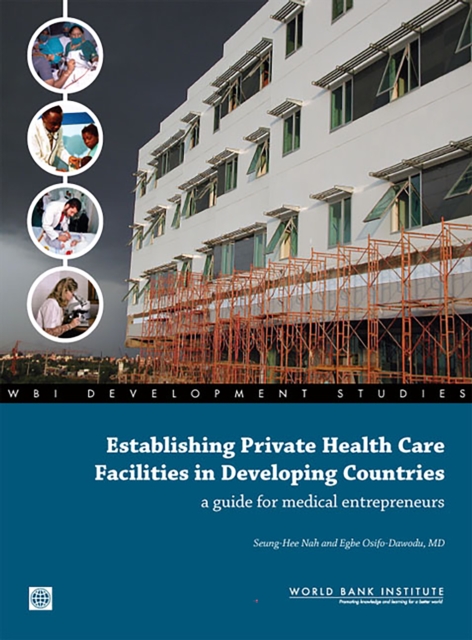
Establishing private health care facilities in developing countries : a guide for medical entrepreneurs
A practical guide for building sustainable healthcare facilities in developing countries. This resource empowers medical professionals and entrepreneurs to navigate the complexities of establishing private healthcare facilities in resource-limited settings. Are you a medical professional with a vision to improve healthcare in a developing country? This guide provides essential tools for success, covering project concepts, feasibility, financing, and risk management. Learn how to navigate regulatory environments, secure investments, and construct facilities that meet community needs. * Master feasibility and pre-feasibility analyses. * Secure financing and manage investments. * Implement effective marketing and pricing strategies. * Construct and staff a sustainable facility. Authored by Seung-Hee Nah and Egbe Osifo-Dawodu, MD, this insightful guide equips you with the knowledge to transform your vision into a thriving, impactful healthcare enterprise.
eBook

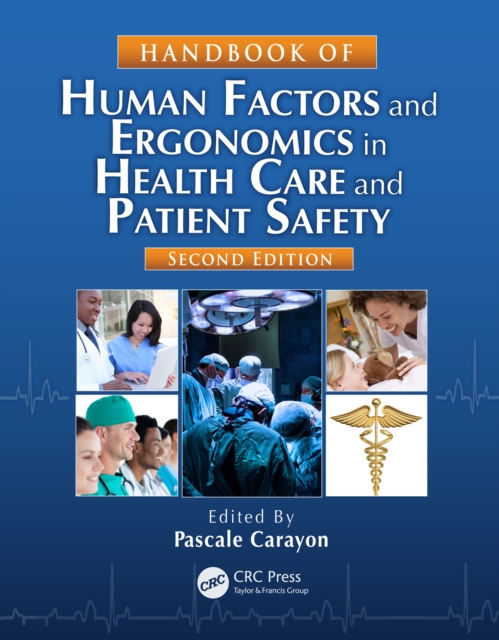
Handbook of Human Factors and Ergonomics in Health Care and Patient Safety
Written for students and professionals, this book is a complete reference on human factors and ergonomics research, concepts, theories, models, methods, and interventions that have been or can be applied in health care. Topics such as medical technology and telemedicine are covered, and special emphasis is put on the contributions of human factors and ergonomics to the improvement of patient safety and quality of care. Nine chapters from the original edition were deleted, and information from them was incorporated into other chapters. Furthermore, this second edition offers 17 new chapters.
eBook

Clinical : an architecture of variation with repetition
\"This book is a clinical study of a trilogy of health-care centers built by estudio.entresitio in Madrid, Spain\"--Page 3.
Book

Predicting factors for survival of breast cancer patients using machine learning techniques
Background
Breast cancer is one of the most common diseases in women worldwide. Many studies have been conducted to predict the survival indicators, however most of these analyses were predominantly performed using basic statistical methods. As an alternative, this study used machine learning techniques to build models for detecting and visualising significant prognostic indicators of breast cancer survival rate.
Methods
A large hospital-based breast cancer dataset retrieved from the University Malaya Medical Centre, Kuala Lumpur, Malaysia (
n
= 8066) with diagnosis information between 1993 and 2016 was used in this study. The dataset contained 23 predictor variables and one dependent variable, which referred to the survival status of the patients (alive or dead). In determining the significant prognostic factors of breast cancer survival rate, prediction models were built using decision tree, random forest, neural networks, extreme boost, logistic regression, and support vector machine. Next, the dataset was clustered based on the receptor status of breast cancer patients identified via immunohistochemistry to perform advanced modelling using random forest. Subsequently, the important variables were ranked via variable selection methods in random forest. Finally, decision trees were built and validation was performed using survival analysis.
Results
In terms of both model accuracy and calibration measure, all algorithms produced close outcomes, with the lowest obtained from decision tree (accuracy = 79.8%) and the highest from random forest (accuracy = 82.7%). The important variables identified in this study were cancer stage classification, tumour size, number of total axillary lymph nodes removed, number of positive lymph nodes, types of primary treatment, and methods of diagnosis.
Conclusion
Interestingly the various machine learning algorithms used in this study yielded close accuracy hence these methods could be used as alternative predictive tools in the breast cancer survival studies, particularly in the Asian region. The important prognostic factors influencing survival rate of breast cancer identified in this study, which were validated by survival curves, are useful and could be translated into decision support tools in the medical domain.
Journal Article