
Catalogue Search | MBRL


Are you sure you want to remove the book from the shelf?

{{itemTitle}}
57
result(s) for
"Heiresses."
Sort by:

Paris : the memoir
Paris rose to prominence as an heiress but cultivated her fame and fortune as the 'it girl' of the naughties, alongside a growing 24-hour news cycle and the advent of the celebrity blog. Using her celebrity brand, Paris set in motion her innovative business ventures, while being written off by tabloids as \"famous for being famous\". With tenacity and grit, she built a global empire and became beloved in the process. Now Paris Hilton is ready to share her story. This book strips away all we thought we knew about a celebrity icon, taking us back to a privileged childhood living with undiagnosed ADHD, a teenage rebellion and 'emotional growth boarding schools', as well as her perilous journey through pre-#MeToo sexual politics. Paris: The Memoir tracks the evolution of celebrity culture through the story of its leading figure and shows us Paris' path to peace while she challenges us to question our role in her story and in our own

See how she dies
Adria Nash meets with skepticism when she arrives at the home of the wealthy Danvers family intent on proving she is London Danvers, the heiress kidnapped many years earlier as a child, but she soon comes to realize there is someone does believe her--and is not at all pleased she has been found.
Book

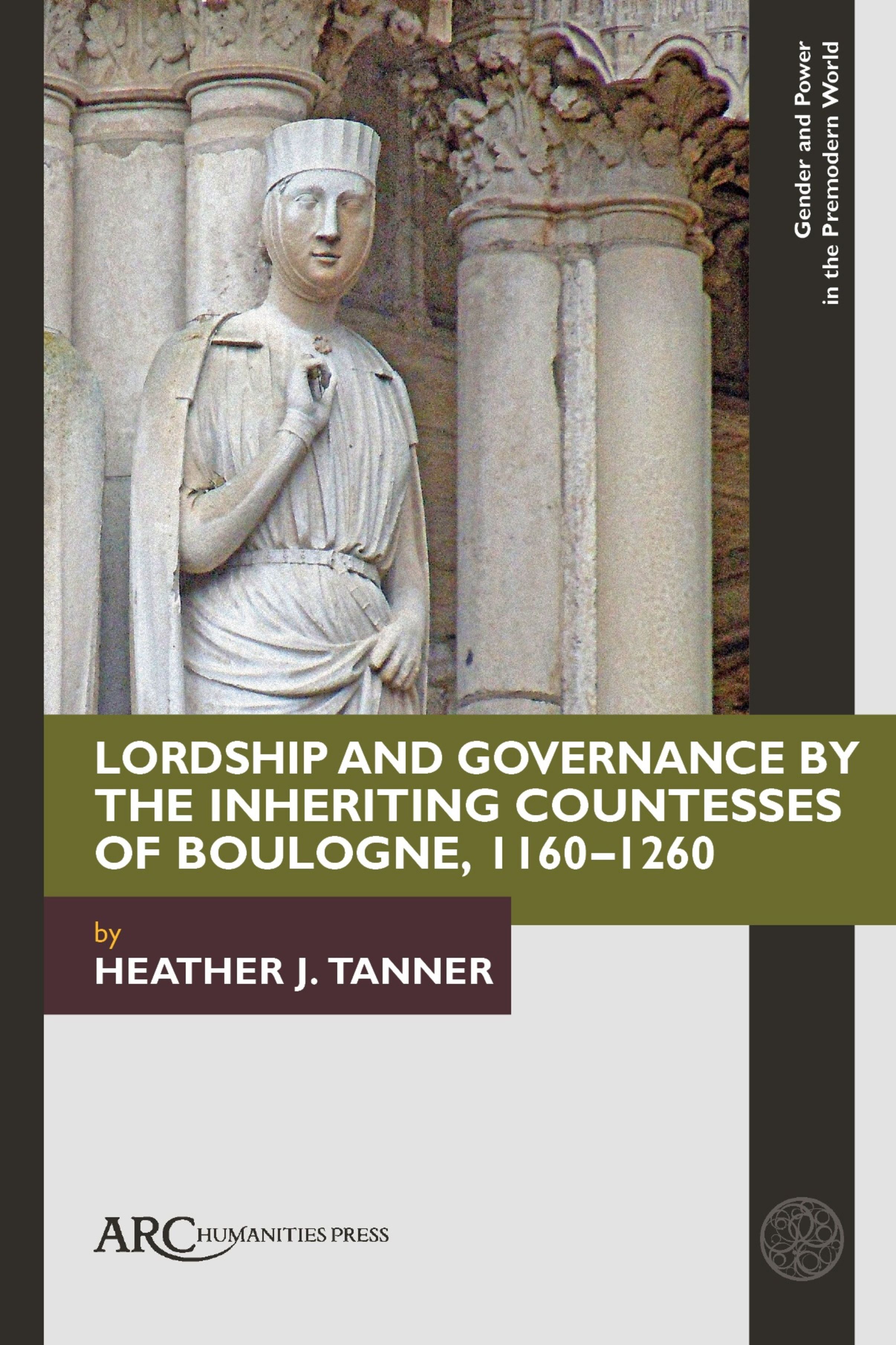
Lordship and Governance by the Inheriting Countesses of Boulogne, 1160-1260
Traditional scholarship argues that the changes fostered by the growth of royal power and feudalism in Western Europe directly impacted women's public power and authority in the later twelfth and thirteenth centuries. Focusing on the inheriting countesses of Boulogne (1160-1260) and their neighbours in northern France, this monograph investigates the influence of the rise of centralized government on elite women's power. This chronological and comparative analysis highlights successive countesses' governance of inherited lands, the roles they played in their spouses' lands and in political affairs outside their inherited lands, along with crucial assessments of the social identity and status of the family. It challenges the established interpretation and shows that the establishment of feudalism and the elaboration of bureaucracy did not curtail elite women's access to or exercise of lordship to any significant degree.
eBook

King of wrath
The billionaire CEO never planned to marry - until the threat of blackmail forces him into an engagement with a woman he barely knows: Vivian Lau, jewellery heiress and daughter of his newest enemy. It doesn't matter how beautiful or charming she is. He'll do everything in his power to destroy the evidence and their betrothal. There's only one problem: now that he has her... he can't bring himself to let her go. Elegant. Ambitious. Well-mannered. Vivian Lau is the perfect daughter and her family's ticket into the highest echelons of high society. Marrying a blue-blooded Russo means opening doors that would otherwise remain closed to her new-money family. While the rude, elusive Dante isn't her idea of a dream partner, she agrees to their arranged marriage out of duty. Craving his touch was never part of the plan. Neither was the worst thing she could possibly do: fall in love with her future husband.


Stick or twist
The attempted kidnap of a wealthy heiress throws up a series of unanswered questions in this twisting tale of suspense. Wealthy heiress Jude Thackeray lost her trust in men following her terrible ordeal at the hands of a ruthless kidnapper. Now she's met Mark Medlicott, she is finally learning to love again. But is Mark who - and what - he seems? No one was ever arrested following the kidnap; there were no credible suspects even. Detective Sergeant Peter Betts and his colleague, DS Hannah McMahon, are determined to crack the case. However, the deeper they dig, the more anomalies they uncover, and it becomes increasingly clear there was more to the attempted kidnap than met the eye. Soon the pair find themselves in a desperate race against time in order to prevent a further catastrophe.
Book

Searching for a Fresh Point of View
In the early 1940s Aaron Copland cultivated an identity as an authority on film composition through public lectures, interviews, and his own film scores. Championing film music’s potential as a serious art form, Copland sought to show Hollywood that film composers could branch out from the romantic and post-romantic aesthetics that infused contemporary soundtracks and write in a more modern, even American, style. During the 1940s the film industry was already embracing an abundance of new production styles, techniques, and genres that fostered innovation in the development of cinematic musical codes. When Copland returned to Hollywood in 1948 to score William Wyler’s psychological melodrama The Heiress (1949), he chose to take on a set of new challenges. Copland attempted to discover a new idiom for love music, on the one hand, and began to use leitmotifs as a structural device, on the other.
Copland’s experience with The Heiress opens a space in which to reassess his opinions about appropriate film-scoring techniques as well as his public endorsement of film composition. His perspectives on film composition—as demonstrated in his writings, correspondence, and film scores as well as in interviews and reviews of his film music—reveal a tension between the composer’s artistic sensibilities and his attitude toward the commercialism of film music. Indeed he maintained a more ambivalent attitude toward cinematic composition than he publically professed. Understood in this context, Copland’s scoring decisions in The Heiress reflect a turn away from the Americana of Rodeo (1942) and Appalachian Spring (1944) and the Russian-themed score of The North Star (1943), as he sought to refashion his identity as a composer in the post-war years.
Journal Article

Gallows Court
\"London, 1930. A headless corpse; an apparent suicide in a locked room; a man burned alive during an illusionist's show in front of thousands of people. Scotland Yard is baffled by the sequence of ghastly murders unfolding across the city and at the centre of it all is mysterious heiress Rachel Savernake. Daughter of a grand judge, Rachel is as glamorous as she is elusive. Jacob Flint, a tenacious young journalist eager to cover the gruesome crimes, is drawn into Rachel's glittering world of wealth and power. But as the body count continues to rise, Jacob is convinced Rachel is harbouring a dark secret and he soon becomes part of a dangerous game that could leave him dancing at the end of the hangman's rope if he pursues the truth-- Provided by publisher.
Book

New Harmony, Indiana
For nearly seven decades, Jane Blaffer Owen was the driving force behind the restoration and revitalization of the town of New Harmony, Indiana. In this delightful memoir, Blaffer Owen describes the transformational effect the town had on her life. An oil heiress from Houston, she met and married Kenneth Dale Owen, great-great-grandson of Robert Owen, founder of a communal society in New Harmony. When she visited the then dilapidated town with her husband in 1941, it was love at first sight, and the story of her life and the life of the town became intertwined. Her engaging account of her journey to renew the town provides glimpses into New Harmony's past and all of its citizens-scientists, educators, and naturalists-whose influence spread far beyond the town limits. And there are fascinating stories of the artists, architects, and theologians who became part of Blaffer Owen's life at New Harmony, where, she says, \"My roots could sink deeply and spread.\"
eBook