
Catalogue Search | MBRL


Are you sure you want to remove the book from the shelf?

{{itemTitle}}
271,506
result(s) for
"Helicopters."
Sort by:

Rotorcraft Aeromechanics
A rotorcraft is a class of aircraft that uses large-diameter rotating wings to accomplish efficient vertical take-off and landing. The class encompasses helicopters of numerous configurations (single main rotor and tail rotor, tandem rotors, coaxial rotors), tilting proprotor aircraft, compound helicopters, and many other innovative configuration concepts. Aeromechanics covers much of what the rotorcraft engineer needs: performance, loads, vibration, stability, flight dynamics, and noise. These topics include many of the key performance attributes and the often-encountered problems in rotorcraft designs. This comprehensive book presents, in depth, what engineers need to know about modelling rotorcraft aeromechanics. The focus is on analysis, and calculated results are presented to illustrate analysis characteristics and rotor behaviour. The first third of the book is an introduction to rotorcraft aerodynamics, blade motion, and performance. The remainder of the book covers advanced topics in rotary wing aerodynamics and dynamics.
eBook

Helicopters
\"This search-and-find book invites early readers to look for new vocabulary words and pictures while giving simple facts about helicopters and how they fly\"--Provided by publisher.
Book

AS-350B könnyű-többcélú helikopter a Magyar Légierőben
A helikopterek diadalmenetének kezdete a 20. század elejére tehető. Bár a technológia - a szó szoros és átvitt értelmében is - akkoriban még csupán a szárnyait bontogatta, a sokoldalúság és a számtalan felhasználási, alkalmazási lehetőség előrevetítette az új repülőeszköz majdani sikerét. A kor előrehaladtával sorra jelentek meg a korszerűbb típusok, amelyek egyre hatékonyabbak, erősebbek, gyorsabbak, és ami a fő, egyre biztonságosabbak lettek.
Journal Article


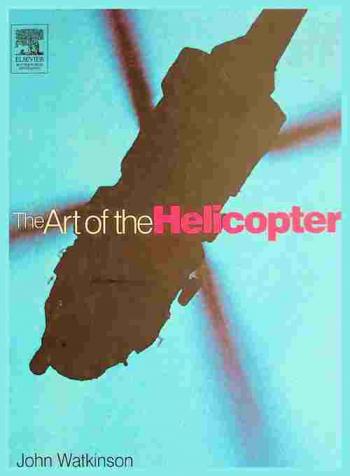
Art of the Helicopter
The modern helicopter is a sophisticated device which merges a surprising number of technologies together.This wide range of disciplines is one of the fascinations of the helicopter, but it is also makes a complete understanding difficult.Those searching for an understanding of the helicopter will find The Art of the Helicopter invaluable.
eBook

How does a helicopter work?
This book looks at the aerodynamics of helicopters and some of the latest models, and is fully loaded with fun features such as sidebars, fact boxes, and cool cutaways.
Book

Optimized Structural Design of a Reciprocating Wing for the Reciprocating Airfoil Aircraft
The development of unconventional and hybrid unoccupied aerial vehicles (UAVs) has gained significant momentum in recent years, with many designs utilizing small fans or rotary blades for vertical take-off and landing (VTOL). However, these systems often inherit the limitations of traditional helicopter rotors, including susceptibility to aerodynamic inefficiencies and mechanical issues. Additionally, achieving a seamless transition from VTOL to fixed-wing flight mode remains a significant challenge for hybrid UAVs. A novel approach is the reciprocating airfoil (RA) or reciprocating wing (RW) VTOL aircraft, which employs a fixed-wing configuration driven by a reciprocating mechanism to generate lift. The RA wing is uniquely designed to mimic a fixed-wing while leveraging its reciprocating motion for efficient lift production and a smooth transition between VTOL and forward flight. Despite its advantages, the RA wing endures substantial stress due to the high inertial forces involved in its operation. This study presents an optimized structural design of the RA wing through wing topology optimization and finite element analysis (FEA) to enhance its load-bearing capacity and stress performance. A comparative analysis with existing RA wing configurations at maximum operating velocities highlights significant improvements in the safety margin, failure criteria, and overall stress distribution. The key results of this study show an 80.4% reduction in deformation, a 43.8% reduction in stress, and a 78% improvement in safety margin. The results underscore the RA wing’s potential as an effective and structurally stable lift mechanism for RA-driven VTOL aircraft, demonstrating its capability to enhance the performance and reliability of next-generation UAVs.
Journal Article


The Ingenuity Helicopter on the Perseverance Rover
The
Ingenuity Helicopter
will be deployed from the
Perseverance Rover
for a 30-sol experimental campaign shortly after the rover lands and is commissioned. We describe the helicopter and the associated
Technology Demonstration
experiment it will conduct, as well as its role in informing future helicopter missions to Mars. This helicopter will demonstrate, for the first time, autonomous controlled flight of an aircraft in the Mars environment, thus opening up an aerial dimension to Mars exploration. The
1.8
kg
,
1.2
m
diameter helicopter, with twin rotors in a counter-rotating co-axial configuration, will help validate aerodynamics, control, navigation and operations concepts for flight in the thin Martian atmosphere. The rover supports a radio link between the helicopter and mission operators on Earth, and information returned from a planned set of five flights, each lasting up to 90 seconds, will inform the development of new Mars helicopter designs for future missions. Such designs in the
4
kg
–
30
kg
range would have the capability to fly many kilometers daily and carry science payloads of
1
kg
–
5
kg
. Small helicopters can be deployed as scouts for future rovers helping to select interesting science targets, determine optimal rover driving routes, and providing contextual high-vantage imagery. Larger craft can be operated in standalone fashion with a tailored complement of science instruments with direct-to-orbiter communication enabling wide-area operations. Other roles including working cooperatively with a central lander to provide area-wide sampling and science investigations. For future human exploration at Mars, helicopter can be employed to provide reconnaissance.
Journal Article