
Catalogue Search | MBRL


Are you sure you want to remove the book from the shelf?

{{itemTitle}}
295
result(s) for
"Helpfulness."
Sort by:
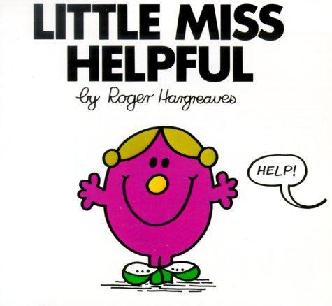
Little Miss Helpful
Little Miss Helpful is one of those people who love to help people, but who end up helping nobody.
Book

How review content, sentiment and helpfulness votes jointly affect trust of reviews and attitude
PurposeWe investigate the joint impacts of three trust cues – content, sentiment and helpfulness votes – of online product reviews on the trust of reviews and attitude toward the product/service reviewed.Design/methodology/approachWe performed three studies to test our research model, presenting participants with scenarios involving product reviews and prior users' helpful and unhelpful votes across experimental settings.FindingsA high helpfulness ratio boosts users’ trust and influences behaviors in both positive and negative reviews. This effect is more pronounced in attribute-based reviews than emotion-based ones. Unlike the ratio effect, helpfulness magnitude significantly impacts only negative attribute-based reviews.Research limitations/implicationsFuture research should investigate voting systems in various online contexts, such as Facebook post likes, Twitter microblog thumb-ups and up-votes for article comments on platforms like The New York Times.Practical implicationsOur findings have significant implications for voting system-providers implementing information techniques on third-party review platforms, participatory sites emphasizing user-generated content and online retailers prioritizing product awareness and reputation.Originality/valueThis study addresses an identified need; that is, the helpfulness votes as an additional trust cue and the joint effects of three trust cues – content, sentiment and helpfulness votes – of online product reviews on the trust of customers in reviews and their consequential attitude toward the product/service reviewed.
Journal Article


Standing out from adjacent reviews: How content similarity affects review helpfulness
Prior research and practice have largely examined review content characteristics in isolation to enhance review helpfulness, overlooking that perceived helpfulness is context dependent. This oversight poses a broader platform design challenge: how to structure information environments as consumers browse reviews sequentially. Drawing on the information diagnosticity and variety-seeking perspectives, we introduce adjacency-based content similarity and argue that platforms can enhance overall helpfulness by reducing local redundancy. Using around 3 million TripAdvisor hotel reviews and Doc2Vec to measure this similarity, we find that reviews are perceived as less helpful when highly similar content appears adjacently; this effect is attenuated for high-reputation reviewers and amplified for hedonic (vs. utilitarian) products, and is driven primarily by similarity in content on experience-related attributes. Complementary online experiments establish causality and identify perceived uniqueness as the mediating mechanism. We further replicate the main pattern in other contexts (e.g., restaurants, video games, and consumer goods). This study advances understanding of review helpfulness by highlighting the role of sequential information structures and offers direct implications for platforms’ algorithmic feed design, particularly through review reordering and curation to mitigate local redundancy.
Journal Article

Something, someday
Reveals how even the smallest gesture can have a lasting impact on the world's biggest problems.
Book

What Makes an Online Review More Helpful: An Interpretation Framework Using XGBoost and SHAP Values
Online product reviews play important roles in the word-of-mouth marketing of e-commerce enterprises, but only helpful reviews actually influence customers’ purchase decisions. Current research focuses on how to predict the helpfulness of a review but lacks a thorough analysis of why it is helpful. In this paper, feature sets covering review text and context cues are firstly proposed to represent review helpfulness. Then, a set of gradient boosted trees (GBT) models is introduced, and the optimal one, which as implemented in eXtreme Gradient Boosting (XGBoost), is chosen to predict and explain review helpfulness. Specially, by including the SHAP (Shapley) values method to quantify feature contribution, this paper presents an integrated framework to better interpret why a review is helpful at both the macro and micro levels. Based on real data from Amazon.cn, this paper reveals that the number of words contributes the most to the helpfulness of reviews on headsets and is interactively influenced by features like the number of sentences or feature frequency, while feature frequency contributes the most to the helpfulness of facial cleanser reviews and is interactively influenced by the number of adjectives used in the review or the review’s entropy. Both datasets show that individual feature contributions vary from review to review, and individual joint contributions gradually decrease with the increase of feature values.
Journal Article

Mr. Strong
Mr. Strong does a lot of inadvertent damage, but sometimes manages to be helpful in his own way.
Book

Anxious or Angry? Effects of Discrete Emotions on the Perceived Helpfulness of Online Reviews
This paper explores the effects of emotions embedded in a seller review on its perceived helpfulness to readers. Drawing on frameworks in literature on emotion and cognitive processing, we propose that over and above a well-known negativity bias, the impact of discrete emotions in a review will vary, and that one source of this variance is reader perceptions of reviewers’ cognitive effort. We focus on the roles of two distinct, negative emotions common to seller reviews: anxiety and anger. In the first two studies, experimental methods were utilized to identify and explain the differential impact of anxiety and anger in terms of perceived reviewer effort. In the third study, seller reviews from Yahoo! Shopping web sites were collected to examine the relationship between emotional review content and helpfulness ratings. Our findings demonstrate the importance of examining discrete emotions in online word-of-mouth, and they carry important practical implications for consumers and online retailers.
Journal Article

No, no, Gnome!
\"Gnome cannot wait to help his friends harvest the school garden! But his eagerness and excitement get him into trouble, leaving them all saying 'No, no, Gnome!'\"-- Provided by publisher.
Book

Effectiveness of Fine-tuned BERT Model in Classification of Helpful and Unhelpful Online Customer Reviews
The problem of information overload in online review platforms has seriously hampered many customers’ ability to evaluate the quality of products or businesses when making purchasing decisions. A large body of literature exists that attempts to predict the helpfulness of online customer reviews and has reported contradictory findings on the effectiveness of various approaches. Moreover, many existing solutions use traditional machine learning techniques and handcrafted features, limiting generalization. Therefore, this study aims to propose a generalized approach by fine-tuning the BERT (Bidirectional Encoder Representations from Transformers) base model. The performance of BERT-based classifiers is then compared with that of bag-of-words approaches to determine the effectiveness of BERT-based classifiers. The evaluations performed using Yelp shopping reviews show that fine-tuned BERT-based classifiers outperform bag-of-words approaches in classifying helpful and unhelpful reviews. In addition, it is found that the sequence length of the BERT-based classifier has a significant impact on classification performance.
Journal Article