
Catalogue Search | MBRL


Are you sure you want to remove the book from the shelf?

{{itemTitle}}
1,045
result(s) for
"Henri Bergson"
Sort by:

Henri Bergson and visual culture : a philosophy for a new aesthetic
\"What does it mean to see time in the visual arts and how does art reveal the nature of time? Paul Atkinson investigates these questions through the work of the French philosopher Henri Bergson, whose theory of time as duration made him one of the most prominent thinkers of the fin de siècle. Although Bergson never enunciated an aesthetic theory and did not explicitly write on the visual arts, his philosophy gestures towards a play of sensual differences that is central to aesthetics. This book rethinks Bergson's philosophy in terms of aesthetics and provides a fascinating and original account of how Bergsonian ideas aid in understanding time and dynamism in the visual arts. From an examination of Bergson's influence on the visual arts to a reconsideration of the relationship between aesthetics and metaphysics, Henri Bergson and Visual Culture explores what it means to reconceptualise the visual arts in terms of duration. Atkinson revisits four key themes in Bergson's work - duration; time and the continuous gesture; the ramification of life and durational difference - and reveals Bergsonian aesthetics of duration through the application of these themes to a number of 19th and 20th-century artworks. This book introduces readers and art lovers to the work of Bergson and contributes to Bergsonian scholarship, as well as presenting a new of understanding the relationship between art and time\"-- Provided by publisher.
BOOK

Bergson and Durational Performance
Explores the possibility of an alternative experience of time, one that is closer to the pure duration described by philosopher Henri Bergson. Contributes to contemporary performance analysis, philosophy and Bergson studies and examines aspects of immersive and participatory performance, ritual and online performance. 9 b&w illus.
eBook

Bergson and history : transforming the modern regime of historicity
\"In this book, Leon ter Schure demonstrates the value of Bergson's philosophy of life for a more expansive understanding of history. Bergson is known for his explorations of time as duration, yet in his writings rarely referred to history. At the same time, historians and philosophers of history have not significantly incorporated Bergson's ideas about the nature of time into their work. Modernity has brought change at an ever-accelerating rate, and one of the results of this has been a tendency toward presentism. Only the here and now matters, as past and future have been absorbed by the \"omnipresent present\" of the digital age. Rather than isolating human history from the history of the natural world, Bergsonism situates history within the broader framework of the evolution of life and allows us to imagine the past instead as a living resource for the invention of the future. This not only reveals a unique sense of history's creative potential, it also allows for a rethinking of important topics in the study of history, such as historical time, the survival of the past, and historical progress\"-- Provided by publisher.
Book

Freedom, Creativity, the Self, and God: Between Rabbi Kook and Bergson’s Lebensphilosophie
In this essay, I examine the intersection between the concepts of freedom, the self, God, and creativity in the works of one of the most prominent twentieth-century Jewish thinkers, Rabbi Abraham Isaac HaCohen Kook (1865–1935), exploring his use of these concepts through the lens of the Lebensphilosophie of the French philosopher Henri Bergson (1859–1941). I first draw a historical and thematic parallel between Bergson’s and Kook’s philosophies that to date has not been considered extensively. I then argue that five different interpretative puzzles related to the topic of freedom in Kook’s teachings can be explained against the background of Bergson’s thought. This Bergsonian interpretation enables the reader to appreciate in what way different aspects of Kook’s thought—the metaphysical, ethical, epistemological, and theological—are interconnected and can be understood as an organic whole. I thereby show that the Bergsonian philosophical and systematic models are an important, and yet unexplored, interpretative tool for the study of Kook’s theological and philosophical thought.
Journal Article

The Interval:Relation and Becoming in Irigaray, Aristotle, and Bergson
The Interval offers the first sustained analysis of the concept grounding Irigaray's thought: the constitutive yet incalculable interval of sexual difference. In an extension of Irigaray's project, Hill takes up her formulation of the interval as a way of rereading Aristotle's concept of topos and Bergson's concept of duration.Hill diagnoses a sexed hierarchy at the heart of Aristotle's and Bergson's presentations. Yet beyond that phallocentrism, she points out how Aristotle's theory of topos as a sensible relation between two bodies that differ in being and Bergson's intuition of duration as an incalculable threshold of becoming are indispensable to the feminist effort to think about sexual difference.Reading Irigaray with Aristotle and Bergson, Hill argues that the interval cannot be grasped as a space between two identities; it must be characterized as the sensible threshold of becoming, constitutive of the very identity of beings. The interval is the place of the possibility of sexed subjectivity and intersubjectivity; the interval is also a threshold of the becoming of sexed forces.
eBook
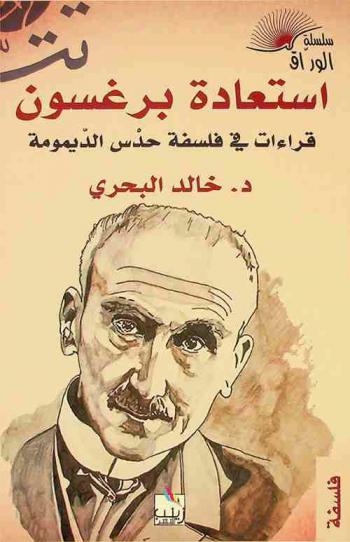
استعادة برغسون : قراءات في فلسفة حدس الديمومة
هذا الكتاب طائفة من الدراسات التي كتبناها في مناسبات وأوقات مختلفة، تعكس اهتماماتنا المستمرة والمتنوعة بقراءة الفلسفة البرغسونية، يقودنا- في ذلك- شغف ممتع ومثمر هو بالأساس حدس نتعقب باستمرار تلبسه بأسئلتنا وبتطلعنا نحو الكشف عن آفاق التفكر الجديد الذي افتتحه برغسون إن من جهة المنهج أو من جهة المقاربة أو من جهة الموضوع أو من جهة الأفق. وتنعقد عرى هذه \"القراءات\" عند نقطة مفصلية تشكل الفكرة الناظمة أو الخيط الهادي وهي بيان الحاجة المستمرة لاستدعاء برغسون راهنا من أجل إستثناف النظر والتفكير على نحو مغاير في جملة من المسائل منها ما يدور على محور ديني- سياسي، ومنها ما يدور على محور تربوي- تعليمي، ومنها ما يدور على محور سيكولوجي-أنتربولوجي.
BOOK

Human rights as a way of life : on Bergson's political philosophy
The work of Henri Bergson, the foremost French philosopher of the early twentieth century, is not usually explored for its political dimensions. Indeed, Bergson is best known for his writings on time, evolution, and creativity. This book concentrates instead on his political philosophy—and especially on his late masterpiece, The Two Sources of Morality and Religion—from which Alexandre Lefebvre develops an original approach to human rights.
We tend to think of human rights as the urgent international project of protecting all people everywhere from harm. Bergson shows us that human rights can also serve as a medium of personal transformation and self-care. For Bergson, the main purpose of human rights is to initiate all human beings into love. Forging connections between human rights scholarship and philosophy as self-care, Lefebvre uses human rights to channel the whole of Bergson's philosophy.
eBook


Deleuze, Bergson, Merleau-Ponty
Deleuze, Bergson, Merleau-Ponty: The Logic and Pragmatics of Creation, Affective Life, and Perception offers the only full-length examination of the relationships between Deleuze, Bergson and Merleau-Ponty.
Henri Bergson (1859–1941), Maurice Merleau-Ponty (1908-1961), and Gilles Deleuze (1925–1995) succeeded one another as leading voices in French philosophy over a span of 136 years. Their relationship to one another's work involved far more than their overlapping lifetimes. Bergson became both the source of philosophical insight and a focus of criticism for Merleau-Ponty and Deleuze. Deleuze criticized Merleau-Ponty's phenomenology as well as his interest in cognitive and natural science. Author Dorothea Olkowski points out that each of these philosophers situated their thought in relation to their understandings of crucial developments and theories taken up in the history and philosophy of science, and this has been difficult for Continental philosophy to grasp. She articulates the differences between these philosophers with respect to their disparate approaches to the physical sciences and with how their views of science function in relation to their larger philosophical projects.
In Deleuze, Bergson, Merleau-Ponty, Olkowski examines the critical areas of the structure of time and memory, the structure of consciousness, and the question of humans' relation to nature. She reveals that these philosophers are working from inside one another's ideas and are making strong claims about time, consciousness, reality, and their effects on humanity that converge and diverge. The result is a clearer picture of the intertwined workings of Continental philosophy and its fundamental engagement with the sciences.
eBook