
Catalogue Search | MBRL


Are you sure you want to remove the book from the shelf?

{{itemTitle}}
150
result(s) for
"Henry VIII, King of England, 1491-1547 Marriage."
Sort by:

The creation of Anne Boleyn : a new look at England's most notorious Queen
Reconstructs the life of the second wife of Henry VIII, drawing on scholarly studies and critical analysis to define an English queen who has been alternately viewed as a whore, martyr, feminist icon, and cautionary tale.
BOOK

Leviticus, Deuteronomy and Henry VIII
This paper re-examines three of the major arguments on the validity of Henry VIII's first marriage, suggesting that, though the king misplayed his cards, he held a much better hand than his contemporary or modern critics have allowed. With a better presentation of his cause, an unbiased court might well have concluded that, on canonical principles and precedents, the union with Katherine should not have been permitted.Unfortunately for Henry, however, even such a favourable verdict could have failed to free him from his Spanish consort.
Journal Article

Thorns, lust and glory : the betrayal of Anne Boleyn
Anne Boleyn has mesmerised the English public for centuries. Her tragic execution, orchestrated by her own husband, never ceases to intrigue. How did this courtier's daughter become the queen of England, and what was it that really tore apart this illustrious marriage, making her the whore of England, an abandoned woman executed on the scaffold? While many stories of Anne Boleyn's downfall have been told, few have truly traced the origins of her tragic fate. In this book, Estelle Paranque takes us back to where it all started: to France, where Anne learned the lessons that would set her on the path to becoming one of England's most infamous queens.
BOOK

Anne Boleyn
In this groundbreaking new biography, G. W. Bernard offers a fresh portrait of one of England's most captivating queens. Through a wide-ranging forensic examination of sixteenth-century sources, Bernard reconsiders Boleyn's girlhood, her experience at the French court, the nature of her relationship with Henry, and the authenticity of her evangelical sympathies.
He depicts Anne Boleyn as a captivating, intelligent, and highly sexual woman whose attractions Henry resisted for years until marriage could ensure legitimacy for their offspring. He shows that it was Henry, not Anne, who developed the ideas that led to the break with Rome. And, most radically, he argues that the allegations of adultery that led to Anne's execution in the Tower could be close to the truth.
eBook

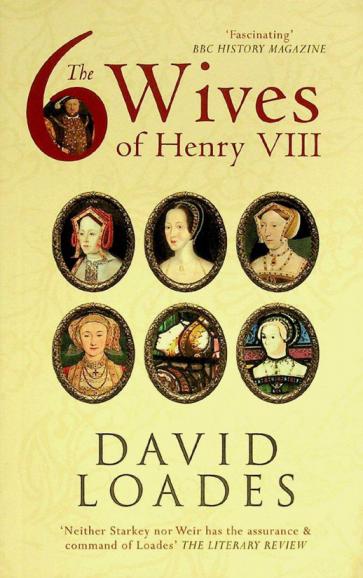
Six lives : the stories of Henry VIII's queens
What were the real life stories and legacies of the six women who married Henry VIII? Discover these extraordinary queens through the court culture that recorded and shaped their often tempestuous lives: their letters, heraldic devices, books, love tokens and, of course, their portraits.
BOOK

Judaizing Emilia Lanier: Fruits of the Poisonous Tree
Lanier's verifiable biography is based mainly on the wills of her parents; on the details recorded about her in the diaries (casebooks) of Simon Forman; on some few clues deduced from her book of poetry, Salve Deus Rex Judaeorum; on a limited number of events involving her husband, Alfonso Lanier, and the later disposition of a lucrative patent he acquired for the weighing of hay and straw; on records relating to Lanier's attempt to set up a school; on the record of her burial; and on some scattered official documentations regarding the Bassano family as of the reigns of King Henry VIII, Queen Elizabeth I and James I.3 From these we know that: Emilia Bassano was baptized on January 27, 1569 at St. Botolph's Church, Bishopsgate, daughter of a Venetian musician, Battista (Baptista) Bassano and his common-law English wife, Margaret Johnson.4 Baptista was hired in 1539 with his four brothers tojóin the court recorder consort of King Henry VIII.5 He died when Emilia was seven and sometime thereafter she moved into the household of Susan Bertie, Dowager Countess of Kent (1554-C.1596), daughter of the redoubtable Katherine Brandon, Duchess of Suffolk, by her second marriage to Richard Bertie.6 The timing and circumstances of this are examined in more detail below, but she presumably left that household before the Countess's second marriage, in 1581, when Lanier was 12 (see p. 18). [...]we also learn that her marriage was not a happy one: 'her husband hath dealt hardly with her, hath spent and consumed her goods. The collection was dedicated to nine royal and noble ladies; it may be inferred from these dedications that Emilia was at some point affiliated with Margaret Clifford (née Russell), Countess of Cumberland and was now specifically seeking her patronage, and also that of her daughter, Anne Clifford, Countess of Dorset.9 The mother was dedicatee of the title poem of the collection, 'Salve Deus Rex Judaeorum', which is printed with various marginal prompts, steering her to key features, most notably in the climactic section, 'The Passion of Christ'.10 The last poem in Lanier's book is 'The Description of Cooke-ham', a country-house poem eulogizing a royal manor not far from Windsor, which she associates with the Clifford ladies.11 The other dedications - to the royal ladies, Queen Anna, Princess Elizabeth and Lady Arbella Stuart, and to other notable aristocratic ladies - seem rather more speculative.
Journal Article

Tudor queenship: Rethinking how power affect Catherine of Aragon and Elizabeth I with foucauldian theories from a feminist perspective
In the annals of English history, the Tudor Dynasty is one of the most captivating eras. Within this dynastic tapestry, few women figures have left as indelible mark as Catherine of Aragon, the first wife of King Henry VIII, and the Virgin Queen---Elizabeth I. One that steps into the sphere of marriage and reproduction, facing the conflict of showing political talent and being the beloved wife of King Henry VIII. The other, a consistent formal dominant of England, remained a virgin throughout her life. Although they had slightly different monarchical roles, they faced similar challenges to the power structure in medieval Tudor. Thus, it is valuable to examine their roles by reconsidering the relations between gender, power, and monarchy. Also, examining how they survive and resist while maximizing their autonomy of power could provide a novel insight into the collaboration of the study of gender history and sociology. This essay attempts historical sociology to scrutinize the role of their queenship in the centre of the patriarchal and monarchical domain of the House of Tudors. There is a notable surge in applying Michel Foucault’s approach to theories of power in gender study by feminists. One of the aims of this research is to fill the vacancy of application of Foucault’s theories into medieval history as well. It aims to investigate the category of gender and its symbolism concerning queenship in the historical period. Most importantly, to redefine, reclaim, and re-evaluate the meanings and values of women figures throughout the traditional historiographical pattern of queenship, which the male chronological historians have largely created at the time. It is found that the two queenships sprouse comprehensive sociological meanings of a parallel considerdation of gender, power and body in such particular political spectrum of monarchial field.
Journal Article
Katherine of Aragon and the Veil
According to several distinguished historians Katherine of Aragon could have averted the Henrician reformation by accepting Cardinal Campeggio's suggestion that she take vows of religion and enter a nunnery, thus facilitating her husband's remarriage. Here it is argued that, even if Katherine had agreed, the fulfilment of such a project would pose serious problems. Once he recognised the enormity of what the legate intended, Henry rapidly lost interest: his craving for an undisputed succession could hardly have been satisfied by adding a second potentially contentious papal bull to that which had allowed his first marriage.
Journal Article

King Henry VIII's other great matter
First marriage The divorce of King Henry VIII from his first wife, Catherine of Aragon, has, over the centuries, produced a positive paper storm of academic books and popular works, examination papers and essays. [...]he had a legitimate son, Edward, born of the tragic Queen Jane.
Journal Article