
Catalogue Search | MBRL


Are you sure you want to remove the book from the shelf?

{{itemTitle}}
32,160
result(s) for
"Heritage Studies"
Sort by:

Capacity building through heritage tourism : an international perspective
\"Capacity Building Through Heritage Tourism: An International Perspective provides a comprehensive account of the valuable tangible and intangible benefits of the development of heritage tourism. Tourism development is widely acknowledged as a crucial tool to foster the development of rural and urban areas. To this end, this book presents nine case studies from international authors that reflect how tourism development is helpful-economically, socially, and otherwise-for community capacity building. The case studies from the countries of Spain, Portugal, Australia, Dubai, Bangladesh, Nigeria, and India demonstrate the uses of various management strategies and methods for rural and urban areas and cover some of the major topics related to community-based tourism, community capacity building, and community participation in developing heritage tourism. Chapters consider the conservation of heritage resources and tourism promotion of destinations that provide opportunities to local communities to strengthen their economies and social standards. Issues and topics addressed include: Water conservation in urban landscape as natural, cultural, and historic tourism resources Spiritual and religious heritage tourism Cultural tourism and the support of public and private funds Economic development and its effect on cultural and natural resources Public-private-partnership to ensure sustainable development Talent management challenges Tribal tourism and the tribal festivals, which are the mirror of their culture and could be major tourist attractions The methodologies and proposed management strategies discussed by book's researchers and professors will be valuable for policymakers, administrators, tourism promoters, researchers, and academicians who are involved with the tourism industry\"-- Provided by publisher.
BOOK

World Heritage on the Ground
The UNESCO World Heritage Convention of 1972 set the contemporary standard for cultural and natural conservation. Today, a place on the World Heritage List is much sought after for tourism promotion, development funding, and national prestige. Presenting case studies from across the globe, particularly from Africa and Asia, anthropologists with situated expertise in specific World Heritage sites explore the consequences of the World Heritage framework and the global spread of the UNESCO heritage regime. This book shows how local and national circumstances interact with the global institutional framework in complex and unexpected ways. Often, the communities around World Heritage sites are constrained by these heritage regimes rather than empowered by them.
eBook


Making Monuments from Mass Graves in Contemporary Spain
This book narrates how, beginning in 1936, bodies buried in mass graves during the Spanish War and subsequent dictatorship were turned into monuments. The book describes how the production of monuments evolved and what forms this process and these monuments took; it examines how the monuments were incorporated into society and used to influence public opinion; and it argues that this process was not simply based on the formal logic of tradition but instead reflected a conscious plan with a specific and rational end goal. As such, this book puts forward the idea that the monument as a material object became an expression of the historical consciousness of its producers, relating how different actors communicated their memories into meaningful gestures while limited by the material reality of integrating the bodies into a novel artefact. Finally, it contends that the people creating these monuments did not just bury their dead according to a funerary tradition but also sought to influence society.
eBook

So, how long have you been native? : life as an Alaska native tour guide
\"So, How Long Have You Been Native? is Alexis C. Bunten's firsthand account of what it is like to work in the Alaska cultural tourism industry. An Alaska Native and anthropologist, she spent two seasons working for a tribally owned tourism business that markets the Tlingit culture in Sitka. Bunten's narrative takes readers through the summer tour season as she is hired and trained and eventually becomes a guide. A multibillion-dollar worldwide industry, cultural tourism provides one of the most ubiquitous face-to-face interactions between peoples of different cultures and is arguably one of the primary means by which knowledge about other cultures is disseminated. Bunten goes beyond debates about who owns Native culture and has the right to \"sell\" it to tourists. Through a series of anecdotes, she examines issues such as how and why Natives choose to sell their culture, the cutthroat politics of business in a small town, how the cruise industry maintains its bottom line, the impact of colonization on contemporary Native peoples, the ways that traditional cultural values play a role in everyday life for contemporary Alaska Natives, and how Indigenous peoples are engaging in global enterprises on their own terms. Bunten's bottom-up approach provides a fascinating and informative look at the cultural tourism industry in Alaska. \"-- Provided by publisher.
Book
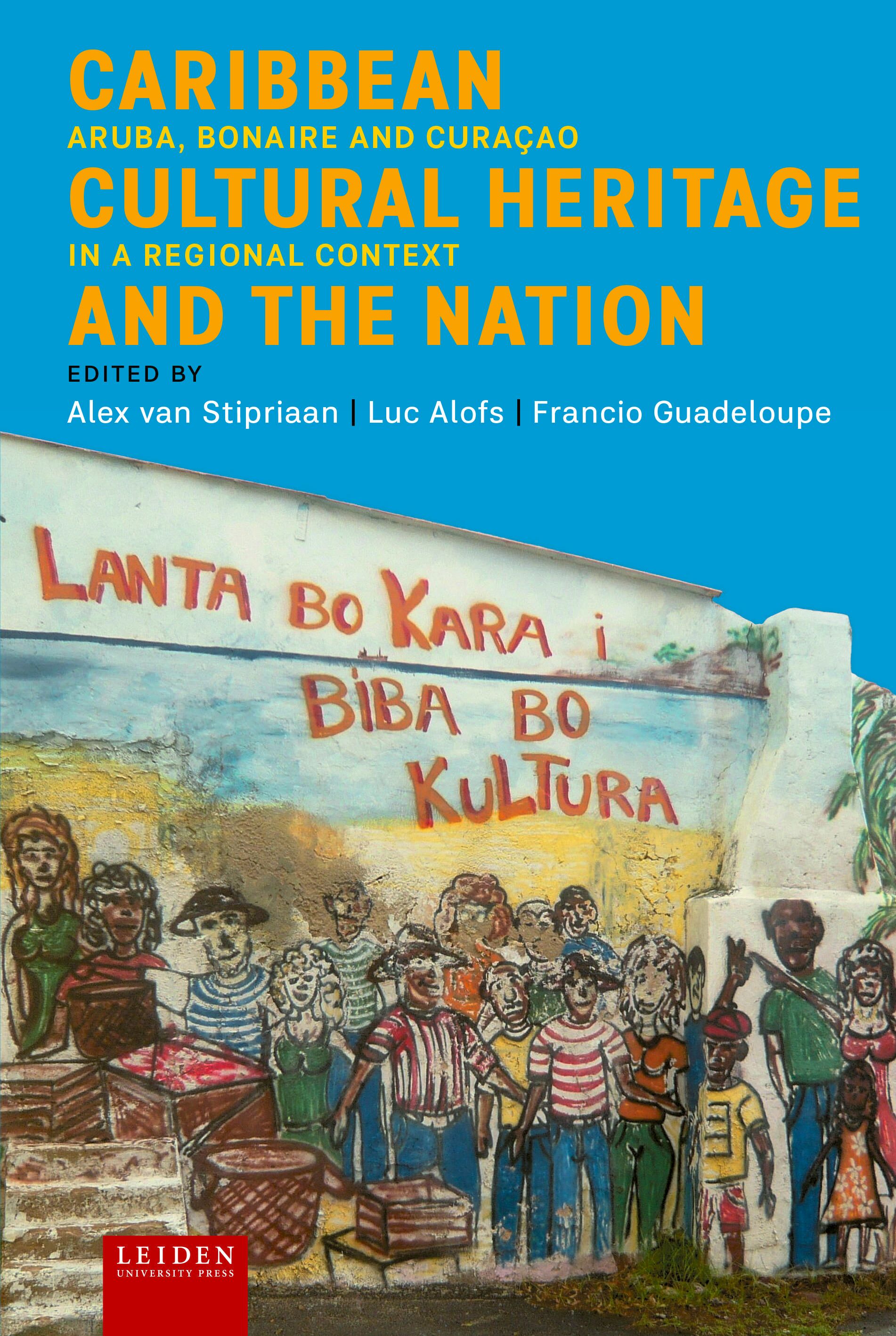
Caribbean Cultural Heritage and the Nation
Centuries of intense and involuntary migrations deeply impacted the development of the creolised cultures on the Dutch Caribbean islands of Aruba, Bonaire, and Curaçao. This volume describes various forms of cultural heritage produced on these islands over time and whether these heritages are part of their ‘national’ identifications. What forms of heritage express the idea of a shared “we” (nation-building), and what images are presented to the outside world (nation-branding)? What cultural heritage is shared between the islands, and what are some real or perceived differences? In this book, examples of cultural heritage ranging from sports to questions of reparations, museums to digital humanities, archaeology to music, language and literature to tourism, and visual art to diaspora policies are compared to developments elsewhere in the Caribbean.
eBook

Home, uprooted : oral histories of India's partition
\"The Indian Independence Act of 1947 granted India freedom from British rule, signaling the formal end of the British Raj in the subcontinent. This freedom, though, came at a price: partition, the division of the country into India and Pakistan, and the communal riots that followed. These riots resulted in the deaths of an estimated 1 million Hindus and Muslims and the displacement of about 20 million persons on both sides of the border. This watershed socioeconomic-geopolitical moment cast an enduring shadow on India's relationship with neighboring Pakistan. Presenting a perspective of the middle-class refugees who were forced from their homes, jobs, and lives with the withdrawal of British rule in India, Home, Uprooted delves into the lives of forty-five Partition refugees and their descendants to show how this epochal event continues to shape their lives. Exploring the oral histories of three generations of refugees from India's Partition--ten Hindu and Sikh families in Delhi, Home, Uprooted melds oral histories with a fresh perspective on current literature to unravel the emergent conceptual nexus of home, travel, and identity in the stories of the participants. Author Devika Chawla argues that the ways in which her participants imagine, recollect, memorialize, or \"abandon\" home in their everyday narratives give us unique insights into how refugee identities are constituted. These stories reveal how migrations are enacted and what home--in its sense, absence, and presence--can mean for displaced populations. Written in an accessible and experimental style that blends biography, autobiography, essay, and performative writing, Home, Uprooted folds in field narratives with Chawla's own family history, which was also shaped by the Partition event and her self-propelled migration to North America. In contemplating and living their stories of home, she attempts to show how her own ancestral legacies of Partition displacement bear relief. Home--how we experience it and what it says about the \"selves\" we come to occupy--is a crucial question of our contemporary moment. Home, Uprooted delivers a unique and poignant perspective on this timely question. This compilation of stories offers an iteration of how diasporic migrations might be enacted and what \"home\" means to displaced populations\"-- Provided by publisher.
Book

Exhibiting Atrocity
Through a global comparative approach, Amy Sodaro uses in-depth case studies of five exemplary memorial museums that commemorate a range of violent pasts and allow for a chronological and global examination of the form: the US Holocaust Memorial Museum in Washington, DC; the House of Terror in Budapest; the Kigali Genocide Memorial Centre in Rwanda; the Museum of Memory and Human Rights in Santiago, Chile; and the National September 11 Memorial Museum in New York. Together, these case studies illustrate the historical emergence and global spread of the memorial museum and show how this new cultural form of commemoration is intended to be used in contemporary societies around the world emerging from widely divergent forms of political violence.
eBook


Reading Memory Sites Through Signs
What can space tell us about our past? Which stories do memory sites narrate? Which memories do they transmit? And, more importantly, how can we read their meanings? Semiotics can provide us with a homogeneous, shareable and theoretically sound methodology to analyse space within a comparable and common frame of reference for scholars of memory studies and traumatic heritage, as well as for historians, architects and museum curators. The book describes in clear and understandable language the main semiotic concepts that can be used to analyse space, illustrating them with carefully chosen case studies of memory spaces - monuments, museums, post-war urban restoration, filmed and virtual space - in order to show the applicability and efficacy of a semiotic methodology.
eBook