
Catalogue Search | MBRL


Are you sure you want to remove the book from the shelf?

{{itemTitle}}
49
result(s) for
"Heroic virtue."
Sort by:

On the origin of superheroes : from the big bang to Action Comics no. 1
\"Most readers think that superheroes began with Superman in 1938, but that Kryptonian rocket didn't just drop out of the sky. By the time Superman's creators were born, the superhero's most defining elements--secret identities, aliases, disguises, signature symbols, traumatic origin stories, extraordinary powers, self-sacrificing altruism--were already well-rehearsed standards. Superheroes have a sprawling, action-packed history that predates Superman by decades and even centuries. On the Origin of Superheroes is a quirky, personal tour of the mythology, literature, philosophy, history, and grand swirl of ideas that have permeated western culture in the centuries that led up to the first appearance of superheroes as we know them today: Superman's appearance in Action Comics, no. 1 in 1938\"-- Provided by publisher.
Book


The Question of Heroism and Heroic Virtue in the Philosophy of Education of Josef Pieper
The question of heroism and heroic virtue belongs among the most discussed topics in history. It emerges as a recurring theme, mainly in the context of an imminent military danger provoking horror and fear which an individual must resist. This is precisely why heroism was a subject of Nazi propaganda in the past, when it was associated with an irrational willingness to sacrifice one’s own life for any value. In the context of the current war turmoil and tenebrous scenarios regarding the future of the humanity, this article poses the following question: what exactly is heroic virtue? In particular, it focuses on the image of heroism presented by Josef Pieper, who followed the line of thinking of Aristotle and Thomas Aquinas. He wanted to demonstrate how the courage to face injustice, in spite of imminent danger, develops into heroism when the power of hope is mobilised within individuals. This refers not only to the natural hope associated with our common expectations, but also a mystical hope that helps a hero maintain justice even when face-to-face with the predominance of evil until the end. The article concludes by proposing several motives that might be considered in the process of education to heroic virtue.
Journal Article

Petticoat Power? Mary Astell's Appropriation of Heroic Virtue for Women
Several recent studies devote themselves to Mary Astell's feminist theory of virtue—her ‘serious proposal to the ladies’ to help women obtain wisdom, equality, and happiness, despite the prejudices of seventeenth-century custom. But there has been little scholarship on Astell's conception of heroic virtues , those exceptional character traits that raise their bearers above the ordinary course of nature. Astell's appropriation of heroic virtue poses a number of philosophical difficulties for her feminist ethics—heroic virtues are characteristically masculine, exceptional, and individualistic, ill-suited to a community-oriented feminism aimed at ordinary women. In this paper, we seek to investigate—and then dispel—these key difficulties. Our intention is to generate a new understanding of Astell's theory of virtue as a unique and sophisticated theory that equalizes and naturalizes heroic virtue for women.
Journal Article
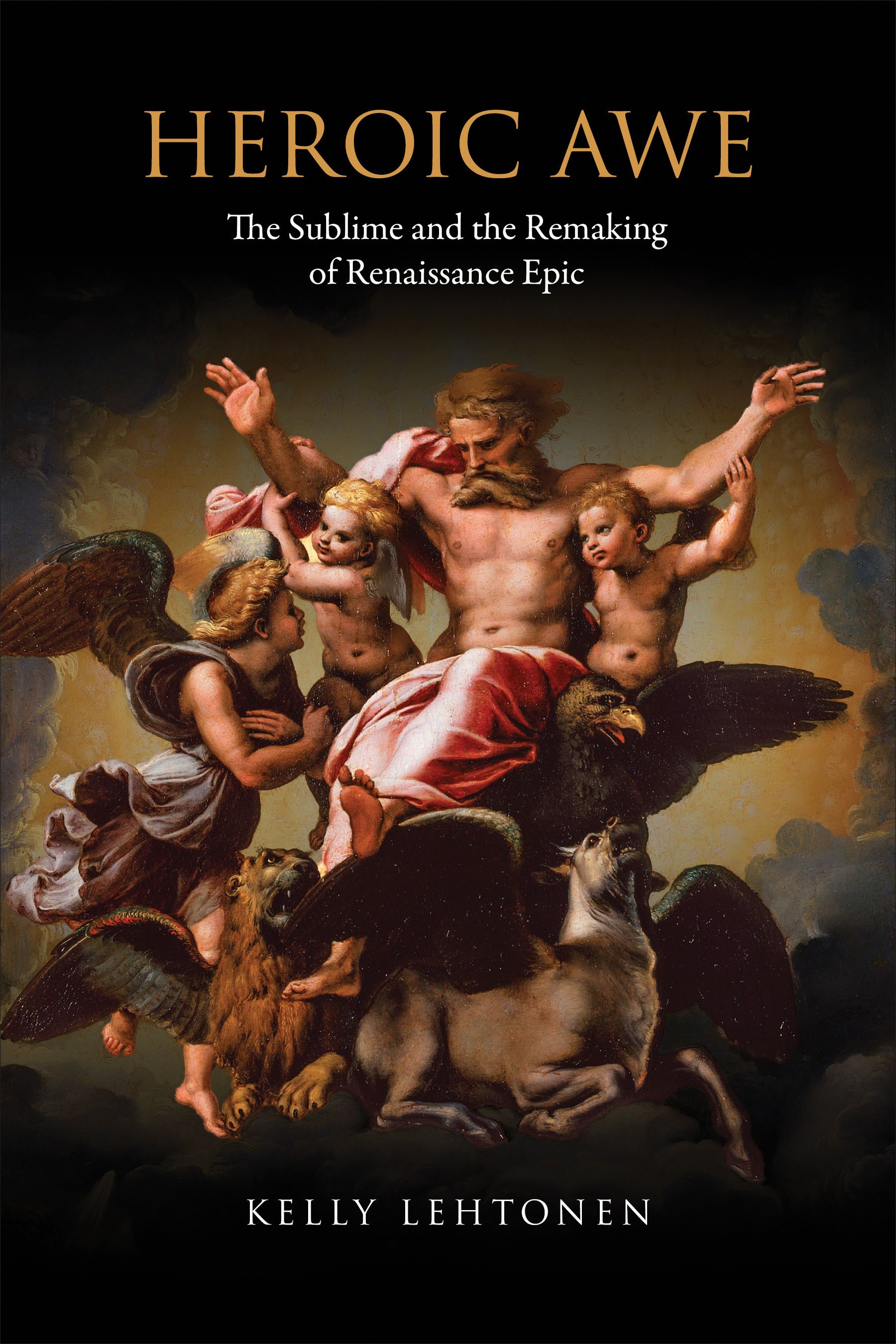
Heroic Awe
During the Renaissance, the most renowned model of epic poetry was Virgil's Aeneid, a poem promoting an influential concept of heroism based on the commitment to one's nation and gods. However, Longinus' theory of the sublime - newly recovered during the Renaissance - contradicted this absolute devotion to nation as a marker of religious piety. Heroic Awe explores how Renaissance epic poetry used the sublime to challenge the assumption that epic heroism was primarily about civic duty and glorification of state.The book demonstrates how the significant investment of Renaissance epic poetry in Longinus' theory of the sublime reshaped the genre of epic. To do so, Kelly Lehtonen examines the intersection between the Longinian sublime and early modern Protestant and Catholic discourses in Renaissance poems such as the Gerusalemme Liberata, Les Semaines, The Faerie Queene, and Paradise Lost. In illuminating the role of Longinus along with that of religious discourses, Heroic Awe offers a new perspective on epic heroism in Renaissance epic poetry, redefining heroism as the capacity to be overwhelmed emotionally, psychologically, and spiritually by encounters with divine glory. In considering the links between religion, the sublime, and epic, the book aims to shed new light on several core topics in early modern studies, including epic heroism, Renaissance philosophy, theories of emotion, and the psychology of religion.
eBook