
Catalogue Search | MBRL


Are you sure you want to remove the book from the shelf?

{{itemTitle}}
832
result(s) for
"Hess, Rudolf"
Sort by:
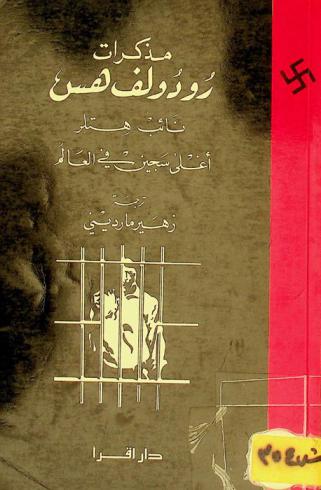

The demon of geopolitics
Karl Haushofer, a Bavarian general and professor, is widely recognized as the “father of geopolitics.” In 1945 the United States sought to put him on trial at Nuremberg as a major war criminal for being “Hitler’s intellectual godfather” and the true author of Mein Kampf. In this definitive biography, noted historian Holger H. Herwig assesses the fiction and reality behind these claims. Making comprehensive use of Haushofer’s previously unavailable private papers, Herwig analyzes Haushofer’s geopolitical concepts, his relations with his student Rudolf Hess, and his mentorship of Hitler and Hess at Landsberg Prison in 1924. Herwig offers unique insights into Haushofer’s crucial behind-the-scenes influence in providing the Nazis with his theories of Autarky and Lebensraum, the rationale for Germany’s control of Europe and the world. This riveting book ends with Haushofer’s final verdict on himself: “I want to be forgotten and forgotten.” But the author concludes with the admonition that the “demon” of Geopolitik demands much closer scrutiny in this new age of geopolitics.
eBook
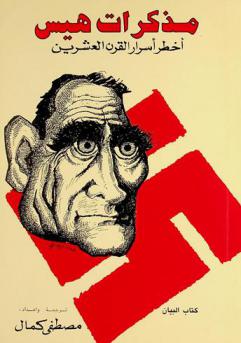
مذكرات هيس : أخطر أسرار القرن العشرين
يتناول كتاب (مذكرات هيس : أخطر أسرار القرن العشرين) والذي قام بترجمته (مصطفى كمال) ويقع في حوالي (167) صفحة من القطع المتوسط موضوع (يوميات هيس رودولف) مستعرضا المحتويات التالية : تمهيد، الفصل الأول : هيس يتكلم، الفصل الثاني : هتلر على سطح صفيح ساخن، الفصل الثالث : أول وآخر قفزة بالمظلة، الفصل الرابع : مواجهة مع البرود الإنجليزي، الفصل الخامس : فرصة لبريطانيا جاءتها من السماء، الفصل السادس : هتلر ينسف مهمتي وتشرشل يسدل الستار، وغيرها من موضوعات الكتاب.
Book

The Truth about Rudolf Hess
Rudolf Hess' flight to Britain in May 1941 stands out as one of the most intriguing and bizarre episodes of the Second World War.In The Truth About Rudolf Hess, Lord James Douglas-Hamilton explores many of the myths which still surround the affair.
eBook

Propaganda and the Flight of Rudolf Hess, 1941–45
The Hess affair raises central questions about the dilemmas, character, and reception of propaganda during the Second World War. Most accounts of the affair focus on why Rudolf Hess flew to Britain, speculating in particular on the involvement of the Security Services. While brief observations on the propaganda aspects of Hess's arrival in Britain have been made by participants, the relatives of participants, and historians, these fail to give adequate consideration to the specific nature of the propaganda apparatus, in particular how the two propaganda centers tried to second-guess each other, and to the reception and broader effects of propaganda directed at European populations. Here, Fox looks at the propaganda issues of the affair.
Journal Article

The Place of Antisemitism in the Goals of Nazism
This article examines the antisemitism at the heart of Adolf Hitler's thinking and political career. Hitler said he was \"the Robert Koch of politics\" because he \"discovered\" that the Jew was the source of all evil affecting humanity and used similar methods against the Jewish problem and all his other foes. The idea that the Jew is a \"ferment of dissolution\" gave great coherence to his projects and actions: his policies were geared toward reversing the process of dissolution. Hitler's main goal, apart from the eradication of the Jews, was a re-distribution of roles between Germany and Great Britain for the \"Aryan\" domination over \"inferior peoples.\" He considered any obstacle in his way the direct or indirect work of Jews. Secrecy and surprise played a huge role in \"his struggle\" to implement his plans by imitating the tricks he ascribed to the Jews.
Journal Article
The Nuremberg War Trials
On October 20th, 1945, twenty-two Nazis were indicted of War Crimes, the beginning of the Nuremberg War Trials. These trials brought before the court, and the world, harrowing documentary evidence of mass murder and atrocities throughout German occupied Europe. On October 15th, 1945, all but 3 defendants were found guilty and sentenced to death by hanging.
Streaming Video

The Art of 'Reading-To' and the Post-Holocaust Suicide in Schlink's The Reader
In Bernhard Schlink's The Reader, former Nazi perpetrator Hanna Schmitz commits suicide, and scholars have not yet answered the question why. When Michael visits Hanna's cell after her death, he notices books on her shelf by Primo Levi, Elie Wiesel, Tadeusz Borowski, Jean Améry, Rudolf Höss, and Hannah Arendt. By citing works from these authors, I argue that Hanna kills herself because she discovers that Michael has become what she once was. I also demonstrate that through her suicide, Hanna fulfills a major demand found in the works of Améry, and by fulfilling that demand, Améry and Hanna are united.
Journal Article

