
Catalogue Search | MBRL


Are you sure you want to remove the book from the shelf?

{{itemTitle}}
17
result(s) for
"Himerius"
Sort by:
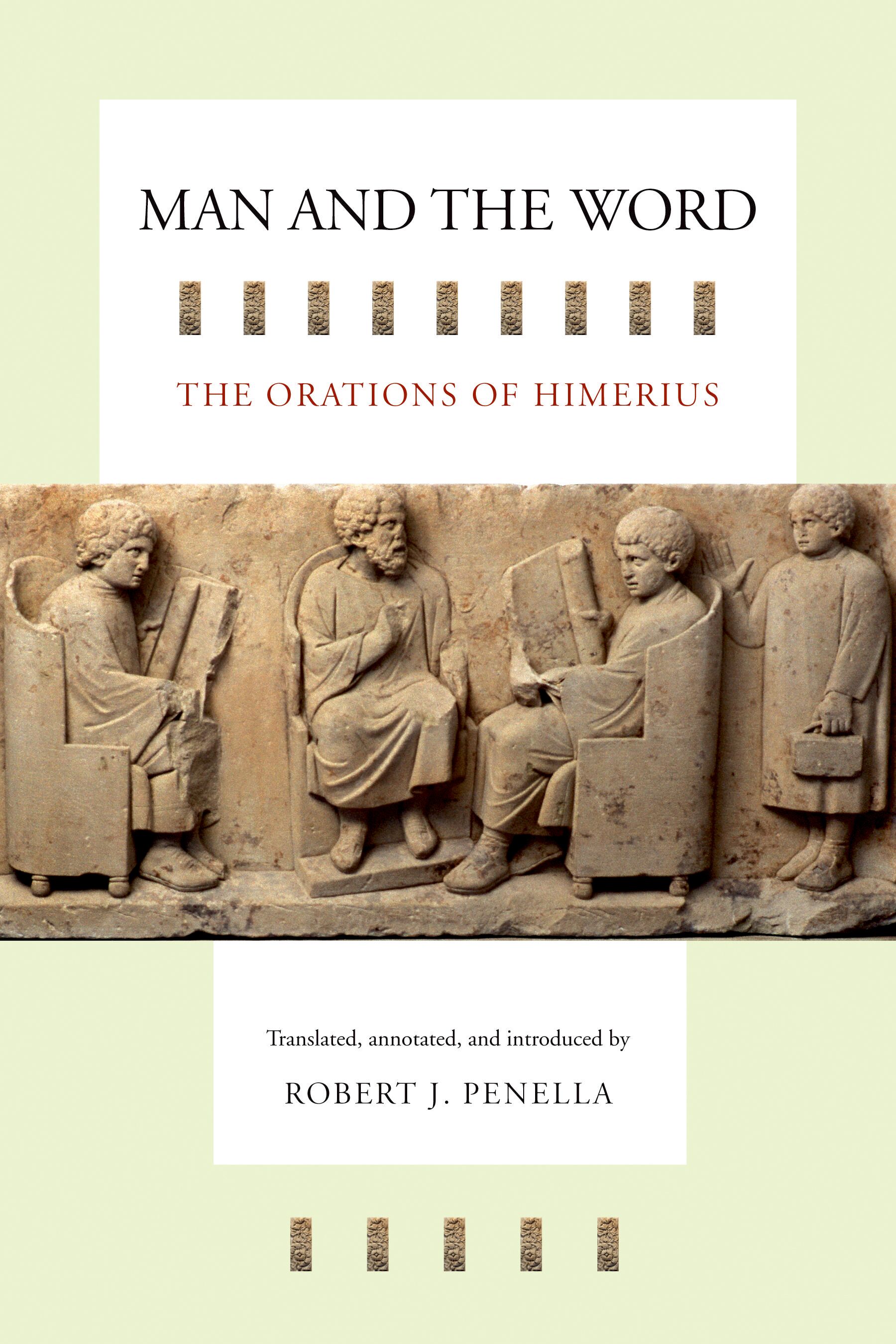
Man and the word
This fully annotated volume offers the first English translation of the orations of Himerius of Athens, a prominent teacher of rhetoric in the fourth century A.D. Man and the Word contains 79 surviving orations and fragments of orations in the grand tradition of imperial Greek rhetoric. The speeches, a rich source on the intellectual life of late antiquity, capture the flavor of student life in Athens, illuminate relations in the educated community, and illustrate the ongoing civic role of the sophist. This volume includes speeches given by Himerius in various cities as he traveled east to join the emperor Julian, customary declamations on imaginary topics, and a noteworthy monody on the death of his son. Extensive introductory notes and annotations place these translations in their literary and historical contexts.
eBook

LYRIC IN THE SECOND DEGREE: ARCHAIC AND EARLY CLASSICAL POETRY IN HIMERIUS OF ATHENS
This article reconsiders the methodological issues posed by the reception of archaic and classical poetry in imperial rhetorical texts. It argues that references to ancient poems and poets in the works of imperial sophists are always already the product of appropriation and rewriting, and that the study of sophists’ engagement with poetry should go beyond Quellenforschung to explore how and why poetic models were transformed in light of their new rhetorical and imperial contexts. To illustrate this approach and its contribution to our understanding of both ancient-reception phenomena and imperial rhetorical culture, the article focusses on Himerius of Athens, a fourth-century c.e. sophist and teacher of rhetoric whose fondness for lyric poetry has caused his Orations to be used as a quarry for lyric fragments and testimonia. Himerius’ treatment of carefully chosen lyric models is here discussed with attention to his self-presentation and rhetorical agenda to show how the sophist appropriated the voices of diverse lyric icons to promote his school and negotiate his position in relation to the imperial administration. This analysis restores Himerius’ intellectual significance within late imperial culture and society, but it also demonstrates how a more in-depth study of the reception of ancient poetry in imperial sophistic literature has the potential to illuminate the strategies of cultural politics used by imperial authors to (re)construct Greek tradition.
Journal Article

The school of libanius in late antique antioch
This book is a study of the fourth-century sophist Libanius, a major intellectual figure who ran one of the most prestigious schools of rhetoric in the later Roman Empire. He was a tenacious adherent of pagan religion and a friend of the emperor Julian, but also taught leaders of the early Christian church like St. John Chrysostom and St. Basil the Great. Raffaella Cribiore examines Libanius's training and personality, showing him to be a vibrant educator, though somewhat gloomy and anxious by nature. She traces how he cultivated a wide network of friends and former pupils and courted powerful officials to recruit top students. Cribiore describes his school in Antioch--how students applied, how they were evaluated and trained, and how Libanius reported progress to their families. She details the professional opportunities that a thorough training in rhetoric opened up for young men of the day. Also included here are translations of 200 of Libanius's most important letters on education, almost none of which have appeared in English before.
Cribiore casts into striking relief the importance of rhetoric in late antiquity and its influence not only on pagan intellectuals but also on prominent Christian figures. She gives a balanced view of Libanius and his circle against the far-flung panorama of the Greek East.
eBook

Examples of comparationes in the Metabaseis collection of MS. Firenze, Biblioteca Medicea Laurenziana, plut. 58.24
The ms. Firenze, Biblioteca Medicea Laurenziana, plut. 58.24 contains a collection of texts extracted from rhetorical works for some of which it is the only witness. Each passage displays a rhetorical figure or a metabasis, but their typology and arrangement within the collection remain unclear. This paper aims at illustrating the ways in which the compiler selected specific comparative formulas by analyzing some marginal notes and the source texts of the related excerpted passages.
Journal Article

Rhetorician Himerius and His School in Athens at 2nd Half of the 4th Century A.D
The complex cultural processes related to the conservation of the ancient heritage had taken place in the period of Late Antiquity. At the same period, the high school of a new had been shaped – the school with the classical religious content that would satisfy the needs of the Christian society. The leaders of the third sophistry, in particular, Himerius, a teacher of Basil the Great and Gregory the Theologian and head of the rhetorical school in Athens of 2nd half of the 4th c. A.D., played an important role in this process. In his 34 preserved speeches classical themes dominate, and the poetic spirit is observed. Information about other speeches was obtained through excerpts and references of Photius (9th c. A.D.). In addition to the rhetoric, some Himerius’s speech fragments are also of special interest. Theses fragments refer to the rhetorical school and teaching, as well as appropriate vocabulary. The heritage of Himerius is very poorly studied in Russian historical science and is in need of updating. Himerius was on a par with other prominent rhetoricians of that period – Libanius from Antioch and Themistius from Constantinople, but in comparison to them Himerius was more committed to the classical tradition. The authors of the present article are grateful to Dr. R.J. Penella for discussing some ideas of this article.
Journal Article

Epideictic Oratory
Epideictic rhetoric addresses contemporary occasions, usually in a praising mode. This chapter gives some background for the literary tradition and social context of late antique epideictic rhetoric and examines several extant examples of subgenres, including the epithalamium (wedding speech), monody (lament), epitaphios (funeral oration), festal oration (“panegyric” proper), and paradoxical encomium. Key practitioners include Gregory of Nazianzus, Libanius, Himerius, and Synesius. It is important to keep in mind the written nature of our epideictic texts, as opposed to the primarily oral role that epideictic played in late antique society. Epideictic oratory seeks to imbue contemporary occasions with deeper and lasting significance, with reference to examples from the cultural repertoire, and for this reason it often tends to a high degree of intertextuality. Because it generally involves evaluation, epideictic is rich in normative concepts and discourse and, thus, reveals much about the values of the society it addresses.
Book Chapter

Introduction
This introductory chapter provides a description of the origins, early life, and works of Himerius. He became a sophist, a master orator, and teacher of rhetoric in fourth century Athens, where he had studied rhetoric in his youth. At some point he received Athenian citizenship, and at a later date he was made an Areopagite. He married into a respected Athenian family, fathering a daughter; Athenian citizenship was a source of pride to him. The Himerian corpus that has survived is hardly in ideal condition. It does contain some orations preserved in full. In other cases, where a continuous chunk of text survives, it is not always easy to decide whether a whole oration (a short dialexis) is present or not. For many of the orations, only a series of discrete excerpts is preserved. Finally, there is some text, preserved in only one damaged manuscript that is the lacunose. Himerius comes to us partly in a direct tradition of his own, partly through excerptors and a lexicographer who culled material from his orations. Himerius's stories from Greek myth or history allow for numerous flattering comparisons of Himerius himself and his addressees to figures from the past. Almost all of Himerius's orations have a poetic tone to them.
Book Chapter
Miscellaneous Remains
Presented here are what Colonna calls the Himerian fragments. One new fragment has surfaced since the publication of Colonna’s edition; it is added to the others here as fragment 17. I have prefaced the fragments with the few remains ofOration37, which could find no home in any of the previous chapters.
Most of the very short fragments are from Lopadiotes’Lexicon(or theLexicon Vindobonense), with the exception of fragment 2, which comes from the Homeric commentator Eustathius, the longer fragment 1, which is preserved in Photius, and fragment 3, from the Excerpta Neapolitana. Photius titles fragment 1
Book Chapter
Himerius’s Son, Rufinus
Two orations concern Himerius’s son, Rufinus. The first,Oration7, Himerius’s plea before the Areopagus for free status for his son, survives only in a few excerpts. The second,Oration8, Himerius’s lament at the premature death of Rufinus, survives in full.
In his brief sketch of Himerius, Eunapius mentions only the Athenian sophist’s daughter, not his prematurely departed son (Vitae phil. et soph.14.2 [494] Giangrande). She is presumably the “full sister” of Rufinus who is mentioned inOration8.12; Himerius there praises Rufinus’s love for and protection of her. The siblings’ mother belonged to a distinguished Athenian family,
Book Chapter
Coming and Going in Himerius’s School
Arrivals at and departures from Himerius’s school in Athens were often occasions for oratory. There are enough examples of Himerian oratory associated with such occasions to warrant examining them here as a group.
Four of the pieces (11, 30, 63, and 64) concern Himerius’s own comings and goings. The meager remains ofOrationII are from a “syntactic” or farewell talk that he delivered to his pupils at Athens when he was about to depart for a visit to Corinth. We have a description of a syntactic oration in Menander Rhetor 2.15. One might imagine on the basis of Menander’s
Book Chapter