
Catalogue Search | MBRL


Are you sure you want to remove the book from the shelf?

{{itemTitle}}
3,330
result(s) for
"Hindu"
Sort by:
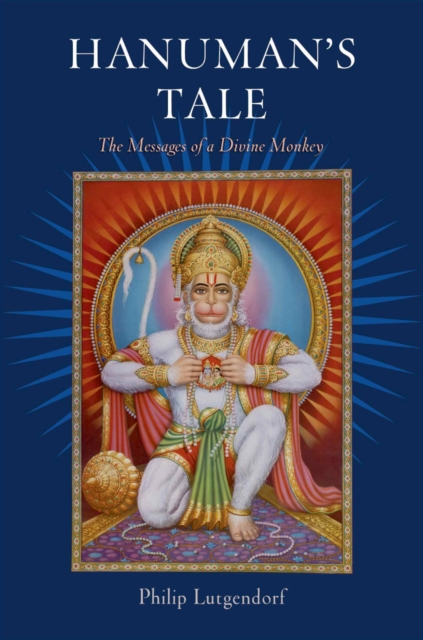
Hanuman's tale : the messages of a divine monkey
This book offers a comprehensive introduction to one of the most beloved and widely worshiped of Hindu deities: the “monkey-god” Hanuman. It details the historical expansion of Hanuman's religious status beyond his role as helper to Rama and Sita, the divine hero and heroine of the ancient Ramayana storytelling tradition. Additionally, it surveys contemporary popular literature and folklore through which Hanuman's mythological biography is celebrated, and describes a range of religious sites and practices that highlight different aspects of his persona. Emphasizing Hanuman's role as a “liminal” deity who combines animal, human, and divine qualities, and as a “middle-class” god within the Hindu pantheon, the book argues that such mediatory status has made Hanuman especially appealing to upwardly-mobile social groups as well as to Hindus of many sectarian persuasions.
eBook

Myths and symbols in Indian art and civilization
\"A landmark work that demystifies the rich tradition of Indian art, Myth and Symbols in Indian Art and Civilization analyzes key motifs found in legend, myth, and folklore taken directly from the Sanskrit. It provides a comprehensive introduction to visual thinking and picture reading in Indian art and thought. Ultimately, the book shows that profound Hindu and Buddhist intuitions on the riddles of life and death are universally recognizable.\" --Page 4 of cover.
Book

The art of loving Krishna : ornamentation and devotion
Since ancient times, Hindus have expressed their love and devotion to
their deities through beautiful ornamentation -- dressing and decorating the deities
with elaborate clothing, jewelry, and flowers. In this pioneering study of temples
in Vrindaban and Jaipur, India, Cynthia Packert takes readers across temple
thresholds and into the god Krishna's sacred domain. She describes what devotees see
when they behold gorgeously attired representations of the god and why these images
look the way they do. She discusses new media as well as global forms of devotion
popular in India and abroad. The Art of Loving Krishna opens a universe of meaning
in which art, religious action, and devotion are dynamically intertwined.
eBook

Shri Krishna Leela
A series of stories of Lord Krishna's deeds based on the tenth canto of Shrimad-Bhaagwat and dealing with the main events and deeds of this performer of great miracles and the true savior of mankind.
BOOK

Himalayan Glaciers
Scientific evidence shows that most glaciers in South Asia's Hindu Kush Himalayan region are retreating, but the consequences for the region's water supply are unclear, this report finds. The Hindu Kush Himalayan region is the location of several of Asia's great river systems, which provide water for drinking, irrigation, and other uses for about 1.5 billion people. Recent studies show that at lower elevations, glacial retreat is unlikely to cause significant changes in water availability over the next several decades, but other factors, including groundwater depletion and increasing human water use, could have a greater impact. Higher elevation areas could experience altered water flow in some river basins if current rates of glacial retreat continue, but shifts in the location, intensity, and variability of rain and snow due to climate change will likely have a greater impact on regional water supplies.
Himalayan Glaciers: Climate Change, Water Resources, and Water Security makes recommendations and sets guidelines for the future of climate change and water security in the Himalayan Region. This report emphasizes that social changes, such as changing patterns of water use and water management decisions, are likely to have at least as much of an impact on water demand as environmental factors do on water supply. Water scarcity will likely affect the rural and urban poor most severely, as these groups have the least capacity to move to new locations as needed. It is predicted that the region will become increasingly urbanized as cities expand to absorb migrants in search of economic opportunities. As living standards and populations rise, water use will likely increase-for example, as more people have diets rich in meat, more water will be needed for agricultural use. The effects of future climate change could further exacerbate water stress.
Himalayan Glaciers: Climate Change, Water Resources, and Water Security explains that changes in the availability of water resources could play an increasing role in political tensions, especially if existing water management institutions do not better account for the social, economic, and ecological complexities of the region. To effectively respond to the effects of climate change, water management systems will need to take into account the social, economic, and ecological complexities of the region. This means it will be important to expand research and monitoring programs to gather more detailed, consistent, and accurate data on demographics, water supply, demand, and scarcity.
eBook
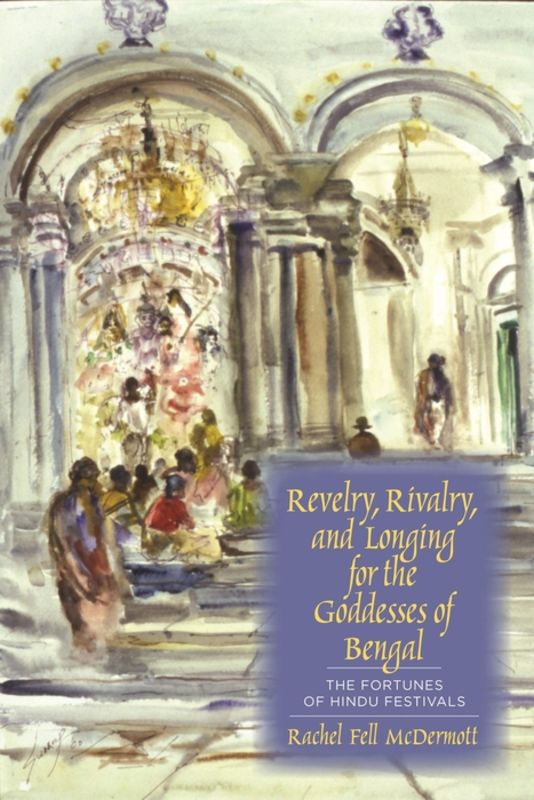
Revelry, rivalry, and longing for the goddesses of Bengal
Annually during the months of autumn, Bengal hosts three interlinked festivals to honor its most important goddesses: Durga, Kali, and Jagaddhatri. While each of these deities possesses a distinct iconography, myth, and character, they are all martial. Durga, Kali, and Jagaddhatri often demand blood sacrifice as part of their worship and offer material and spiritual benefits to their votaries. Richly represented in straw, clay, paint, and decoration, they are similarly displayed in elaborately festooned temples, thronged by thousands of admirers. The first book to recount the history of these festivals and their revelry, rivalry, and nostalgic power, this volume marks an unprecedented achievement in the mapping of a major public event. Rachel Fell McDermott describes the festivals' origins and growth under British rule. She identifies their iconographic conventions and carnivalesque qualities and their relationship to the fierce, Tantric sides of ritual practice. McDermott confronts controversies over the tradition of blood sacrifice and the status-seekers who compete for symbolic capital. Expanding her narrative, she takes readers beyond Bengal's borders to trace the transformation of the goddesses and their festivals across the world. McDermott's work underscores the role of holidays in cultural memory, specifically the Bengali evocation of an ideal, culturally rich past. Under the thrall of the goddess, the social, political, economic, and religious identity of Bengalis takes shape.
eBook


The Biography of a God
Mahasu is the joint name of four gods whose influence is widespread throughout the Indian states of Himachal Pradesh and Uttarakhand. Like other deities in the Western Himalayas, they are regarded as royal gods who rule over territories and people. This book traces changes in faith and practices surrounding the Mahasu brothers, and shows how the locals understand these changes by emphasizing the dominant role of humans in the decisions of the gods. The locals are also constantly testing the authenticity of the human mediumship. Thus, the book presents the claim that the gap between local conceptions of divinity and the perceptions of anthropologists regarding gods may be narrower than we think.
The Biography of a God: Mahasu in the Himalayas is based on ethnographic research, resulting in an important contribution to the study of Indian village deities, Himalayan Hinduism, lived Hinduism, and the anthropology of religion.
eBook