
Catalogue Search | MBRL


Are you sure you want to remove the book from the shelf?

{{itemTitle}}
16
result(s) for
"Hindu philosophers"
Sort by:

The immortal philosopher of India : Swami Vivekananda
Short biography of Swami Vivekananda, 1863-1902, Indian philosopher and religious leader.

Adhyāropāpavāda: Revisiting the Interpretations of Svāmi Saccidānandendra Sarasvatī and The Post-Śaṅkarādvaitins
A fundamental difference in Svāmi Saccidānandendra Sarasvatī’s (SSS) and the Post-Śaṅkarādvaitins’ (PSA) exegeses of Advaita Vedānta lies in the pedagogic method of adhyāropa-apavāda (deliberate attribution of characteristics to the attribute-less brahman and its corresponding/complementary contradiction). For SSS, adhyāropāpavāda is the sole method to negate avidyā (ignorance); other Upaniṣadic methods— lakṣaṇā and netivāda —are subsumed under it. For the PSA, on the other hand, adhyāropāpavāda plays a subsidiary, less consequential role in engendering gnosis; the primary role is that of mahāvākyas (the “great” Vedāntic statements). SSS denounces the PSA—with the sole exception of Sureśvarācārya —for their (purportedly incorrect) interpretation of the method; he contends that it has led to the lamentable reification of concepts in Advaita Vedānta and ultimately undermined its basic tenets. In this article, I articulate SSS’ position.
Journal Article


Is There a Root of Being? Indic Philosophies and the Parmenidean Problem
This article is a survey of various philosophical schools, focusing primarily on South Asian ones, and how they address the problem of being and nonbeing. The early Greek poet Parmenides stated that nonbeing is something that we cannot actually conceptualize and, thus, cannot speak of meaningfully. Plato and Aristotle are two examples of Western philosophers who came up with different ways of resolving the issue. As we turn to Indic schools of philosophy, we encounter a colorful array of different approaches. The Upanishads gave rise to a variety of points of view, though the Advaita Vedānta school of Adi Śaṅkara has dominated the discussion over the last few centuries. Other schools represented in this survey are Sāṃkhya, Buddhism (Therāvada, Sarvāstivāda, Sautantrika, Yogācāra, and Mādhyamaka), Vaiśeṣika, and Nyāya. Unsurprisingly, each comes up with different constructs that are frequently mutually exclusive, despite efforts by some writers to look past some obvious differences that are not reconcilable. There are also some conceptual similarities with Western philosophy, but the different cultural backdrops limit the ability to easily transfer ideas from one context to the other. My method is to quote short passages from the central writings (usually the “official” sutras) and show how they fit into their particular systems.
Journal Article

Mediating Disjunctures of Time: Ancestral Chronotopes in Ritual and Media Practices
In this article, I approach regimes of time as a medial question, examining the interplay of different temporalities in ritual and media practices among Hindus in Mauritius and Twelver Shi'ite Muslims in Mumbai. These interactions consist of fluctuations between modernist linear modes of time and suspensions of the distinctions of past, present, and future as the performative outcome of certain ritual practices. Drawing on a broad notion of media and mediality, I trace the links between shifting states in the functioning of media and the oscillation between the different notions of temporality examined. Analyzing their interconnectedness in ancestral politics and religious mobilizations, I show how media practices provide ways to navigate the heterochronies that characterize such politics and activism.
Journal Article

Dictionary of Untranslatables
This is an encyclopedic dictionary of close to 400 important philosophical, literary, and political terms and concepts that defy easy--or any--translation from one language and culture to another. Drawn from more than a dozen languages, terms such asDasein(German),pravda(Russian),saudade(Portuguese), andstato(Italian) are thoroughly examined in all their cross-linguistic and cross-cultural complexities. Spanning the classical, medieval, early modern, modern, and contemporary periods, these are terms that influence thinking across the humanities. The entries, written by more than 150 distinguished scholars, describe the origins and meanings of each term, the history and context of its usage, its translations into other languages, and its use in notable texts. The dictionary also includes essays on the special characteristics of particular languages--English, French, German, Greek, Italian, Portuguese, Russian, and Spanish.
Originally published in French, this one-of-a-kind reference work is now available in English for the first time, with new contributions from Judith Butler, Daniel Heller-Roazen, Ben Kafka, Kevin McLaughlin, Kenneth Reinhard, Stella Sandford, Gayatri Chakravorty Spivak, Jane Tylus, Anthony Vidler, Susan Wolfson, Robert J. C. Young, and many more.The result is an invaluable reference for students, scholars, and general readers interested in the multilingual lives of some of our most influential words and ideas.
Covers close to 400 important philosophical, literary, and political terms that defy easy translation between languages and culturesIncludes terms from more than a dozen languagesEntries written by more than 150 distinguished thinkersAvailable in English for the first time, with new contributions by Judith Butler, Daniel Heller-Roazen, Ben Kafka, Kevin McLaughlin, Kenneth Reinhard, Stella Sandford, Gayatri Chakravorty Spivak, Jane Tylus, Anthony Vidler, Susan Wolfson, Robert J. C. Young, and many moreContains extensive cross-references and bibliographiesAn invaluable resource for students and scholars across the humanities
eBook

Fear of Infinity: Friedrich Schlegel's Indictment of Indian Philosophy in Über die Sprache und die Weisheit der Indier
Friedrich Schlegel's 1808 work, \"Über die Sprache und die Weisheit der Indier,\" has been widely credited as a major contribution to the field of linguistics, but also criticized for its supposed racial bias. This article argues that the aspect of the work that has had the most long-term impact is its indictment of South Asian philosophy and religion, the negative repercussions of which were felt well into the twentieth-century. After initially being a zealous champion of the ancient wisdom of Indian thought, by 1808, Schlegel harshly criticized South Asian religions as misguided precursors to the perfected system of Christianity. Schlegel's indictment is founded on his inability to reconcile aspects of Hinduism and Buddhism that concern issues of metaphysics and eschatology, but that have no true analogues in the Greco-Latin or Christian traditions, for Schlegel suffers from a \"fear of infinity.\"
Journal Article
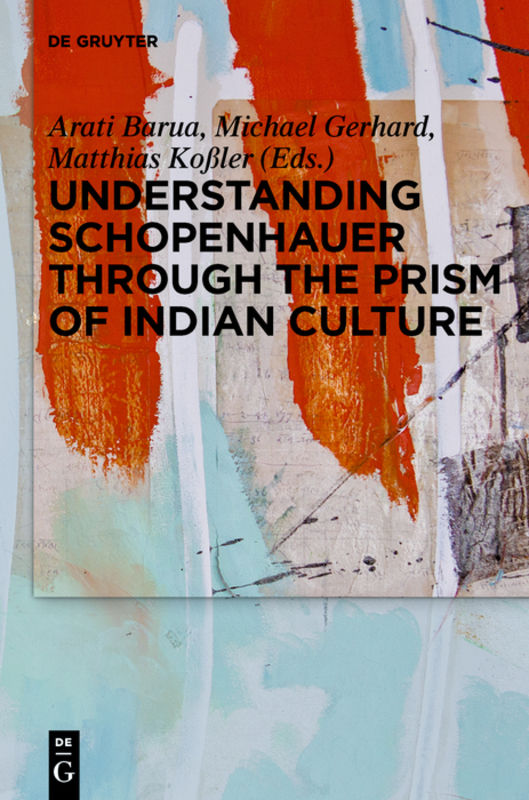
Understanding Schopenhauer through the Prism of Indian Culture
Arthur Schopenhauer was the first Western thinker who incorporated thoughts of the Upanishads in his own philosophy. His appreciation for Indian philosophy and culture is quite well known. Presently serious research work is going on in different disciplines in different academic institutions and universities in the West to examine the influence of Indian philosophy and culture in the philosophical thinking of Germany, particularly in relation to Arthur Schopenhauer and vice versa.
This book provides a common platform for interaction to the scholars from East and West to express their views on the link between Eastern and Western philosophy. It significantly contributes to a better understanding not only of the connection between Schopenhauer and Indian philosophical systems but also of the increasing interest in this relation.
The book includes papers of eminent scholars. The papers shed new light on the relationship between Schopenhauer's philosophy and the different aspects of Indian philosophy and culture, and thus offer a rich source of research material.
eBook