
Catalogue Search | MBRL


Are you sure you want to remove the book from the shelf?

{{itemTitle}}
23
result(s) for
"Hindu pilgrims and pilgrimages India."
Sort by:

Hindu Pilgrimage
In recent years, changes in religious studies in general and the study of Hinduism in particular have drawn more scholarly attention to other forms of the Hindu faith that are concretely embodied in temples, icons, artworks, rituals, and pilgrimage practices. This book analyses the phenomenon of pilgrimage as a religious practice and experience and examines Shrî Shailam, a renowned south Indian pilgrimage site of Shiva and Goddess Durga. In doing so, it investigates two dimensions: the worldview of a place that is of utmost sanctity for Hindu pilgrims and its historical evolution from medieval to modern times.
Reddy blends religion, anthropology, art history and politics into one interdisciplinary exploration of how Shrî Shailam became the epicentre for Shaivism. Through this approach, the book examines Shrî Shailam's influence on pan-Indian religious practices; the amalgamation of Brahmanical and regional traditions; and the intersection of the ideological and the civic worlds with respect to the management of pilgrimage centre in modern times.
This book is the first thorough study of Shrî Shailam and brings together phenomenological and historical study to provide a comprehensive understanding of both the religious dimension and the historical development of the social organization of the pilgrimage place. As such, it will be of interest to students of Hinduism, Pilgrimage and South Asian Studies.
eBook
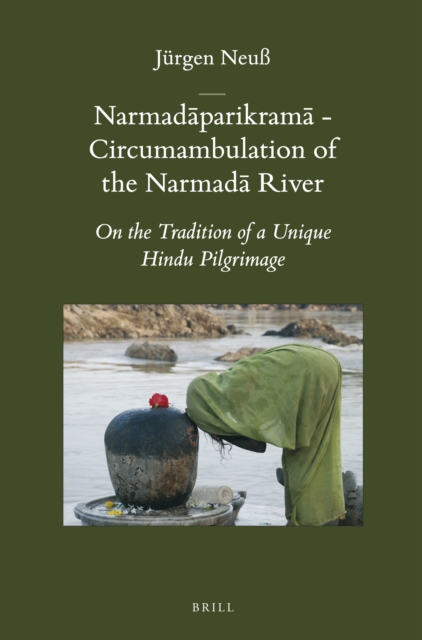
Narmadāparikramā – Circumambulation of the Narmadā River
In Narmadāparikramā. Circumambulation of the Narmadā River Jürgen Neuss offers a comprehensive study of the Narmadāparikramā, a singular Hindu pilgrimage, which comprises the complete circumambulation of the Central Indian river Narmadā.
eBook

Religious tourism and religious tolerance: insights from pilgrimage sites in India
Purpose
– This paper aims to explore the ways in which religious tourism in India fosters religious tolerance.
Design/methodology/approach
– The paper uses a conceptual apparatus derived from the basic structure of religious tourism comprising motivation, journey and destination, to understand various aspects of tolerance. Tolerance, with the implicit meaning of diversity and pluralism, is examined at two levels – intra-religion and inter-religion – using field investigations from three Hindu pilgrimage sites, namely, Vrindavan, Tuljapur, Shegaon and review of one Muslim site called Ajmer Sharif. These sites exhibit a range of combinations, sectarian traditions within Hindu and their interactions with others, including Muslims and foreigners.
Findings
– Each of the sites provides different sets of opportunities for the “others” to get exposed to religious and cultural aspects. It is found that tolerance within the Hindu sects and with non-Hindus from other religious faiths is a function of their engagement with cultural performances and participation in the religious tourism economy in a pilgrimage site.
Originality/value
– On a broader level, this paper argues that conceptualising tolerance within a social and cultural sphere helps in a better understanding of tolerance and identifying areas within religious tourism where it can be promoted. A conscious effort to promote tolerance through religious tourism will add value to religious tourism and help it thrive.
Journal Article
Hindu pilgrimage: shifting patterns of worldview of Srisailam
In recent years, changes in religious studies in general and the study of Hinduism in particular have drawn more scholarly attention to other forms of the Hindu faith that are concretely embodied in temples, icons, artworks, rituals, and pilgrimage practices. This book analyses the phenomenon of pilgrimage as a religious practice and experience and examines Shrî Shailam, a renowned south Indian pilgrimage site of Shiva and Goddess Durga. In doing so, it investigates two dimensions: the worldview of a place that is of utmost sanctity for Hindu pilgrims and its historical evolution from medieval to modern times. Reddy blends religion, anthropology, art history and politics into one interdisciplinary exploration of how Shrî Shailam became the epicentre for Shaivism. Through this approach, the book examines Shrî Shailam's influence on pan-Indian religious practices; the amalgamation of Brahmanical and regional traditions; and the intersection of the ideological and the civic worlds with respect to the management of pilgrimage centre in modern times. This book is the first thorough study of Shrî Shailam and brings together phenomenological and historical study to provide a comprehensive understanding of both the religious dimension and the historical development of the social organization of the pilgrimage place. As such, it will be of interest to students of Hinduism, Pilgrimage and South Asian Studies.
eBook

The powerful ephemeral
The violent partitioning of British India along religious lines and ongoing communalist aggression have compelled Indian citizens to contend with the notion that an exclusive, fixed religious identity is fundamental to selfhood. Even so, Muslim saint shrines known as dargahs attract a religiously diverse range of pilgrims. In this accessible and groundbreaking ethnography, Carla Bellamy traces the long-term healing processes of Muslim and Hindu devotees of a complex of dargahs in northwestern India. Drawing on pilgrims' narratives, ritual and everyday practices, archival documents, and popular publications in Hindi and Urdu, Bellamy considers questions about the nature of religion in general and Indian religion in particular. Grounded in stories from individual lives and experiences, The Powerful Ephemeral offers not only a humane, highly readable portrait of dargah culture, but also new insight into notions of selfhood and religious difference in contemporary India.
eBook
A Holy Bath for Hindus
\"Many people went to the Ganges River. They took a dip in the water. And they prayed for a clean start. This is part of a festival in the Hindu religion. The Kumbh Mela began on January 13 [2025]. It lasts six weeks.\" (News-O-Matic) Learn more about the Kumbh Mela.
Web Resource
India : pilgrims of the Ganges
India: Pilgrims of the Ganges' is a journey through the North of India along the basin of the sacred river for Hindus, the Ganges. From the valleys located on the side of the Himalayas, cradle of Buddhism, to the saint city of Benares, this documentary offers a fascinating journey through National Parks turned into sanctuaries for wildlife, and cities where Islam and Hinduism live together since centuries ago. We will witness the most crowded religious pilgrimage in the planet and get close to the mystic and enigmatic world of the Sadhus, the sacred men of India. Finally we will reach Benares, the sacred city, where Hindus purify their living souls and find eternal rest after death.
Streaming Video
The great gathering
This remarkable documentary provides a rare and fascinating study of the history, meaning, and diverse participants of the Maha Kumbha Mela, a spectacular Hindu sacred festival held every twelve years on the banks of the Ganges in India. The Kumbha Mela is the largest festive gathering of humanity on earth. It rotates between four different host cities. In 2001 it is estimated that 50 million people gathered for this unique event. By bathing in the Ganges during the Kumbha Mela it is believed that one will be absolved of all past-life Karma and freed from the vicious cycle of birth and death.The Kumbha Mela of 2001 was a very auspicious occasion and was held in Allahabad. Pilgrims came by plane, train, car, and foot from every corner of India as from around the world. Virtually every nationality and religion on earth was represented, and participants rightly felt that the spiritual energy of the world was focused on this momentous celebration. The film includes commentary by a diverse selection of participants and pilgrims, spectacular scenes of the bathing ceremonies, and many telling and intimate details of the spiritual activities that abounded. Among the highlights are scenes of the Naga Babas, a nakedly-clad sect of holy men, who left their caves in the Himalayas to bathe in the Ganges and perform their spiritual duties.\"The Great Gathering\" will stimulate thought and discussion in a wide range of courses in Asian and Indian studies, cultural anthropology, and comparative religion. It was produced by David Ehrlich and directed by Mary Sue Connolly for Black Witch Films.
Streaming Video
