
Catalogue Search | MBRL


Are you sure you want to remove the book from the shelf?

{{itemTitle}}
36,222
result(s) for
"Hinduism."
Sort by:

Transcendent in America
Yoga, karma, meditation, guru - these terms, once obscure, are now a part of the American lexicon. Combining Hinduism with Western concepts and values, a new hybrid form of religion has developed in the United States over the past century. In Transcendent in America, Lola Williamson traces the history of various Hindu-inspired movements in America, and argues that together they constitute a discrete category of religious practice, a distinct and identifiable form of new religion.Williamson provides an overview of the emergence of these movements through examining exchanges between Indian Hindus and American intellectuals such as Thomas Jefferson and Ralph Waldo Emerson, and illuminates how Protestant traditions of inner experience paved the way for Hindu-style movements' acceptance in the West.Williamson focuses on three movements - Self-Realization Fellowship, Transcendental Meditation, and Siddha Yoga - as representative of the larger of phenomenon of Hindu-inspired meditation movements. She provides a window into the beliefs and practices of followers of these movements by offering concrete examples from their words and experiences that shed light on their world view, lifestyle, and relationship with their gurus. Drawing on scholarly research, numerous interviews, and decades of personal experience with Hindu-style practices, Williamson makes a convincing case that Hindu-inspired meditation movements are distinct from both immigrant Hinduism and other forms of Asian-influenced or New Age groups.
eBook


Tastes of the Divine: Hindu and Christian Theologies of Emotion
The intensity and meaningfulness of aesthetic experience have often been described in theological terms. By designating basic human emotions as rasa, a word that connotes taste, flavor, or essence, Indian aesthetic theory conceptualizes emotional states as something to be savored. At their core, emotions can be tastes of the divine. In this book, the methods of the emerging discipline of comparative theology enable the author's appreciation of Hindu texts and practices to illuminate her Christian reflections on aesthetics and emotion. Three emotions vie for prominence in the religious sphere: peace, love, and fury. Whereas Indian theorists following Abhinavagupta claim that the aesthetic emotion of peace best approximates the goal of religious experience, devotees of Krishna and medieval Christian readings of the Song of Songs argue that love communicates most powerfully with divinity. In response to the transcendence emphasized in both approaches, the book turns to fury at injustice to attend to emotion's foundations in the material realm. The implications of this constructive theology of emotion for Christian liturgy, pastoral care, and social engagement are manifold.
eBook

Celebrating Hindu festivals
What do Hindus believe? How do they celebrate what is important to them? What food do they eat during festival time? How do Hindus in the UK celebrate? Read this book to find out the answers to these questions and more.
Book

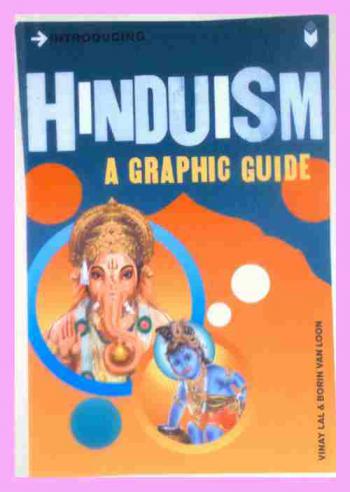
Introducing Hinduism
A guide to the key philosophical, literary, mythological and cultural traditions of this extraordinarily diverse faith, giving equal consideration to texts and everyday practices. -- Cover.
Book

Sonic Liturgy
Sonic Liturgy: Ritual and Music in Hindu Tradition builds on the foundation of Guy L. Beck's earlier work, Sonic Theology: Hinduism and Sacred Sound, which described the theoretical role of sound in Hindu thought. Sonic Liturgy continues the discussion of sound into the realm of Hindu ritual and musical traditions of worship. Beginning with the chanting of the Sama-Veda alongside the fire sacrifices of the ancient Indo-Aryans and with the classical Gandharva music as outlined in the musicological texts of Bharata and Dattila, Beck establishes a historical foundation for an in-depth understanding of the role of music in the early Puja rituals and Indian theater, in the vernacular poetry of the Bhakti movements, in medieval temple worship of Siva and Vishnu in southern India, and later in the worship of Krishna in the northern Braj region. By surveying a multitude of worship traditions, and drawing upon diverse sources in both Sanskrit and vernacular languages, Beck reveals a continuous template of interwoven ritual and music in Hindu tradition that he terms \"sonic liturgy,\" a structure of religious worship and experience that incorporates sound and music on many levels. In developing the concept and methods for understanding the phenomenon of sonic liturgy, Beck draws from liturgical studies and ritual studies, broadening the dimensions of each, as well as from recent work in the fields of Indian religion and music. As he maps the evolution of sonic liturgy in Hindu culture, Beck shows how, parallel to the development of religious ritual from ancient times to the present, there is a less understood progression of musical form, beginning with Vedic chants of two to three notes to complicated genres of devotional temple music employing ragas with up to a dozen notes. Sonic liturgy in its maturity is manifest as a complex interactive worship experience of the Vaishnava sects, presented here in Beck's final chapters.
eBook

Woman and goddess in Hinduism : reinterpretations and re-envisionings
\"Offering multilayered explorations of Hindu understandings of the Feminine, both human and divine, this book emphasizes theological and activist methods and aims over historical, anthropological, and literary ones. The contributors approach the Feminine in Hindu traditions from the standpoint of intersubjective construction via a method that can be termed dialexis. Here, dialexis refers to a form of intellectual engagement \"across styles\" that takes as its starting point an adequate accounting of contextualized signification. The diverse ways that cultures articulate themselves are rooted in lexical choices made in historical, geographical, and cultural contexts\"-- Provided by publisher.
Book
Wendy Doniger, On Hinduism / Reseña de Wendy Doniger, On Hinduism
Review of Wendy Doniger's On Hindusim.
Journal Article