Catalogue Search | MBRL


Are you sure you want to remove the book from the shelf?

{{itemTitle}}
94,877
result(s) for
"Hindus"
Sort by:
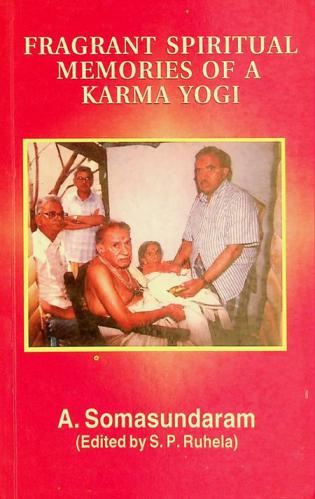

The Hindu Family and the Emergence of Modern India
Between 1955 and 1956 the Government of India passed four Hindu Law Acts to reform and codify Hindu family law. Scholars have understood these acts as a response to growing concern about women's rights but, in a powerful re-reading of their history, this book traces the origins of the Hindu law reform project to changes in the political-economy of late colonial rule. The Hindu Family and the Emergence of Modern India considers how questions regarding family structure, property rights and gender relations contributed to the development of representative politics, and how, in solving these questions, India's secular and state power structures were consequently drawn into a complex and unique relationship with Hindu law. In this comprehensive and illuminating resource for scholars and students, Newbigin demonstrates the significance of gender and economy to the history of twentieth-century democratic government, as it emerged in India and beyond.
eBook


Little India
Little India is a rich historical and ethnographic examination of a fascinating example of linguistic plurality on the island of Mauritius, where more than two-thirds of the population is of Indian ancestry. Patrick Eisenlohr's groundbreaking study focuses on the formation of diaspora as mediated through the cultural phenomenon of Indian ancestral languages—principally Hindi, which is used primarily in religious contexts. Eisenlohr emphasizes the variety of cultural practices that construct and transform boundaries in communities in diaspora and illustrates different modes of experiencing the temporal relationships between diaspora and homeland.
eBook


Interplay of Ethnic Identity and Acculturation in Marginalisation of Santals
Ethnic identity is a vital dimension of our social identity. Tribal people including Santals were made to leave their land and move to the hills and jungles in the face of Aryan invasion. They were not included in Aryan caste system and were called Ashura and Naushad. Their attempts to protect their identity faced another severe threat when Christian Missionaries tried to shape their cultural practices with puritan ethics. As a last resort they took up Hindu religious practices but failed to make a place in mainstream. Our ethnographic work attempts to make in-depth study of this marginalised community to understand the interactions of the factors like ethnic identity and acculturation. They are found to be still marginalised and socially underprivileged. Participation of the marginalised counterparts is often hindered by regressive practices deeply rooted in the mainstream. Intense analytical understanding of the marginalised societies is critical for successful development planning.
Journal Article