
Catalogue Search | MBRL


Are you sure you want to remove the book from the shelf?

{{itemTitle}}
96
result(s) for
"Hindutva."
Sort by:
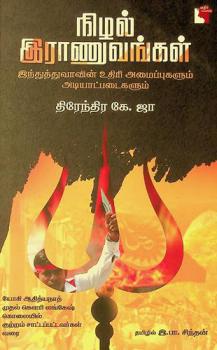
Nil̲al irāṇuvaṅkaḷ : Intuttuvāvin̲ utiri amaippukaḷum aṭiyāṭpaṭaikaḷum
About the hidden Right wing and Hindutva organisations.
BOOK

Sustaining anti-Hindutva activism in Aotearoa New Zealand: Strategies, challenges and way forward
In this article, I will discuss how Hindutva operates in a small country like Aotearoa New Zealand, through various socio-cultural and religious organisations. The fieldwork for this article is a part of my larger doctoral research that focuses on anti-Hindutva activism in Aotearoa New Zealand. The study relies on ethnographic fieldwork and semi-structured interviews with six anti-Hindutva activists to understand the presence of Hindutva and anti-Hindutva activism in the country. Compared with the copious work on Hindutva in the diaspora in other multicultural countries, there is comparatively less literature on the presence of Hindutva in Aotearoa New Zealand, and even less on the organisations that work to challenge Hindutva in diasporic spaces. As such, this article will make a valuable and timely contribution by exposing the veiled presence of Hindutva in Aotearoa New Zealand and then looking at the anti-Hindutva activism that challenges Hindutva in this country. In this article, I will discuss the methods, challenges and aspirations of one such organisation operating in Aotearoa New Zealand: the Aotearoa Alliance of Progressive Indians (AAPI). AAPI has become one of the most prominent organisations (and perhaps the only one in the country) that exclusively focuses on the rise of Hindutva in India and the diaspora.
Journal Article


THE MASSACRE AND MARTYR(DOM)S OF OAK CREEK
This article concerns how competing investments in the real motivate political disagreement. The ethnography focuses on face-to-face debate in the wake of spectacular white supremacist violence against Sikhs in the United States. Young activists relate their struggle against racial supremacy to martyrs from the seventeenth and eighteenth centuries, motivating their call for a politics that would defy empire, cultivate coalitional alliances, and refuse well-worn performances of multicultural docility. However, for institutional decision-makers of rank, who ground their authority in having witnessed majoritarian state terror first-hand, such agonism risks decades of partial but hard-won respectability, legibility, and safety. This article argues that the in/comparability of evental violence is staked by a global “economy of agonism,” which mobilizes in this case at least two political forms distinctive of the late-twentieth century in each the politics of recognition and ethnonationalism. The article probes the competing investments motivating political disjuncture by tracking what is here called the “problem of diaspora,” the seeming untenability of calibrations to and between home (land) and sites of dispersion. An ethnographic pursuit of psycho-social cleavages consequently reveals the “extimacy” of, or mutual co-implication of internal and external in, “collective relation-making,” i.e., in making solidarity, alliance, or coalition amongst seemingly similarly situated others.
Journal Article

The rhetoric of Hindu India : language and urban nationalism
\"Examines the rise of the urban right-wing Hindu nationalist ideology in India called Hindutva between 1984 and 2004\"-- Provided by publisher.
BOOK


“Fight, Die, and If Required Kill”: Hindu Nationalism, Misinformation, and Islamophobia in India
This article provides a deep dive into several recent cases of majoritarian hate speech and violence perpetrated against Muslims in India. We first provide an introduction to Hindutva as a social movement in India, followed by an examination of three case studies in which Islamophobic hate speech circulated on social media, as well as several instances of anti-Muslim violence. These case studies—the Delhi riots, the Love Jihad conspiracy theory, and anti-Muslim disinformation related to the COVID pandemic—show that Hindu nationalism in India codes the Muslim minority in the country as particularly dangerous and untrustworthy.
Journal Article


Muslim Imaginations of Islam in India
This paper explores two broad questions: (a) what is the nature of anti-Muslim discourse in contemporary India and (b) how does it impact their religious orientation and practices? Using survey data produced by CSDS-Lokniti and the Pew Research Center, the paper shows that the dominant assumption that anti-Muslim Hindutva eventually forces Muslims to take refuge in the realm of religion and make them more Islamic is not entirely correct. It is argued that everyday concerns and anxieties are not entirely interpreted through the prism of religion or religiosity. Instead, Muslim communities seem to interpret the growing intolerance in the country as a political phenomenon.
Journal Article