
Catalogue Search | MBRL


Are you sure you want to remove the book from the shelf?

{{itemTitle}}
26
result(s) for
"Hippies Histoire."
Sort by:


Ripped, torn and cut
Ripped, torn and cut offers a collection of original essays exploring the motivations behind – and the politics within – the multitude of fanzines that emerged in the wake of British punk from 1976. Sniffin’ Glue (1976–77), Mark Perry’s iconic punk fanzine, was but the first of many, paving the way for hundreds of home-made magazines to be cut and pasted in bedrooms across the UK. From these, glimpses into provincial cultures, teenage style wars and formative political ideas may be gleaned. An alternative history, away from the often-condescending glare of London’s media and music industry, can be formulated, drawn from such titles as Ripped ;amp; Torn, Brass Lip, City Fun, Vague, Kill Your Pet Puppy, Toxic Grafity, Hungry Beat and Hard as Nails. Here, in a pre-internet world, we see the development of networks and the dissemination of punk’s cultural impact as it fractured into myriad sub-scenes: industrial, post-punk, anarcho, Oi!, indie, goth. Ripped, torn and cut brings together academic analysis with practitioner accounts to forge a collaborative history ‘from below’. The first book of its kind, this collection reveals the contested nature of punk’s cultural politics by turning the pages of a vibrant underground press.
eBook

Wear Some Armor in Your Hair
WINNER, 2025 Illinois State Historical Society Russell P. Strange Book of the Year Award!
Police brutality, gentrification, and grassroots activism in 1960s Chicago
In August of 1968, approximately 7,000 people protested the Vietnam War against the backdrop of the Democratic National Convention in Chicago. This highly televised event began peacefully but quickly turned into what was later termed a “police riot.” Brian Mullgardt’s investigation of this event and the preceding tensions shines a light on the ministers, Yippies, and community members who showed up and stood together against the brutality of the police. Charting a complex social history, Wear Some Armor in Your Hair brings together Chicago history, the 1960s, and urbanization, focusing not on the national leaders, but on the grassroots activists of the time.
Beginning in 1955, two competing visions of urban renewal existed, and the groups that propounded each clashed publicly, but peacefully. One group, linked to city hall, envisioned a future Lincoln Park that paid lip service to diversity but actually included very little. The other group, the North Side Cooperative Ministry, offered a different vision of Lincoln Park that was much more diverse in terms of class and race. When the Yippies announced anti-war protests for the summer of ‘68, the North Side Cooperative Ministry played an instrumental role. Ultimately, the violence of that week altered community relations and the forces of gentrification won out.
Mullgardt’s focus on the activists and community members of Lincoln Park, a neighborhood at the nexus of national trends, broadens the scope of understanding around a pivotal and monumental chapter of our history. The story of Lincoln Park, Chicago, is in many ways the story of 1960s activism writ small, and in other ways challenges us to view national trends differently.
eBook
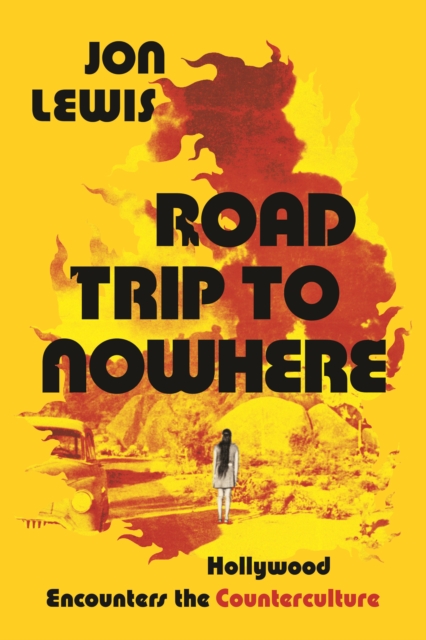
Road Trip to Nowhere
How a new generation of counterculture talent changed the
landscape of Hollywood, the film industry, and celebrity
culture. By 1967, the commercial and political impact on
Hollywood of the sixties counterculture had become impossible to
ignore. The studios were in bad shape, still contending with a
generation-long box office slump and struggling to get young people
into the habit of going to the movies. Road Trip to
Nowhere examines a ten-year span (from 1967 to 1976) rife with
uneasy encounters between artists caught up in the counterculture
and a corporate establishment still clinging to a studio system on
the brink of collapse. Out of this tumultuous period many among the
young and talented walked away from celebrity, turning down the
best job Hollywood-and America-had on offer: movie star. Road
Trip to Nowhere elaborates a primary-sourced history of movie
production culture, examining the lives of a number of talented
actors who got wrapped up in the politics and lifestyles of the
counterculture. Thoroughly put off by celebrity culture, actors
like Dennis Hopper, Christopher Jones, Jean Seberg, and others
rejected the aspirational backstory and inevitable material
trappings of success, much to the chagrin of the studios and
directors who backed them. In Road Trip to Nowhere , film
historian Jon Lewis details dramatic encounters on movie sets and
in corporate boardrooms, on the job and on the streets, and in
doing so offers an entertaining and rigorous historical account of
an out-of-touch Hollywood establishment and the counterculture
workforce they would never come to understand.
eBook

Canadian Countercultures and the Environment
Studies of the radical environmental politics of the 1960s have tended to downplay the extent to which much of that countercultural intellectual and social ferment continued into the 1970s and 1980s. Canadian Countercultures and the Environment adds to our knowledge of this understudied period. This collection contributes a sustained analysis of the beginning of major environmental debates in this era and examines a range of issues related to broad environmental concerns, topics which emerged as key concerns in the context of Cold War military investments and experiments, the oil crisis of the 1970s, debates over gendered roles, and the increasing attention to urban pollution and pesticide use. No other publication dealing with this period covers the wide range of environmental topics (among others, activism, midwifery, organic farming, recycling, urban cycling, and communal living) or geographic locales, from Yukon to Atlantic Canada. Together, they demonstrate how this period influenced and informed environmental action and issues in ways that have had a long-term impact on Canadian society. With contributions by: Matt Cavers Megan Davies Nancy Janovicek Alan MacEachern David Neufeld Ryan O'Connor Daniel Ross Henry Trim Sharon Weaver
eBook

Make it a green peace! : the rise of countercultural environmentalism
Make it a Green Peace! explores the complex intellectual and cultural roots of Greenpeace, tracing the development of the organization from its emergence amidst the various protest movements of the 1950s and 1960s to the end of its volative, dramatic, and at times quirky first decade in 1980.
eBook

The Making of a Counter-Culture Icon
At first glance, the works of Fedor Dostoevsky (1821–1881) do not appear to have much in common with those of the controversial American writer Henry Miller (1891–1980). However, the influencer of Dostoevsky on Miller was, in fact, enormous and shaped the latter’s view of the world, of literature, and of his own writing. The Making of a Counter-Culture Icon examines the obsession that Miller and his contemporaries, the so-called Villa Seurat circle, had with Dostoevsky, and the impact that this obsession had on their own work.
Renowned for his psychological treatment of characters, Dostoevsky became a model for Miller, Lawrence Durrell, and Anais Nin, interested as they were in developing a new kind of writing that would move beyond staid literary conventions. Maria Bloshteyn argues that, as Dostoevsky was concerned with representing the individual’s perception of the self and the world, he became an archetype for Miller and the other members of the Villa Seurat circle, writers who were interested in precise psychological characterizations as well as intriguing narratives. Tracing the cross-cultural appropriation and (mis)interpretation of Dostoevsky’s methods and philosophies by Miller, Durrell, and Nin, The Making of a Counter-Culture Icon gives invaluable insight into the early careers of the Villa Seurat writers and testifies to Dostoevsky’s influence on twentieth-century literature.
eBook

Where Have All the Flower Children Gone?
What happened to the Vietnam protesters and civil rights activists? Where did their idealism lead them? And what do they feel they have contributed to the nation's political debate? Answers to these and many other questions can be found in the first-hand narratives, history, and photographs ofWhere Have All the Flower Children Gone?
Chapters examine such aspects as the origins of the student protest movement and the conservative backlash as well as the fates of draft evaders, expatriates, and conscientious objectors. Respondents explore the conflict between the various generations over Vietnam, Iraq, and other issues. What happened to the children of the 1960s, and how do they reconcile their pasts with the present? Gurvis examines little-known aspects of the 1960s such as an uprising at Colorado State and coffeehouses that helped soldiers form opinions about Vietnam.
Where Have All the Flower Children Gone?puts a contemporary face on the Age of Aquarius. Gurvis interviews such officials as Senator Chuck Hagel (R-Nebraska) and such high-profile former radicals as Bernadine Dohrn. The book also provides one of the last interviews with the late Ossie Davis. The major and minor players of Kent State and Jackson State, where students and others perished at the hands of soldiers, weigh in as well as do the generations preceding and succeeding the Baby Boomers.
Sandra Gurvis is a freelance writer living in Columbus, Ohio. She has written for numerous magazines and is the author of ten books, including the novelThe Pipe Dreamers.
eBook

The American Counterculture
The American counterculture played a major role during a pivotal moment in American history. Post-War prosperity combined with the social and political repression characteristic of middle-class life to produce both widespread civil disobedience and artistic creativity in the Baby Boomer generation.This introduction explores the relationship between the counterculture and American popular culture. It looks at the ways in which Hollywood and corporate record labels commodified and adapted countercultural texts, and the extent to which countercultural artists and their texts were appropriated. It offers an interdisciplinary account of the economic and social reasons for the emergence of the counterculture, and an appraisal of the key literary, musical, political and visual texts which were seen to challenge dominant ideologies.Key Features:*examines the ways in which texts were seen to be countercultural*assesses the extent to which they represented real opposition to cultural orthodoxies*scrutinises the notion of the counterculture*examines the limits to and achievements of the counterculture*places key countercultural figures and texts in context of the shifting wider social and political climate of the United States*uses case studies to illuminate the text.
eBook

The Hippies and American Values
“Turn on, tune in, drop out,” Timothy Leary
advised young people in the 1960s. And many did, creating a
counterculture built on drugs, rock music, sexual liberation,
and communal living. The hippies preached free love, promoted
flower power, and cautioned against trusting anyone over
thirty. Eschewing money, materialism, and politics, they
repudiated the mainstream values of the times. Along the way,
these counterculturists created a lasting legacy and inspired
long-lasting social changes.
The Hippies and American Values uses an innovative
approach to exploring the tenets of the counterculture
movement. Rather than relying on interviews conducted years
after the fact, Timothy Miller uses “underground”
newspapers published at the time to provide a full and in-depth
exploration. This reliance on primary sources brings an
immediacy and vibrancy rarely seen in other studies of the
period. Miller focuses primarily on the cultural
revolutionaries rather than on the political radicals of the
New Left. It examines the hippies’ ethics of dope, sex,
rock, community, and cultural opposition and surveys their
effects on current American values. Filled with illustrations
from alternative publications, along with posters, cartoons,
and photographs,
The Hippies and American Values provides a graphic
look at America in the 1960s. This second edition features a
new introduction and a thoroughly updated, well-documented
text. Highly readable and engaging, this volume brings deep
insight to the counterculture movement and the ways it changed
America. The first edition became a widely used course-adoption
favorite, and scholars and students of the 1960s will welcome
the second edition of this thought-provoking book.
eBook