
Catalogue Search | MBRL


Are you sure you want to remove the book from the shelf?

{{itemTitle}}
26
result(s) for
"Hippocrates Influence."
Sort by:

The Cambridge companion to Hippocrates
\"Hippocrates is a towering figure in Greek medicine. Dubbed the 'father of medicine', he has inspired generations of physicians over millennia in both the East and West. Despite this, little is known about him, and scholars have long debated his relationship to the works attributed to him in the so-called 'Hippocratic Corpus', although it is undisputed that many of the works within it represent milestones in the development of Western medicine. In this Cambridge Companion, an international team of authors introduces major themes in Hippocratic studies, ranging from textual criticism and the 'Hippocratic Question' to problems such as aetiology, physiology and nosology. Emphasis is given to the afterlife of Hippocrates from Late Antiquity to the Modern period. Hippocrates had as much relevance in the fifth-century BC Greek world as in the medieval Islamic world, and he remains with us today in both medical and non-medical contexts\"-- Provided by publisher.
BOOK
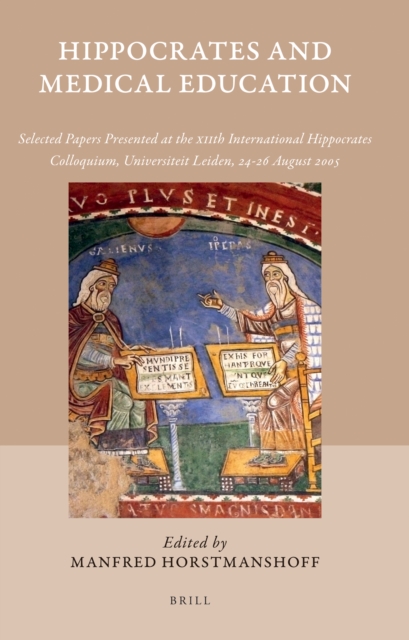
Hippocrates and Medical Education
The collection of writings known as the Corpus Hippocraticum played a decisive role in medical education for more than twenty four centuries. This is the first full-length volume on medical education in Graeco-Roman antiquity since Kudlien's seminal article from 1970. The articles in this volume were originally presented as papers at the XIIth International Colloquium Hippocraticum in Leiden in 2005.
eBook

Hippocrates now : the \father of medicine\ in the internet age
\"We need to talk about Hippocrates. Current scholarship attributes none of the works of the 'Hippocratic corpus' to him, and the ancient biographical traditions of his life are not only late, but also written for their own promotional purposes. Yet Hippocrates features powerfully in our assumptions about ancient medicine, and our beliefs about what medicine -- and the physician himself -- should be. In both orthodox and alternative medicine, he continues to be a model to be emulated. This book will challenge widespread assumptions about Hippocrates (and, in the process, about the history of medicine in ancient Greece and beyond) and will also explore the creation of modern myths about the ancient world. Why do we continue to use Hippocrates, and how are new myths constructed around his name? How do news stories and the internet contribute to our picture of him? And what can this tell us about wider popular engagements with the classical world today, in memes, 'quotes' and online?\"-- Provided by publisher.
BOOK
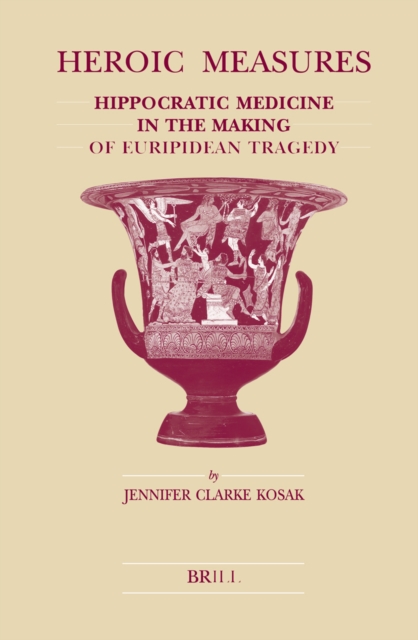
Heroic measures : Hippocratic medicine in the making of Euripidean tragedy
This book demonstrates the importance of Greek medical thought in the work of Euripides. Part I shows the significance of the healing figure in Euripidean drama; Part II analyzes the role of traditional and rationalist remedies in the construction of Euripidean plots and arguments.
eBook


From elemental qualities to medication: Hippocratic pharmacological system in classical Greek medicine
While numerous scholars have studied Hippocrates’ philosophy, ideas, and oaths, there has been limited research on his pharmacological theories especially combined with clinical medication. This paper extracts and reconstructs a pharmacological system from the extensive corpus of Hippocrates, dividing it into two parts: the first is the philosophical theory of medicine, exploring the natural properties of all things and humans, producing the Four Humors Theory; the second is clinical pharmacology, discussing how to maintain balance to preserve or restore health. The system comprises two major inferences: first, the four elemental qualities form the foundational logic of natural philosophy and the pharmacological essence of medical philosophy; second, the system guides the complementary “regimen therapy” and the “evacuation therapy” based on the underlying logic of the four elemental qualities. Through theoretical construction and practical validation, this reflects ancient Greece’s exploration of the relationship between pharmacal practice and medical philosophy during the classical era.
Journal Article

Hydroxybenzoic acid isomers and the cardiovascular system
Today we are beginning to understand how phytochemicals can influence metabolism, cellular signaling and gene expression. The hydroxybenzoic acids are related to salicylic acid and salicin, the first compounds isolated that have a pharmacological activity. In this review we examine how a number of hydroxyphenolics have the potential to ameliorate cardiovascular problems related to aging such as hypertension, atherosclerosis and dyslipidemia. The compounds focused upon include 2,3-dihydroxybenzoic acid (Pyrocatechuic acid), 2,5-dihydroxybenzoic acid (Gentisic acid), 3,4-dihydroxybenzoic acid (Protocatechuic acid), 3,5-dihydroxybenzoic acid (α-Resorcylic acid) and 3-monohydroxybenzoic acid. The latter two compounds activate the hydroxycarboxylic acid receptors with a consequence there is a reduction in adipocyte lipolysis with potential improvements of blood lipid profiles. Several of the other compounds can activate the Nrf2 signaling pathway that increases the expression of antioxidant enzymes, thereby decreasing oxidative stress and associated problems such as endothelial dysfunction that leads to hypertension as well as decreasing generalized inflammation that can lead to problems such as atherosclerosis. It has been known for many years that increased consumption of fruits and vegetables promotes health. We are beginning to understand how specific phytochemicals are responsible for such therapeutic effects. Hippocrates’ dictum of ‘Let food be your medicine and medicine your food’ can now be experimentally tested and the results of such experiments will enhance the ability of nutritionists to devise specific health-promoting diets.
Journal Article

Suicide and euthanasia: A global and longitudinal perspective
Introduction: While suicide remains beyond legislative control, euthanasia is subject to legal regulation in most countries. Data on suicide is readily available and reasonably reliable, whereas statistics on euthanasia are often less pronounced and obscure. Objectives: This study aims to assess affirmative attitudes towards suicide and euthanasia, explore the relationship between these attitudes, and analyse trends in these viewpoints. Methods: Cross-sectional data from 90 countries on suicide ideation and positive attitudes towards euthanasia were analysed to establish the level of, and relationship between, these constructs. Longitudinal data from 11 countries was examined to identify trends in these attitudes. Results: Mean scores for suicide ideation and positive attitudes towards euthanasia differed significantly (t=14.92; p<.001; d=1.022; large effect), with a significant correlation between the attitudes (r=.846; p<.001; large effect). Longitudinal data revealed a substantial increase in positive attitudes towards euthanasia (M=3.95 in the 1st wave, 1981-1984, to M=5.57 in the 7th wave, 2017-2022) and suicide ideation (M=2.35 in the 1st wave to M=3.37 in the 7th wave). Conclusions: Suicide ideation levels are lower than positive attitudes towards euthanasia. The constructs are highly related, and the prevalence of positive perceptions has increased over the past 40 years. While suicide captures the attention of mental health professionals, the escalating acceptance of euthanasia suggests a phenomenon of profound impact, necessitating increased focus within the mental health community.
Journal Article

The Mediterranean Diet in the Era of Climate Change: A Reference Diet for Human and Planetary Health
Nowadays, climate change constitutes an enormous global threat for human health and environmental sustainability. The expanding world population and the increased global need for food production have an important negative impact upon the environment. Diet can link human health with environmental sustainability. Food production systems are closely related to anthropogenic greenhouse gas emissions and the aggravation of climate change, and current Western-type, animal-based dietary patterns may lead to adverse environmental footprints. In this present narrative review, we address the interconnection of the Mediterranean diet (MD) with climate change and sustainability. The MD is a highly recommended dietary intervention for the prevention and management of various endocrine and cardiometabolic diseases. Beyond its evidence-based, health-promoting effects, it also has a beneficial environmental impact, reducing greenhouse gas emissions and enhancing biodiversity, food security, and sustainability. Based on the evidence reviewed herein, the MD should be incorporated within the framework of a “One Health” model, which involves the improvement not only of human health but also of planetary health and food system sustainability. Our review aims to provide a stimulus for health professionals to strongly recommend the implementation of the MD under the current pressure of climate change, despite all barriers, targeting both human health preservation and planetary well-being.
Journal Article

Advancements and Impact of Medical Translation During the Golden Age: A Comprehensive Analysis
This article presents a comprehensive analysis of the advancements and impact of medical translation during the Golden Age of Translation. It focuses on the fundamental role that translators and scholars played in disseminating medical knowledge, shaping medical practices, and fostering intellectual and cultural exchange. It also discusses the significance of the House of Wisdom in Baghdad, key translators and their contributions, as well as the influence of translated medical texts such as Avicenna's Canon of Medicine, Al-Razi's Book of Healing, and Al-Zahrawi's Comprehensive Book on Medicine. Also examined is the impact of translation on the standardization of medical terminology and the transmission of medical knowledge across cultures and regions. The article concludes by highlighting the lasting legacy of translations in terms of their impact on global medical knowledge and suggests possible areas in which to conduct further research on medical translation history, as well as the role of modern technology in understanding and interpreting historical medical texts.
Journal Article