
Catalogue Search | MBRL


Are you sure you want to remove the book from the shelf?

{{itemTitle}}
17
result(s) for
"Hispanic mining towns"
Sort by:
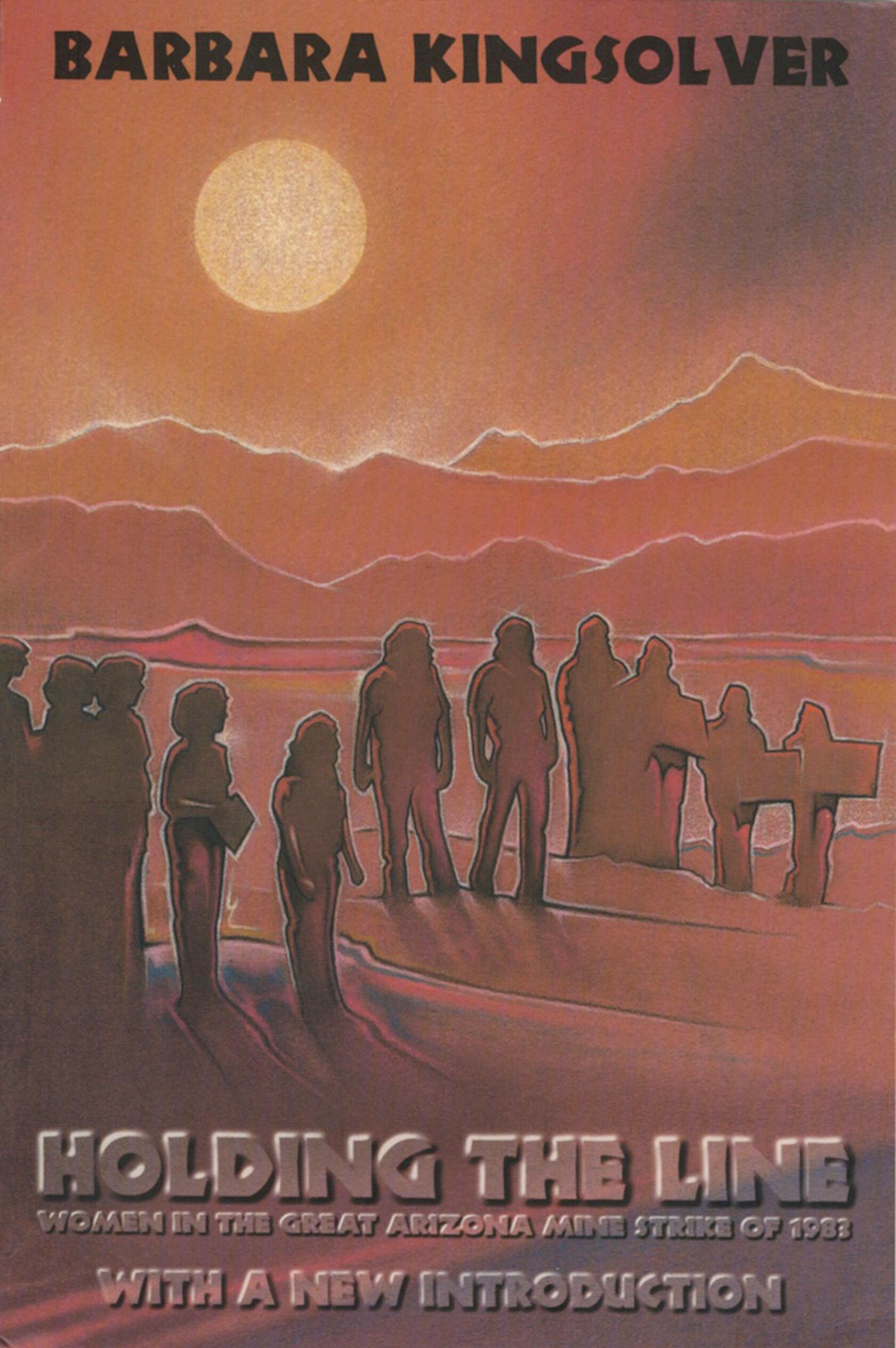
Holding the Line
Holding the Line, Barbara Kingsolver's first non-fiction book, is the story of women's lives transformed by an a signal event. Set in the small mining towns of Arizona, it is part oral history and part social criticism, exploring the process of empowerment which occurs when people work together as a community. Like Kingsolver's award-winning novels,Holding the Lineis a beautifully written book grounded on the strength of its characters.
Hundreds of families held the line in the 1983 strike against Phelps Dodge Copper in Arizona. After more than a year the strikers lost their union certification, but the battle permanently altered the social order in these small, predominantly Hispanic mining towns. At the time the strike began, many women said they couldn't leave the house without their husband's permission. Yet, when injunctions barred union men from picketing, their wives and daughters turned out for the daily picket lines. When the strike dragged on and men left to seek jobs elsewhere, women continued to picket, organize support, and defend their rights even when the towns were occupied by the National Guard. \"Nothing can ever be the same as it was before,\" said Diane McCormick of the Morenci Miners Women's Auxiliary. \"Look at us. At the beginning of this strike, we were just a bunch of ladies.\"
eBook

Bishop Martínez Compañón's Practical Utopia in Enlightenment Peru
“Bishops, because they are bishops, cannot stop being vassals of their kings, and functionaries of their states. Nor are they exempt from practicing with all those around them, especially with their diocesans, works of mercy, physically as well as spiritually.
I gave [the miners] as proof of this truth one of the soliloquies of the Emperor Marcus Aurelius, in which he said: “You are a man, you are a citizen of the world.” —Bishop Martínez Compañón recounting his experiences with the Hualgayoc miner's guild in a letter to Viceroy Teodoro de Croix of Peru, May 1786.
Journal Article

Expectations of order and campesino conservatism: memory, history, and rural morality
Based on the concrete example of Atarjea (Guanajuato), here I discuss the link between memory and history, including experience, subjective burdens, and future projections made by the subjects themselves as part of this link. I argue that for local campesinos, this implies a moral position that transcends the politically utilitarian selection of certain recollections, involving aspirations to order and conservatism opposed to the agrarian and environmentalist projects currently promoted by the Mexican government.
Journal Article

The Historical City and Suburbs: A Development Pattern Comparison: Case of Studies of the Historical Centre of Durango, Mexico and the Analco Neighborhood
The city of Durango, which was very recently inscribed as a part of the World Heritage “Silver Route”, is a colonial Spanish American city that was a very important center for the mining industry. The Indian town of San Juan Bautista de Analco was an independent territory later annexed to the city of Durango, becoming one of its neighborhoods. The founding of each of the places was the result of different reasons: on one hand, economics was the purpose for the establishment of the city of Durango; and on the other hand, religion was the purpose for the establishment of the Indian town of Analco. The differences between these two places are not only limited to their origins, but also, from the point of view of physical development, include their urban growth and development. In this research we analyze, from an urban point of view, the historical factors for their respective blocks’ typologies and shapes, as well as the differences and/or similarities in their building typologies, to discover the degree of influence one might have had over the other.
Journal Article


A Gold Rush Salvadoran in California's Latino World, 1857
A close analysis of an 1857 open letter to the Spanish-speaking press in Los Angeles by Ángel Mora, a departing Salvadoran miner, provides hints to the opportunities that drew Central Americans to the California gold rush, as well as the personal and historical reasons for their disillusion and departure. It also illuminates Central Americans' national identity, their sense of community with Hispanics from other countries, and their response to events in their homelands.
Journal Article

