
Catalogue Search | MBRL


Are you sure you want to remove the book from the shelf?

{{itemTitle}}
53
result(s) for
"Histadrut"
Sort by:

On the frontier of integration: the Histadrut and the Palestinian Arab citizens of Israel
This article analyzes the Histadrut, the quintessential Labor Zionist organization, and its policies regarding the Palestinian Arab citizens of Israel between the years 1948-1967. Using archival documents, published material, and oral history, the article reconstructs previously unexplored aspects of Palestinian membership in the Histadrut and reveals the spectrum of attitudes that it elicited. Whereas previous research has identified the Histadrut's role in segregating the Jewish and Palestinian communities in Palestine, this article argues that after 1948, the Histadrut integrated the Palestinian Arabs into Israeli society in a way that complicates our understanding of Zionism.
Journal Article
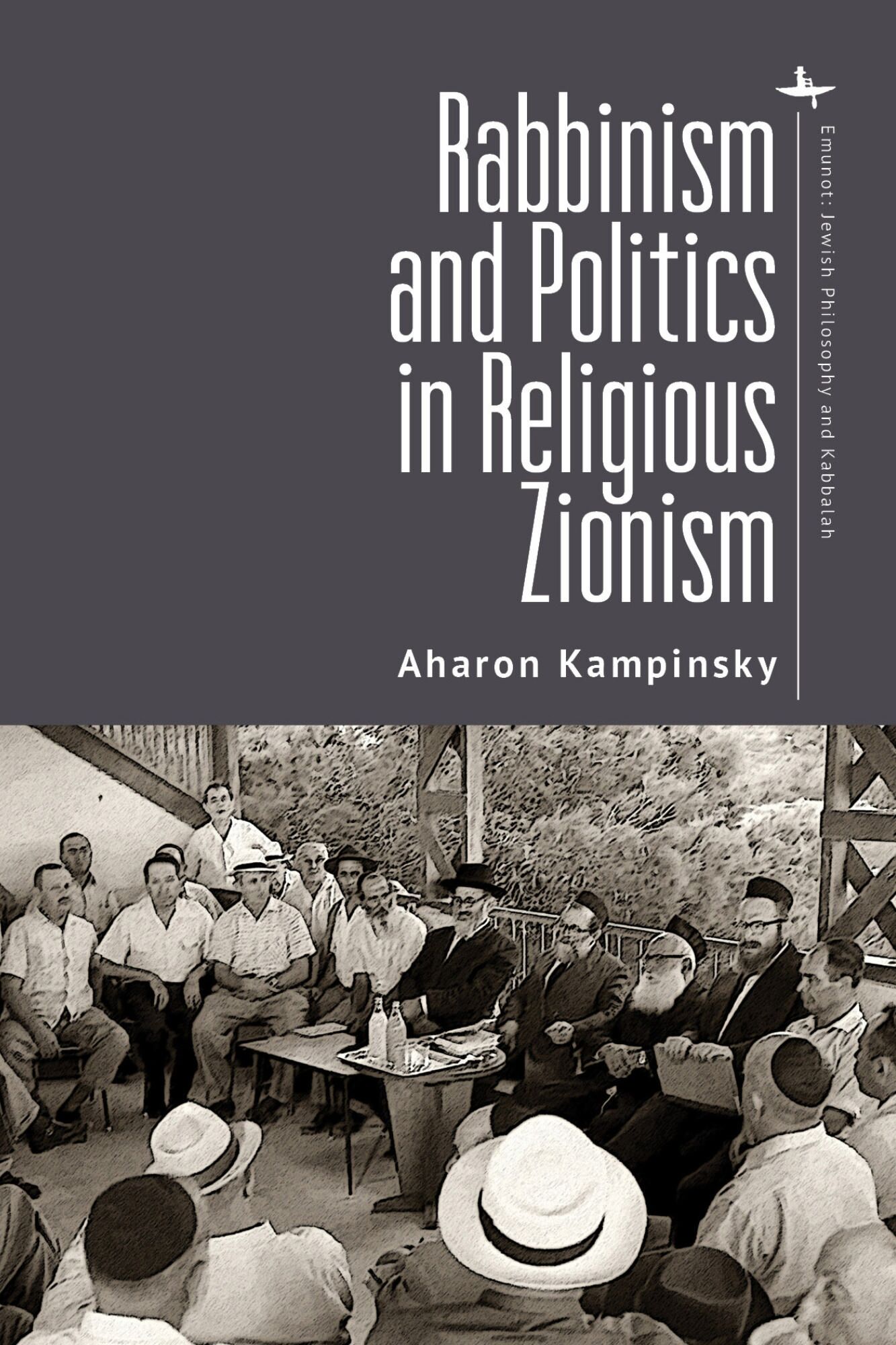
Rabbinism and Politics in Religious Zionism
This book examines the relationship between the rabbinate and politics in religious Zionism during the early years of the State of Israel. What fundamental issues did the rabbis of the party face? Did all religious Zionist rabbis follow the same ideological line? Why did the relationship between rabbis and politicians experience ups and downs? And is there a chance for rabbis to have significant influence over religious Zionism in the future?
Rabbinism and Politics in Religious Zionism seeks to answer these questions.
eBook

Adjudication Instead of Strike Action: The Histadrut, the Post-Socialist Liberal Welfare State, and the Passing of the Israel Labor Court Law
The subject of this article is the public struggle over the establishment of the labor court system in Israel and the complex attitudes of the Histadrut, particularly in the 1960s. The conflict, I argue, was resolved in accordance with state policy and economic interests. At the time, the government's view of labor courts as a key mechanism in the settlement of prevalent collective disputes was shared by the political right and employers. This is consistent with another argument that the labor courts represented the government's policy of promoting a social-democratic welfare state model, affected by social-liberal thinking, or \"post-socialist liberalism,\" as it was termed by Yehuda Sha'ari, one of the main promoters of the Labor Court Law. The resulting preference for adjudication over strike action engendered a powerful labor and social security mechanism.
Journal Article

Labor in Israel
Using a comprehensive analysis of the wave of organizing that swept the country starting in 2007,Labor in Israelinvestigates the changing political status of organized labor in the context of changes to Israel's political economy, including liberalization, the rise of non-union labor organizations, the influx of migrant labor, and Israel's complex relations with the Palestinians. Through his discussion of organized labor's relationship to the political community and its nationalist political role, Preminger demonstrates that organized labor has lost the powerful status it enjoyed for much of Israel's history. Despite the weakening of trade unions and the Histadrut, however, he shows the ways in which the fragmentation of labor representation has created opportunities for those previously excluded from the labor movement regime.
Organized labor is now trying to renegotiate its place in contemporary Israel, a society that no longer accepts labor's longstanding claim to be the representative of the people. As such, Preminger concludes that organized labor in Israel is in a transitional and unsettled phase in which new marginal initiatives, new organizations, and new alliances that have blurred the boundaries of the sphere of labor have not yet consolidated into clear structures of representation or accepted patterns of political interaction.
eBook
Adjudication Instead of Strike Action: The Histadrut, the Post-Socialist Liberal Welfare State, and the Passing of the Israel Labor Court Law
The subject of this article is the public struggle over the establishment of the labor court system in Israel and the complex attitudes of the Histadrut, particularly in the 1960s. The conflict, I argue, was resolved in accordance with state policy and economic interests. At the time, the government's view of labor courts as a key mechanism in the settlement of prevalent collective disputes was shared by the political right and employers. This is consistent with another argument that the labor courts represented the government's policy of promoting a social-democratic welfare state model, affected by social-liberal thinking, or \"post-socialist liberalism,\" as it was termed by Yehuda Sha'ari, one of the main promoters of the Labor Court Law. The resulting preference for adjudication over strike action engendered a powerful labor and social security mechanism.
Journal Article

Israel’s Recent Unionizing Drives
abstractIn light of the labor movement’s prominence in Israel’s history, the recent resurgence of unionizing activity after some 30 years of organized labor’s decline has caused much scholarly debate. However, scholars have paid insufficient attention to political ‘climate’, the wider social context, and the ‘battle of ideas’. This article therefore discusses the status of organized labor in media discourse, the rhetoric against the labor courts, liberalization in legal reasoning, and how organized labor is construed by the courts, as well as the conceptual differentiation between ‘workers’ and ‘the public’. It concludes that both organized labor and vestigial corporatist institutions are facing delegitimizing rhetoric and proposes that, for a fuller assessment of union revitalization, we should pay attention to labor struggles on three planes: the frontal struggle in the workplace, the institutional struggle to shore up the institutions crucial to collective labor relations, and the ideological struggle against the narrative of delegitimation.
Journal Article

Labor in Israel
Introduction : an inquiry into labor in Israel in the 21st century -- Neoliberalism, neocorporatism and worker representation -- The rise of labor activism -- The old structures : corrupt, fossilized, irrelevant? -- Taking the struggle beyond the workplace -- Renegotiating the role of the Histadrut -- The frontal struggle : recognition in the workplace -- The ideological struggle : the delegitimization of organized labor -- The institutional struggle : undermining the labor courts -- Labor representation outside union structures -- Pluralism and the changing nature of politics -- Between national community and class solidarity -- Porous labor market, insular political community -- Conclusion : beyond nationalism and neoliberalism?
Book
The 1956 Strike of Middle-Class Professionals
abstractThis article assumes, first, that during the 1950s the government, the trade union Histadrut, and the political party Mapai situated themselves in an intermediate position between the Ashkenazi public and the recently arrived Mizrahi immigrants. Second, it assumes that the right and center-right public forces, such as the General Zionist and Herut parties, and the influential liberal-oriented newspaper Ha’aretz played key roles in the evolution of ethnic relations during this period and impacted the political orientation of the Ashkenazi middle class. It examines these assumptions by considering the part played by the right, the center-right, and the Mapai government during a prolonged conflict between the Ashkenazi academic middle class and the government during the mid-1950s. This dispute centered on the appropriate extent of the wage gaps set between the salaries of the new Ashkenazi academic middle class and those of the new Mizrahi proletariat.
Journal Article

Mo(ve)ments of resistance : politics, economy and society in Israel/Palestine 1931-2013
In Mo(ve)ments of Resistance, Grinberg summarizes both his own work and that of other political economists, providing a coherent historical narrative covering the time from the beginning of Socialist Zionism (1904) to the Oslo Accords and the neoliberalization of the economy (1994-1996).
eBook

North Americans, Israelis, or Jews? The Ethnic Identity of Immigrants' Offspring
Using a sample of 206 Israeli migrants' offspring in North America, who filled in questionnaires and 34 in-depth interviews, this article examines the components and indicators of ethnic identity and identification of the offspring of Israelis in North America, by immigration generation. Are their identities and social network local, meaning that they lead to integration and assimilation, or are they diasporic and transnational, positioned somewhere between North America and Israel? The main findings of this study illuminate complex and dynamic patterns of identity components and the factors that affect them. Generational affiliation, i.e., second generation immigrants compared to those of the 1.5 generation, had a considerable effect on the various indicators of identity and identification. Members of the 1.5 generation are more inclined than second generation immigrants to maintain transnational or diasporic relations and to experience a splitting of identity and estrangement toward the destination society. Second-generation participants, feel \"at home\" in the destination country and are more inclined to assimilate into their proximal host Jewish group and the non-Jewish majority This study makes its main contribution by distinguishing between second and 1.5-generation Israeli immigrants in regard to the re-construction of their ethnic identity. It also contributes to understanding the effect of agents of socialization, on the dynamic patterns of this identity in its various dimensions.
Journal Article