
Catalogue Search | MBRL


Are you sure you want to remove the book from the shelf?

{{itemTitle}}
456
result(s) for
"Historians China."
Sort by:

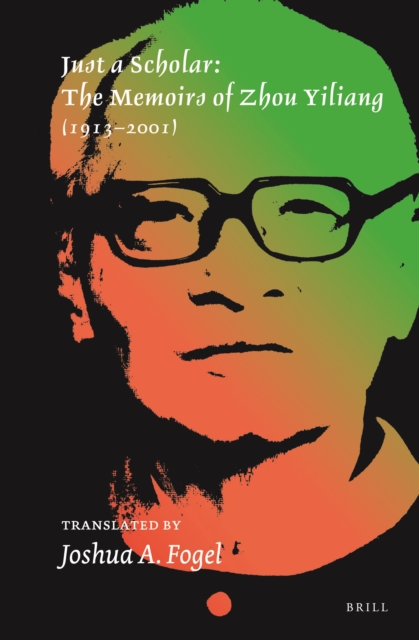
Just a Scholar
In this work, Zhou Yiliang tells the story of his extraordinary life and work caught up in all the events of 20th-century China and beyond.
eBook
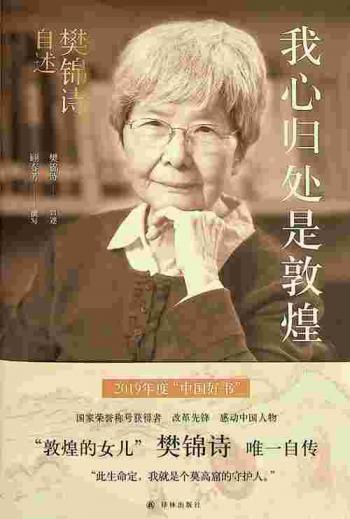

Just a Scholar
In Just a Scholar, Zhou Yiliang tells the story of his extraordinary life and work caught up in all the events of twentieth-century China and beyond.
eBook

Reading Sima Qian from Han to Song : the father of history in pre-modern China
\"In Father of Chinese History, Esther Klein explores the life and work of the great Han dynasty historian Sima Qian as seen by readers from the Han to the Song dynasties. Today Sima Qian is viewed as both a tragic hero and a literary genius. Premodern responses to him were more equivocal: the complex personal emotions he expressed prompted readers to worry about whether his work as a historian was morally or politically acceptable. Klein demonstrates how controversies over the value and meaning of Sima Qian's work are intimately bound up with larger questions: How should history be written? What role does individual experience and self-expression play within that process? By what standards can the historian's choices be judged?\"-- Provided by publisher.
Book

Xun Xu and the Politics of Precision in Third-Century AD China
This biography of the court scholar Xun Xu explores central areas of intellectual life in third-century China -- court lyrics, music, metrology, pitch systems, archeology, and historiography. It clarifies the relevant source texts in order to reveal fierce debates. Besides solving technical puzzles about the material details of court rites, the book unfolds factional struggles that developed into scholarly ones.
eBook

Here in \China\ I dwell : reconstructing historical discourses of China for our time
\"Here in 'China' I Dwell is a historiographical account of the formation of Chinese historical narratives in light of outside pressures on China--the view from China's borders. There is a special discussion of the influence of Japanese historians on the concept of China and its borders, including the nature of their sources, cultural and religious and more. In Ge's comparative account, a new portrait of Chinese historical narratives, along with the views and assumptions implicit in these narratives, emerges in the context of East Asia, a similarly constructed concept with its own multitudes of frontiers and peoples\"--Provided by publisher.
Book

Following the leader
With unique access to Chinese leaders at all levels of the party and government, best-selling author David M. Lampton tells the story of China’s political elites from their own perspectives. Based on over five hundred interviews, Following the Leader offers a rare glimpse into how the attitudes and ideas of those at the top have evolved over the past four decades. Here China’s rulers explain their strategies and ideas for moving the nation forward, share their reflections on matters of leadership and policy, and discuss the challenges that keep them awake at night. As the Chinese Communist Party installs its new president, Xi Jinping, for a presumably ten-year term, questions abound. How will the country move forward as its explosive rate of economic growth begins to slow? How does it plan to deal with domestic and international calls for political reform and to cope with an aging population, not to mention an increasingly fragmented bureaucracy and society? In this insightful book we learn how China’s leaders see the nation’s political future, as well as about its global strategic influence.
eBook

Sparks : China's underground historians and their battle for the future
\"A vital account of how some of China's most important writers, filmmakers, and artists have overcome crackdowns and censorship to challenge the Chinese Communist Party on its most sacred ground, its monopoly on history\" -- publisher's description.
Book

Understanding China's Growth: Past, Present, and Future
The pace and scale of China's economic transformation have no historical precedent. In 1978, China was one of the poorest countries in the world. The real per capita GDP in China was only one-fortieth of the U.S. level and one-tenth the Brazilian level. Since then, China's real per capita GDP has grown at an average rate exceeding 8 percent per year. As a result, China's real per capita GDP is now almost one-fifth the U.S. level and at the same level as Brazil. This rapid and sustained improvement in average living standard has occurred in a country with more than 20 percent of the world's population so that China is now the second-largest economy in the world. I will begin by discussing briefly China's historical growth performance from 1800 to 1950. I then present growth accounting results for the period from 1952 to 1978 and the period since 1978, decomposing the sources of growth into capital deepening, labor deepening, and productivity growth. But the main focus of this paper will be to examine the sources of growth since 1978, the year when China started economic reform. Perhaps surprisingly, given China's well-documented sky-high rates of saving and investment, I will argue that China's rapid growth over the last three decades has been driven by productivity growth rather than by capital investment. I also examine the contributions of sector-level productivity growth, and of resource reallocation across sectors and across firms within a sector, to aggregate productivity growth. Overall, gradual and persistent institutional change and policy reforms that have reduced distortions and improved economic incentives are the main reasons for the productivity growth.
Journal Article