
Catalogue Search | MBRL


Are you sure you want to remove the book from the shelf?

{{itemTitle}}
1,567
result(s) for
"Historians Interviews."
Sort by:

From antiquity to ethnography : Keith Thomas, Brian Harrison and Peter Burke
'From Antiquity to Ethnography' is the first time a collection of these interviews is being published as a book. They have been conducted by one of England's leading social anthropologists and historians, Professor Alan Macfarlane. Filmed over a period of several years, the three conversations in this volume are part of the series 'Creative Lives and Works.' These transcriptions form a part a larger set of interviews that cut across various disciplines, from the social sciences and the sciences to the performing and visual arts. The current volume is on three of Britain's foremost social and cultural historians. The study of historical traditions, social mores and practices come alive in these conversations. We also learn about the painstaking nature of notetaking which the subject demands.
BOOK
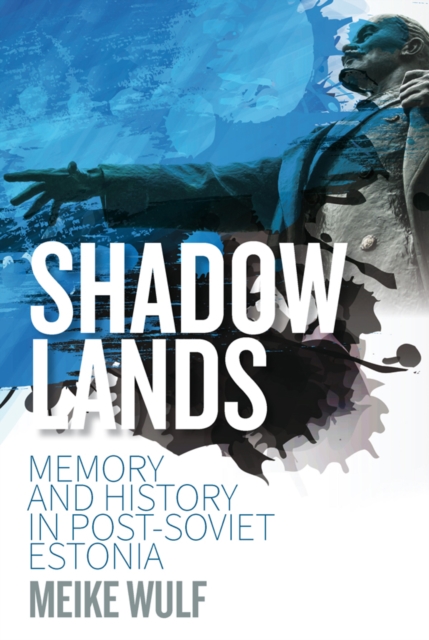
Shadowlands
Located within the forgotten half of Europe, historically trapped between Germany and Russia, Estonia has been profoundly shaped by the violent conflicts and shifting political fortunes of the last century. This innovative study traces the tangled interaction of Estonian historical memory and national identity in a sweeping analysis extending from the Great War to the present day. At its heart is the enduring anguish of World War Two and the subsequent half-century of Soviet rule. Shadowlands tells this story by foregrounding the experiences of the country's intellectuals, who were instrumental in sustaining Estonian historical memory, but who until fairly recently could not openly grapple with their nation's complex, difficult past.
eBook

Thinking in the past tense : eight conversations
\"If the vibrancy in Thinking in the Past is any indication, the study of intellectual history is enjoying an unusually fertile period in both Europe and North America. This collection of conversations with leading scholars brims with insights from such diverse fields as the history of science, the reception of classical antiquity, book history, global philology, and the study of material culture\"-- Provided by publisher.
Book

Conversations About History, Volume 3
FIVE BOOKS IN ONE! This collection includes the following 5 complete Ideas Roadshow books featuring leading researchers providing fully accessible insights into cutting-edge academic research while revealing the inspirations and personal journeys behind the research. A detailed preface highlights the connections between the different books and all five books are broken into chapters with a detailed introduction and questions for discussion at the end of each chapter: 1. Eating One's Own: Examining Civil War - A Conversation with intellectual historian David Armitage, the Lloyd C. Blankfein Professor of History at Harvard University. This conversation covers David Armitage's extensive research on the history of ideas of civil war from Ancient Rome to the present. A salient feature of his work is a strong focus on etymology as it relates to our understanding of how people interpreted (or misinterpreted) and perceived events in history which results in a fascinating exploration of how our understanding of various concepts has been prejudiced by past societies and past beliefs that we might not even be aware of, and how they, in turn, go on to influence other societies; and how this cumulative process frames our understanding of these ideas.2. China: Up Close and Personal - A Conversation with Karl Gerth, Hwei-Chih and Julia Hsiu Chair in Chinese Studies and Professor of History at UC San Diego. This wide-ranging conversation covers the emerging American-style consumer culture of China which is revolutionizing the lives of hundreds of millions of Chinese, how it has transformed its economy and lifestyle and has the potential to reshape the world.3. Sheathing the Bodkin: Combating Suicide - A Conversation with poet, author and historian Jennifer Michael Hecht. After intriguing details about how she combines writing poetry, doing scholarly history and public writing, this wide-ranging conversation movingly embellishes upon Jennifer Michael Hecht's book, Stay: A History of Suicide and the Philosophies Against It, which is an intellectual and cultural history of the most persuasive arguments against suicide from the Stoics and the Bible to Dante, Shakespeare, Wittgenstein, and such twentieth-century writers as Albert Camus.4. For the Love of History - A Conversation with Margaret MacMillan, Professor of History at the University of Toronto and emeritus Professor of International History and the former warden of St Antony's College at the University of Oxford. This wide-ranging conversation examines her research on patriotism and nationalism, which are essential themes of her lifelong work on 19th and 20th history.5. The Epicurean Republic - A Conversation with award-winning author and independent scholar Matthew Stewart. In his later years, Thomas Jefferson referred to \"the revolutionary part of the [American] Revolution\", which for him meant the founding ideals that would serve as a model for the world on how to build a modern state, as opposed to an incidental squabble between one country and its former colonists. This wide-ranging conversation explores how many of these ideals that Jefferson referred to are part of an intellectual thread that passes through key Enlightenment thinkers such as Spinoza and can be traced all the way back to Epicurus.Howard Burton is the founder and host of all Ideas Roadshow Conversations and was the Founding Executive Director of Perimeter Institute for Theoretical Physics. He holds a PhD in theoretical physics and an MA in philosophy.
eBook

A people's history of World War II : the world's most destructive conflict, as told by the people who lived through it
Presents interviews, photographs, letters, oral histories, stories, eyewitness accounts, and excerpts from historical writings from different perspectives on a wide variety of topics related to the Second World War.
Book

African Art, Interviews, Narratives
Joanna Grabski and Carol Magee bring together a compelling collection that shows how interviews can be used to generate new meaning and how connecting with artists and their work can transform artistic production into innovative critical insights and knowledge. The contributors to this volume include artists, museum curators, art historians, and anthropologists, who address artistic production in a variety of locations and media to question previous uses of interview and provoke alternative understandings of art.
eBook


The Way Things Are
\"Where can we find what is ultimately meaningful? How can we discover what is truly worth knowing?\" In one form or another Huston Smith has been posing these questions to himself--and the world--all his life. In the course of seeking answers, he has become one of the most interesting, enlightening, and celebrated voices on the subject of religion and spirituality throughout the world. The twenty-three interviews and essays in this volume, edited by cultural historian and filmmaker Phil Cousineau, offer a uniquely personal perspective on Smith's own personal journey, as well as wide-ranging reflection on the nature and importance of the religious quest. In The Way Things Are, readers will find Smith in conversation with some of the world's most influential personalities and religious leaders, from journalist Bill Moyers to religion scholar Philip Novak, and recounting his personal experiences with such luminaries as Joseph Campbell, Aldous Huxley, Timothy Leary, Daisetz Suzuki, Ram Dass, and the Dalai Lama. Throughout these engaging exchanges Smith speaks with passion and humor of his upbringing as the son of missionary parents in China, of the inspiring and colorful individuals he has known, and of his impressions of the different religious and philosophical traditions he has encountered. A fascinating view of the state of world religion and religious leadership over the past fifty years, the book also looks to the future with a final interview on the vital importance of the transcendent message of religion for the post-9/11 world. Readers will find The Way Things Are to be Huston Smith's most and accessible book to date.
eBook

Shadowlands : Memory and History in Post-Soviet Estonia
\"Located within the forgotten half of Europe, historically trapped between Germany and Russia, Estonia has been profoundly shaped by the violent conflicts and shifting political fortunes of the last century. This innovative study traces the tangled interaction of Estonian historical memory and national identity in a sweeping analysis extending from the Great War to the present day. At its heart is the enduring anguish of World War Two and the subsequent half-century of Soviet rule. Shadowlands tells this story by foregrounding the experiences of the country's intellectuals, who were instrumental in sustaining Estonian historical memory, but who until fairly recently could not openly grapple with their nation's complex, difficult past\"--From publisher's website.
Book
