
Catalogue Search | MBRL


Are you sure you want to remove the book from the shelf?

{{itemTitle}}
138
result(s) for
"Historians Soviet Union"
Sort by:

The Life and Thought of Lev Karsavin
\"At last, Russia has begun to speak in a truly original voice.\" So said Anatoly Vaneev, a Soviet dissident who became Karsavin's disciple in the Siberian gulag where the philosopher spent his last two years. The book traces the unusual trajectory of this inspiring voice: Karsavin started his career as Russia's brightest historian of Catholic mysticism; however, his radical methods - which were far ahead of their time - shocked his conservative colleagues. The shock continued when Karsavin turned to philosophy, writing flamboyant and dense essays in a polyphonic style, which both Marxists and religious traditionalists found provocative. There was no let-up after he was expelled by Lenin from Soviet Russia: in exile, he became a leading theorist in the Eurasian political movement, combining Orthodox theology with a left-wing political orientation. Finally, Karsavin found stability when he was invited to teach history in Lithuania: there he spent twenty years reworking his philosophy, before suffering the German and Soviet invasions of his new homeland, and then deportation and death. Clearing away misunderstandings and putting the work and life in context, this book shows how Karsavin made an original contribution to European philosophy, inter-religious dialogue, Orthodox and Catholic theology, and the understanding of history.
eBook

Victor Yefimovich Kelner, 1945–2021 (ז״ל)
An obituary for Victor Yefimovich Kelner, who died in Feb 2021 at the age of 76, is presented. Victor grew up in the shadow of Russian war, and of another, mostly cold but no less present, especially in the realm of culture and humanistic learning. As a Soviet border guard, Victor served on the Cold War's front line before completing his undergraduate and graduate degrees in history at Leningrad State University. His scholarly interests at the time were comfortably within the USSR's acceptable limits: a dissertation on the early history of the British labor movement, and a book and a slew of articles on the history of publishing and the book trade in late Imperial Russia.
Journal Article

Writing the Stalin era : Sheila Fitzpatrick and Soviet historiography
\"This book weaves together elements of biography, historiography, and historical writing to explore the writings and legacy of Sheila Fitzpatrick, the University of Chicago's eminent scholar of Soviet history. It begins with essays that examine Fitzpatrick's contribution to her field and concludes with reminiscences about her life and career so far written by friends, family members, colleagues, and students. The heart of the book is a collection of original articles written by some of Fitzpatrick's students. These articles address subjects ranging from Kazakh resettlement under Stalin to the self-fashioning of scientists under Khrushchev, from state practices of terror to cultural and gender politics, showcasing both diverse and shared elements in the work of this scholar's protâegâes\"--Provided by publisher.
Book
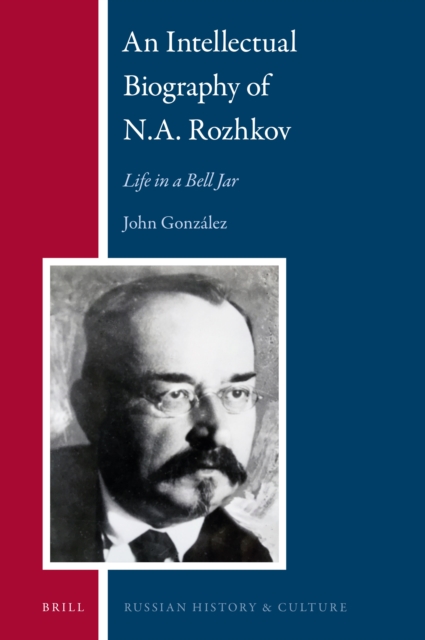
An Intellectual Biography of N.A. Rozhkov
An Intellectual Biography of N.A. Rozhkov is the first English language study to follow Russia's most gifted and important historian to emerge from the school of V.O. Kliuchevskii through the transformative decades that bridged the nineteenth and twentieth centuries. Rozhkov's early philosophical influences are examined to explain his radicalisation from middle-class intellectual academic to Leninist-Bolshevik to Menshevik social-democrat. His Marxist-socialist beliefs landed him in gaol several times and eventually he was exiled to Siberia for a decade where he was able to refine his political worldview and develop his theory of historical development. Critical of Lenin and the 1917 revolution, he spent the last decade of his life being persecuted by the Bolshevik regime.
eBook

Solovyov and Larionov
\"Solovyov, a young scholar born into obscurity, arrives in St Petersburg to have his thesis topic handed to him: the story of General Larionov. Dismissive at first, his subject soon intrigues the young scholar, even obsesses him: this is no ordinary General. Not only did Larionov fight for the monarchist Whites during the Civil War, he did so with bloody distinction. So how did he manage to live unharmed in the Soviet Union, on a Soviet pension, cutting an imposing figure on the Yalta beaches, leaving behind a son and a volume of memoirs? The budding young historian sets off to Crimea to look for some lost pages from the General's diary, and on his journey discovers many surprises, not least the charming Zoya, who works at Yalta's Chekhov Museum.\"--Provided by publisher.
Book
