
Catalogue Search | MBRL


Are you sure you want to remove the book from the shelf?

{{itemTitle}}
30
result(s) for
"Historic buildings Malta"
Sort by:


Physical–mechanical consolidation and protection of Miocenic limestone used on Mediterranean historical monuments: the case study of Pietra Cantone (southern Sardinia, Italy)
The present work aims to study the consolidating and protective chemical treatments of the
Pietra Cantone
, a Miocenic (lower Tortonian) limestone widely used in important monuments and historical buildings of Cagliari (southern Sardinia, Italy). Similar limestones of the same geological period have also been used in several important monuments of Mediterranean area, i.e., Malta and Gozo Islands, Matera (central Basilicata, Italy), Lecce (southern Puglia, Italy) and Balearic Islands (Spain). The
Pietra Cantone
limestone shows problems of chemical–physical decay, due to their petrophysical and compositional characteristics: high porosity (on average 28–36 vol%), low cemented muddy-carbonate matrix, presence of phyllosilicates and sindepositional sea salts (<3%). So, after placed in the monument, this stone is easily alterable by weathering chemical processes (e.g., carbonate dissolution and sulfation) and also by cyclic mechanisms of crystallization/solubilization of salts and hydration/dehydration of hygroscopic phases of the clay component. To define the mineralogical-petrographic features (composition, texture) of limestone, the clay and salt crystalline phases, the optical microscope in polarized light and diffraction analysis were used. To define the petrophysical characteristics (i.e., shape and size distribution of porosity, surface area (SBET), matrix microstructures, rock composition) and interactions of chemical treatments with rock, SEM–EDS analysis and N2 porosimetry with BET and BJH methods were used. To evaluate the efficacy of Na/K-silicates, ethyl silicate consolidants and protective nano-molecular silane monomer water repellent, the mechanical strengths (uniaxial compressive strength, point load and flexural resistance), water/helium open porosity, water absorption and vapour permeability data determined before and after the chemical treatments of the
Pietra Cantone
samples from monument were compared.
Journal Article

An archaeoacoustic study of the Ħal Saflieni Hypogeum on Malta
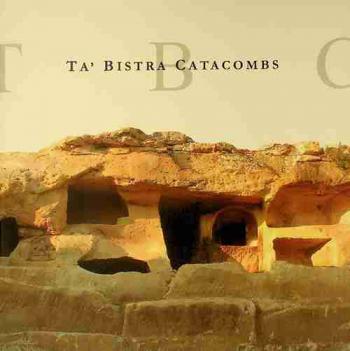
The remarkable subterranean architecture of the Ħal Saflieni Hypogeum on Malta has generated many claims about its dramatic acoustic effects, but previous studies have lacked rigour. A systematic, methodical approach has now been applied to measure the acoustic properties of the site, and to test earlier assertions. The results confirm some, but not all, prior observations, and demonstrate how a sound-based approach can contribute to an understanding of the archaeological context. It is argued that for the people who created the Hypogeum, the acoustics must have had particular significance and ritual power.
Journal Article
Sheltering archaeological sites in Malta: lessons learnt
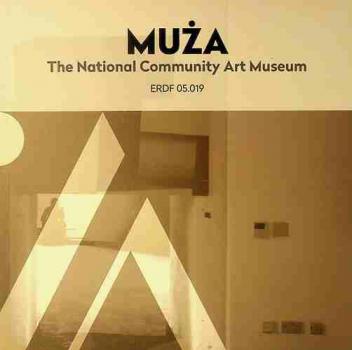
The purpose of this paper is to review the performance of the protective shelters installed over three archaeological sites in Malta over the past decade, and to draw some key lessons learnt that may be useful to others when considering whether to adopt a similar solution. The conservation threats to the Megalithic Temples of Malta are introduced and defined—these range from material issues (loss of surface) to structural issues (cracking and dislodgement of stones leading to structural instability and collapses). Causes identified specifically included fluctuating environmental conditions: wetting and drying cycles and thermal fluctuations, combined with the salt-laden Mediterranean island environment. The recognition during the late twentieth century of these issues as key factors in the deterioration of these structures, and the strategy that was developed in response, are outlined. A key component of this strategy was the installation of protective shelters over three of the main megalithic sites. The process through which the design requirements for the shelters were defined is reviewed. The performance of the shelters is then examined, through a critical review of unpublished reports and published studies. An evidence-based summary of the beneficial effects of the shelters is provided, and the possibility of any harmful effects discussed. A number of lessons learnt through this process are then identified. One key lesson is that the microenvironment in a newly-sheltered site is at a transitional stage that does not necessarily reflect longer-term trends, which therefore require long-term monitoring to be understood. The choice and number of environmental parameters to be monitored need to be informed by a careful consideration of their sustainability, both in terms of equipment and human resources. Any monitoring programme, however well-designed, needs to be open to re-evaluation and revision where needed. As more experience and data are accumulated from different sheltering projects, it will become more feasible to establish performance indicators in advance of a sheltering intervention, on the basis of which to evaluate its performance. The experience of these projects is then used to inform a checklist of key considerations for anyone considering whether to shelter an archaeological site. The foremost consideration is that every site requires a site-specific strategy tailored to its needs. The decision whether a shelter is desirable, and what its performance requirements should be, may only be taken in the context of such a strategy. This paper should help define the parameters for such a decision to take place.
Journal Article


Stones, Books and Flags: Born and the Role of Archaeological Heritage Management under the Barcelona Model
Since the 1980s, Barcelona's local institutions have been pioneers in creating a close relationship between culture, urban regeneration, and the social and economic development of the city, and subsequently in implementing a new paradigm in cultural policy for entrepreneurial, cultural, and creative cities. As a consequence, the city has also become a model for place branding and cultural tourism. In this context, Born, an archaeological site of the early eighteenth century which offers detailed testimony to both the cultural and economic lifestyle of the city at that time and the defeat of the Catalans during the War of the Spanish Succession, has been preserved and opened to the public in line with the city's varying cultural policies and attitudes to national identity over the last two decades. This article discusses Born from 2000 to 2017 and the political and cultural management context in relation to the Barcelona model that has defined its current form as a cultural centre. In this context, this article also discusses the role of archaeology in Barcelona's cultural governance, as a case study through which to consider the role of urban archaeological heritage management today. Depuis les années 1980, les institutions locales de Barcelone ont joué un rôle pionnier dans la création de relations plus étroites entre la culture, la réhabilitation urbaine et le développement social et économique de la ville, puis dans la mise en œuvre d'un nouveau modèle de politique culturelle destiné aux villes à vocations entrepreneuriales, culturelles et créatives. Ainsi la ville est devenue un modèle de tourisme culturel et d’élaboration d'une image de marque pour un lieu donné. C'est dans ce contexte qu'El Born, un site archéologique qui a produit des indications détaillées sur la vie culturelle et économique de la ville au début du XVIIIe siècle et sur la défaite des Catalans pendant la Guerre de Succession d'Espagne, a été conservé et ouvert au public conformément aux diverses politiques et attitudes de la ville envers l'identité nationale qui ont eu cours durant les deux dernières décennies. Dans cet article, il sera question d'El Born entre 2000 et 2017 et du contexte dans lequel sa gestion politique et culturelle s'est inscrite par rapport au modèle de Barcelone, un modèle qui a déterminé le centre culturel sous sa forme actuelle. On examinera aussi le rôle de l'archéologie dans la gestion culturelle de Barcelone, une étude de cas pouvant servir à considérer le rôle que la gestion du patrimoine archéologique urbain joue de nos jours. Translation by Madeleine Hummler Seit den 1980er Jahren haben die lokalen Institutionen in Barcelona als Pioniere bei der Förderung von engen Beziehungen zwischen Kultur, Stadterneuerung und die soziale und wirtschaftliche Entwicklung der Stadt gewirkt, und dann bei der Verwirklichung eines neuen Modells in der Kulturpolitik von unternehmerischen, kulturellen und kreativen Städten. Dadurch ist die Stadt ein Modell der Markenbildung eines Ortes und des Kulturtourismus geworden. In diesem Zusammenhang ist El Born, eine archäologische Stätte des frühen 18. Jahrhunderts mit ausführlichen Angaben über das kulturelle und wirtschaftliche Leben in der derzeitigen Stadt und über den Niederschlag der Katalanen im Spanischen Erbfolgekrieg, erhalten worden und der Öffentlichkeit zugänglich gemacht worden, in Übereinstimmung mit den verschiedenen Strategien und Einstellungen zur nationalen Identität, die in den letzten zwei Jahrzehnten in der Stadt vorlagen. In diesem Artikel wird El Born zwischen 2000 und 2017 und seine politische und denkmalpflegerische Führung in Bezug auf das Barcelona Modell, welche seine aktuelle Form als Kulturzentrum geprägt hat, dargelegt. Dabei wird auch die Bedeutung der Archäologie in der Leitung des Kulturbereichs in Barcelona als Fallstudie für die Rolle der Bodendenkmalpflege in den heutigen Städten untersucht. Translation by Madeleine Hummler
Journal Article

Geomechanical, durability–hygrothermal and thermal shock properties of Kocaeli Kandira stone used as building stone in historical structures
This study investigated the mineralogical, chemical, physical, mechanical, durability–hygrothermal, thermal shock properties, and economic aspects of the Kandira stone, one of the well-known natural building stones, commonly used in many historical structures in the Marmara and Thrace regions. Especially, it has been preferred to Malta stone in historical structures in Istanbul due to economic reasons at the beginning of the 1900s. A similar appearance and lithology with Malta stone and closeness of the Kandıra stone to İstanbul made it attractive to be used as natural building stone in historical monuments and new structures. The mean physico-mechanical properties of Kandira stone yielded 2.24 g/cm3 apparent density, 2.72 specific gravity, 19.21% total porosity, 5.8% water absorption by weight, 48 MPa compressive strength, 11.4 MPa bending strength. In terms of durability properties, Kandira stone has high resistance to aging by CaCl salt mist and no or low resistance to SO2 aging in a humid environment. Also, the freeze–thaw test of Kandira stone yielded an exceptionally low mass loss (0.11%) indicating that the stone is resistant to freeze–thaw effect. Thermal shock tests indicated that Kandira stone is mainly resistant to thermal shock cycles. Economically, the calculated probable reserve of Kandira stone resulted in 40.8 × 10⁶ tons of material and the potential economic value based on the probable reserve is calculated around 54.672 × 10⁹ TL (approximately €7.2B). In conclusion, this study defined the petrographic, geomechanical, durability–hygrothermal and thermal shock properties essential for the use of Kandira stone as building stone and restoration material.
Journal Article