
Catalogue Search | MBRL


Are you sure you want to remove the book from the shelf?

{{itemTitle}}
380
result(s) for
"Historic districts -- Conservation and restoration"
Sort by:

Reconnecting the city
Historic Urban Landscape is a new approach to urban heritage management, promoted by UNESCO, and currently one of the most debated issues in the international preservation community. However, few conservation practitioners have a clear understanding of what it entails, and more importantly, what it can achieve.
* Examples drawn from urban heritage sites worldwide – from Timbuktu to Liverpool
* Richly illustrated with colour photographs
* Addresses key issues and best practice for urban conservation
eBook

The historic urban landscape : managing heritage in an urban century
This book offers a comprehensive overview of the intellectual developments in urban conservation.The authors offer unique insights from UNESCO's World Heritage Centre and the book is richly illustrated with colour photographs.
eBook


The Challenge of Genadendal
\"During our term in office as President of the Republic of South Africa, we decided to rename the presidential official residence in Cape Town from 'Westbrooke' to 'Genadendal' which means 'Valley of Grace'. We also visited this historic little town on 10 October 1995. The renaming of the official residence was in honour of the oldest mission settlement in South Africa. Over the centuries it became a place associated with the coming together of people from different racial groups: in addition to being the first permanent Khoi settlement at the Cape, it was also a place of sanctuary for more than a thousand slaves when slavery was abolished in 1838. Genadendal is blessed with a rich tangible and intangible heritage. It boasts of vernacular architecture, musical traditions and language and a long tradition of humanitarian efforts and political struggle. It is with pleasure that we learned about the completion of the restoration project due to the assistance of the Dutch Government. The improvements that were effected provided the inhabitants with infrastructure to improve the quality of their lives. May the history of Genadendal continue to inspire especially during the 270th year of its existence.\" - Nelson Mandela (former President of South Africa). The Challenge of Genadendal presents the results of this important project.
eBook
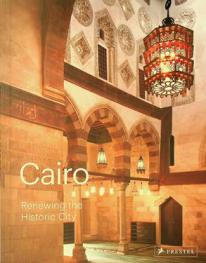
Cairo : renewing the historic city
This book reveals how the Aga Khan Development Network and its Historic Cities Programme transformed an area of Cairo's urban blight into a dynamic public space. Once a city of verdant gardens and parks, Cairo in the 1980s was severely overcrowded, economically struggling, and many of its inhabitants lived in unsanitary conditions. Historic Cairo, a World Heritage Site centered on the original Fatimid settlement of Cairo, has presented a challenge to conservationists and urban planners over the years as they have sought to protect the city's heritage while it remains a living city. Understanding how the process of decline could be reversed by restoring monuments and building a new park, the Aga Khan Development Network (AKDN) set about revitalizing the Darb al Ahmar area and creating Al Azhar Park. This book features numerous scholarly contributors and authors who participated in the program, and shows how the conservation effort paid off in countless ways.
Book
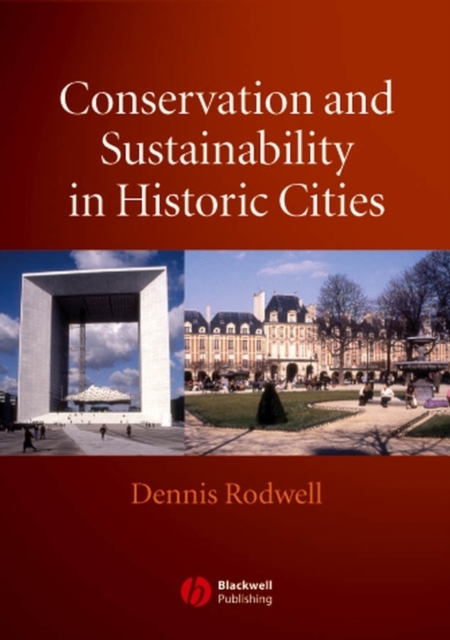
Conservation and sustainability in historic cities
Conservation and Sustainability in Historic Cities examines how the two key issues of urban conservation and sustainability relate to each other in the context of historic cities, and how they can be brought together in a common philosophy and practice that is mutually supportive. It sets out the theoretical and practical background to architectural conservation and how its perceived relevance and level of attainment can be extended when harnessed to wider agendas of sustainability and cultural identity. It tests the achievement of urban conservation through case studies from across Europe and elsewhere, assessing them against the sustainability agenda.
eBook

Cairo : renewing the historic city
This book reveals how the Aga Khan Development Network and its Historic Cities Programme transformed an area of Cairo's urban blight into a dynamic public space. Once a city of verdant gardens and parks, Cairo in the 1980s was severely overcrowded, economically struggling, and many of its inhabitants lived in unsanitary conditions. Historic Cairo, a World Heritage Site centered on the original Fatimid settlement of Cairo, has presented a challenge to conservationists and urban planners over the years as they have sought to protect the city's heritage while it remains a living city. Understanding how the process of decline could be reversed by restoring monuments and building a new park, the Aga Khan Development Network (AKDN) set about revitalizing the Darb al Ahmar area and creating Al Azhar Park. This book features numerous scholarly contributors and authors who participated in the program, and shows how the conservation effort paid off in countless ways.
BOOK

Tokyo vernacular
Preserved buildings and historic districts, museums and reconstructions have become an important part of the landscape of cities around the world. Beginning in the 1970s, Tokyo participated in this trend. However, repeated destruction and rapid redevelopment left the city with little building stock of recognized historical value. Late twentieth-century Tokyo thus presents an illuminating case of the emergence of a new sense of history in the city’s physical environment, since it required both a shift in perceptions of value and a search for history in the margins and interstices of a rapidly modernizing cityscape. Scholarship to date has tended to view historicism in the postindustrial context as either a genuine response to loss, or as a cynical commodification of the past. The historical process of Tokyo’s historicization suggests other interpretations. Moving from the politics of the public square to the invention of neighborhood community, to oddities found and appropriated in the streets, to the consecration of everyday scenes and artifacts as heritage in museums, Tokyo Vernacular traces the rediscovery of the past—sometimes in unlikely forms—in a city with few traditional landmarks. Tokyo's rediscovered past was mobilized as part of a new politics of the everyday after the failure of mass politics in the 1960s. Rather than conceiving the city as national center and claiming public space as national citizens, the post-1960s generation came to value the local places and things that embodied the vernacular language of the city, and to seek what could be claimed as common property outside the spaces of corporate capitalism and the state.
eBook