
Catalogue Search | MBRL


Are you sure you want to remove the book from the shelf?

{{itemTitle}}
722
result(s) for
"Historical fiction, English"
Sort by:


Victoriana
In this book Cora Kaplan looks at the politics of ‘Victoriana’ from the 1970s to the present, a politics that emerges from the alternation between nostalgia and critique in fiction, film, biography and literary studies. She asks how Jane Eyre can still evoke tears and rage, as well as inspiring imitation and high art, and why Henry James has become fiction’s favourite late Victorian character in the new millennium?
eBook


Traces of Another Time
Is the historical novel the outmoded genre that some people imagine--form inseparable from romanticism, nationalism, and the nineteenth century? In this stimulating volume, Margaret Scanlan answers a convincing \"no,\" as she demonstrates the relevance of historical novels by well-known figures such as Anthony Burgess, John le Carr, Graham Greene, Doris Lessing, Iris Murdoch, and Paul Scott, as well as by less well established writers such as Joseph Hone and Thomas Kilroy. Scanlan shows what a skeptical, experimental approach to the relationship between history and fiction these writers adopt and how radically they depart from the mimetic conventions usually associated with historical novels. Drawing on contemporary historiography and literary theory, Scanlan defines the problem of writing historical fiction at a time when people see the subject of history as fragmentary and uncertain. The writers she discusses avoid the great events of history to concentrate on its margins: what interests them is history as it is experienced, usually reluctantly, by human beings who would rather be doing something else. The first section of the book looks at fictional representations of England's difficult history in Ireland; the second examines spies, aliens, and the loss of public confidence; and the third probes the theme of Apocalypse, nuclear or otherwise, and depicts the collapse of the British Empire as an instance of the greatly diminished importance of Western culture in the world.
Originally published in 1990.
ThePrinceton Legacy Libraryuses the latest print-on-demand technology to again make available previously out-of-print books from the distinguished backlist of Princeton University Press. These paperback editions preserve the original texts of these important books while presenting them in durable paperback editions. The goal of the Princeton Legacy Library is to vastly increase access to the rich scholarly heritage found in the thousands of books published by Princeton University Press since its founding in 1905.
eBook
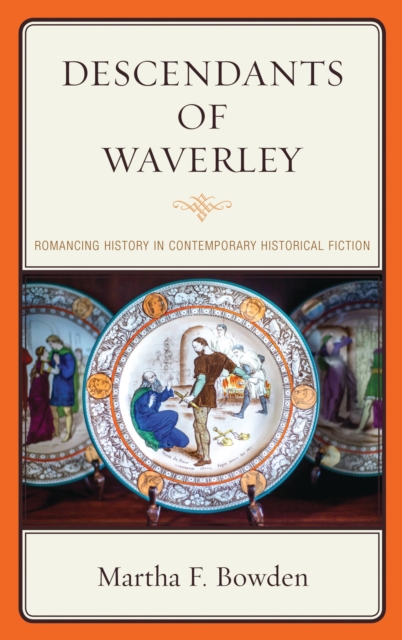
Descendants of Waverley
Descendants of Waverley examines contemporary novelists’ combination of historical authority and narrative art to create authentic and accessible depictions of the past. This technique, the “romance of history,” challenges conventional theories that the novel as a genre erased the romance. Individual chapters establish the critical framework, analyze the strategies that authors use to romance history, and demonstrate the subgenres that exist in current historical fiction. While the author does not consider Walter Scott to be the inventor of historical fiction, she demonstrates the ways in which contemporary fiction’s techniques reflect the form of the genre that Scott both developed and theorized in the Waverley novels (1814–1832). In writing his “historical romances,” Scott drew on the forms of the fictions that preceded his work, especially Gothic fiction, and was influenced by the fluid definitions of “romance” that permeated the theorizing of the novel and its development in the eighteenth century, where fiction was described as evolving from and replacing romances and referred to as “romances” themselves. She begins by tracing this history and moves on to discuss contemporary fiction, both as technique, in the uses of intertextuality, and in as form, in the increasing hybridity of contemporary fiction. This hybridity is reflected in such forms as the historical detective novel, the embedded narrative, and the biographical novel; the pedagogical elements inherent in the historical novel before Scott’s oeuvre continue into the present. The book ends with the recent phenomenon of historical fantasy; in this subgenre, the traits of more conventional historical fiction, such as intertextuality and the tension between the familiar and strange, combine with a playful form of fantasy that releases revenants among the Luddites and wizards into the Battle of Waterloo. John Frow’s theory of the slipperiness of genre is a critical component for explicating the most recent metamorphoses of historical fiction. The critical framework also develops from recent and eighteenth-century histories of the novel, twentieth- and twenty-first-century theories of Scott’s influence, and contemporary writers’ own reflections on what they do when they write historical novels.
eBook

Sovereign Fantasies
During and after the Hundred Years War, English rulers struggled with a host of dynastic difficulties, including problems of royal succession, volatile relations with their French cousins, and the consolidation of their colonial ambitions toward the areas of Wales and Scotland. Patricia Ingham brings these precarious historical positions to bear on readings of Arthurian literature in Sovereign Fantasies, a provocative work deeply engaged with postcolonial and gender theory.Ingham argues that late medieval English Arthurian romance has broad cultural ambitions, offering a fantasy of insular union as an \"imagined community\" of British sovereignty. The Arthurian legends offer a means to explore England's historical indebtedness to and intimacies with Celtic culture, allowing nobles to repudiate their dynastic ties to France and claim themselves heirs to an insular heritage. Yet these traditions also provided a means to critique English conquest, elaborating the problems of centralized sovereignty and the suffering produced by chivalric culture. Texts such as Sir Gawain and the Green Knight, the Alliterative Morte Arthure, and Caxton's edition of Malory's Morte Darthur provide what she terms a \"sovereign fantasy\" for Britain. That is, Arthurian romance offers a cultural means to explore broad political contestations over British identity and heritage while also detailing the poignant complications and losses that belonging to such a community poses to particular regions and subjects. These contestations and complications emerge in exactly those aspects of the tales usually read as fantasy-for example, in the narratives of Arthur's losses, in the prophecies of his return, and in tales that dwell on death, exotic strangeness, uncanny magic, gender, and sexuality.Ingham's study suggests the nuances of the insular identity that is emphasized in this body of literature. Sovereign Fantasies shows the significance, rather than the irrelevance, of medieval dynastic motifs to projects of national unification, arguing that medieval studies can contribute to our understanding of national formations in part by marking the losses produced by union.
eBook
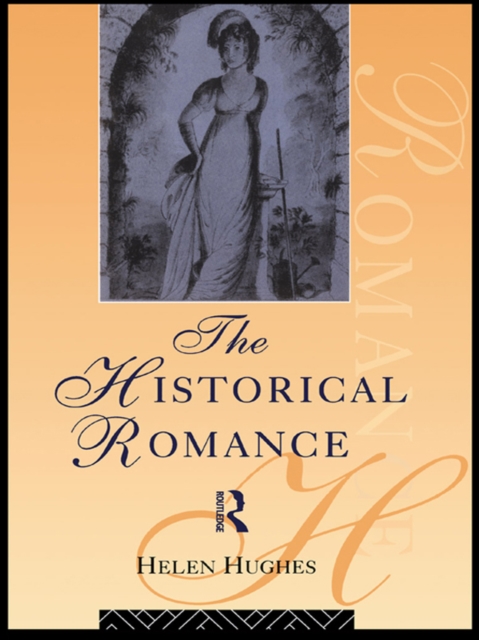
The Historical Romance
The Historical Romance explores the ways in which romance authors seek to represent our fantasies of life in the past. Examining how the cut-and-thrust swashbucklers of the 1930s gave way to female-orientated romances, Helen Hughes takes a comprehensive look at how romance authors have dealt with the turbulent question of female independence, and how traditional attitudes towards love, marriage and women's sexuality have been approached in more recent texts. Hughes also charts the ways in which the marketing of romance has developed, with the eventual explosion of the mass market and the blockbusting family sagas of the eighties. The Historical Romance unravels the formulaic and mythical nature of historical romance to provide a fascinating study of this highly popular genre.
eBook