
Catalogue Search | MBRL


Are you sure you want to remove the book from the shelf?

{{itemTitle}}
19
result(s) for
"Historical museums Interpretive programs."
Sort by:

Historical villages
\"Re-creating life in past times to educate the public and the historical villages where role-playing takes place can provide teens with the opportunity to learn skills from bygone times, such as blacksmithing or cabinetmaking, and earn a living. Historical villages give people the chance to bring another time to life, using historical tools and wearing period clothing. Costume design, set building, and makeup artistry, among other jobs, are explored, as well as how the experience gained at a historical village can be applied to careers within the tourism and museum industries and in carpentry and acting.\"--Amazon.com.
Book

Exhibiting Patriotism
American nationalism, patriotism and citizenship are proudly on display at historical sites across America-but they are also contested and reshaped by visitors and their engagement with those places. In Exhibiting Patriotism, Bergman analyzes exhibits, interpretive materials, and orientation films at major US sites, from Mt. Rushmore and to the USS Arizona Memorial, where controversy has erupted over the stories they tell about the past. She shows how historic narratives are the result of dynamic relationships between institutions and the public, and how these relationships are changing in an era when museums are becoming more visitor-centered, seeing visitors as partners in historical interpretation. Drawing on film theory, memory studies, visual communication, and visitor studies, Bergman offers an important analysis for scholars and professionals in American studies, museum studies, public history, and communication and media studies.
eBook


Interpreting naval history at museums and historic sites
Interpreting Naval History at Museums and Historic Sites demonstrates the broad appeal of naval themed commemoration, centering on military aspects from both times of war and peace. Transcending place and time, naval history is shaped into public forums for modern day consumption. These occurrences are not limited to just recent history, as can be seen in the celebration of man's long history of transforming bodies of water from barriers into opportunities. In addition, with the modern day nation-state naval history is not just limited to areas near large bodies of water, as seen with landlocked states in the United States sharing in a proud naval tradition. Examples of this included in the book are USS Arizona, BB-39, and USS Missouri, BB-63.) Naval history is just one avenue, with sites marking the history of immigration, engineering technology, and architecture.. Naval history also extends into lighthouses and port facility construction which are the background of a host of U.S. Generals in the U.S. Army with the Army Corps of Engineers, which includes the Robert E. Lee. Using an international approach, the book illustrates the intersection of the historical understanding of one's place and naval traditions. Locating the boundaries, one finds both the depth and breath of the topics linking (and dividing) water and man.
eBook
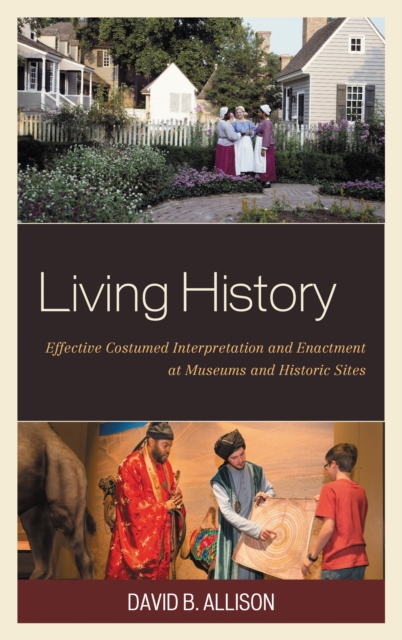
Living history
Living history museums are cultural institutions that merge historical exhibits with live costumed performance. While unique and vitally important, they often compromise historical accuracy and authenticity for the sake of tourism and entertainment value. Many also pursue methods of performance and historiography that are becoming increasingly outdated. Living History Museums: Undoing History Through Performance examines the performance practices used by institutions such as Plimoth Plantation and Colonial Williamsburg, and offers a new genealogy of living history museum performance in the U.S. and Europe. Currently, existing scholarship on living history museums addresses the subject from a museum-studies or anthropology perspective. Author Scott Magelssen, however, approaches the material from a background in theatre history and theory, analyzing living history museums using postmodern methodology. Considering performance as a method for the study of history and exploring emergent non-traditional theatrical practices, the book offers suggestions for performance in an increasingly postmodern landscape. Concluding with an international listing of living history institutions and a complete list of sources, Living History Museums is a valuable resource for students and teachers of theatre and performance studies, cultural studies, folklore, popular culture, American studies, and museum studies.
eBook

Reading Memory Sites Through Signs
What can space tell us about our past? Which stories do memory sites narrate? Which memories do they transmit? And, more importantly, how can we read their meanings? Semiotics can provide us with a homogeneous, shareable and theoretically sound methodology to analyse space within a comparable and common frame of reference for scholars of memory studies and traumatic heritage, as well as for historians, architects and museum curators. The book describes in clear and understandable language the main semiotic concepts that can be used to analyse space, illustrating them with carefully chosen case studies of memory spaces - monuments, museums, post-war urban restoration, filmed and virtual space - in order to show the applicability and efficacy of a semiotic methodology.
eBook

The Engaging Museum
This very practical book guides museums on how to create the highest quality experience possible for their visitors. Creating an environment that supports visitor engagement with collections means examining every stage of the visit, from the initial impetus to go to a particular institution, to front-of-house management, interpretive approach and qualitative analysis afterwards.
This holistic approach will be immensely helpful to museums in meeting the needs and expectations of visitors and building their audience.
This book features:
includes chapter introductions and discussion sections
supporting case studies to show how ideas are put into practice
a lavish selection of tables, figures and plates to support and illustrate the discussion
boxes showing ideas, models and planning suggestions to guide development
an up-to-date bibliography of landmark research.
The Engaging Museum offers a set of principles that can be adapted to any museum in any location and will be a valuable resource for institutions of every shape and size, as well as a vital addition to the reading lists of museum studies students.
eBook
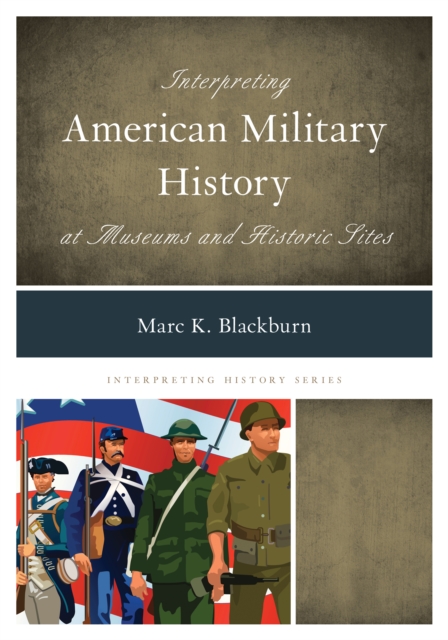
Interpreting American military history at museums and historic sites
Across the country, museums and historic sites welcome visitors into a world long gone but fundamental to America today.Military history in particular is etched into our country's culture and the public's imagination.
eBook
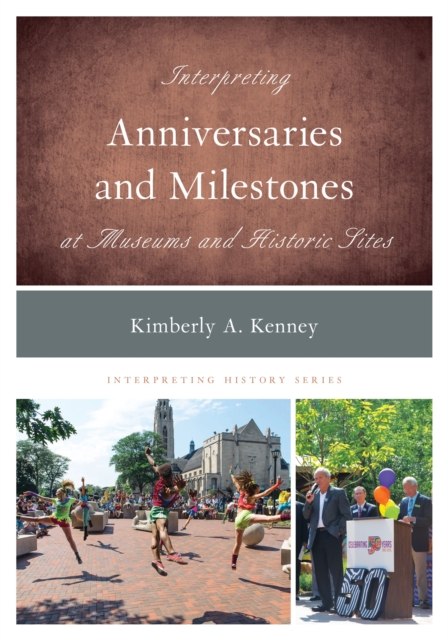
Interpreting anniversaries and milestones at museums and historic sites
Interpreting Anniversaries and Milestones at Museums and Historic Sites is an invaluable resource for a wide range of cultural organizations that are attempting to plan an historical anniversary celebration or commemoration, including museums, churches, cities, libraries, colleges, arts organizations, science centers, historical societies, and historic house museums. As you plan a milestone anniversary for your institution, learn from what others have already accomplished in their own communities.
eBook

The Constructed Past
The Constructed Past presents group of powerful images of the past, termed in the book construction sites. At these sites, full scale, three-dimensional images of the past have been created for a variety of reasons including archaeological experimentation, tourism and education. Using various case studies, the contributors frankly discuss the aims, problems and mistakes experienced with reconstruction. They encourage the need for on-going experimentation and examine the various uses of the sites; political, economical and educational.
Introduction P. G. Stone and P. Planel ; 1. Archaeological reconstructions and the community in the UK M. Blockley 2. Reconstruction versus preservation in place in the United States National Park Service J. H. Jameson Jr. and W. J. Hunt 3. Reconstruction sites and education in Japan: a case study from the Kansai Region K. Okamura and R. Condon 4. The origin and role of the Irish National Heritage Park E. Culleton 5. Resurrection and deification at Colonial Williamsburg, USA I. N. Hume 6. Shakespeare's Globe: 'As faithful a copy as scholarship ... could get ..' .. '.. A bit of a bastard ..' T. Schadla-Hall 7. Butser Ancient Farm, UK P. Reynolds 8. The Historical Archaeological Experimentation Centre at Lejre, Denmark: 30 years of experimenting with the past M. Rasmussen and B. Grønnow 9. Reconstruction as ideology: the Open Air Museum at Oerlinghausen, Germany M. Schmidt 10. Slavonic Archaeology: GroB Raden an Open Air Museum in a unified Germany U. Sommer 11. The reconstruction of sites in the archaeological themepark Archeon in the Netherlands G. Ijzereef 12. Pembrokeshire's pasts. Natives, invaders and Welsh archaeology: the Castell Henllys experience H. Mytum 13. The Parc Pyrénéen de l'Art Préhistorique, France: beyond replica and re-enactment in interpreting the ancient past J. Clottes and C. Chippindale 14. Experimental archaeology and education: ancient technology at the service of modern education at SAMARA, France G. Dieudonné 15. Lake dwellings: archaeological interpretation and social perception, a case study from France P. Pétrequin 16. The Ancient Technology Centre, Cranbourne, UK - a reconstruction site built for education J. Keen 17. Bede's World, UK: the monk who made history P. Fowler 18. Archaeological reconstruction and education at the Jorvik Viking Centre and Archaeological Resource Centre, York, UK A. Jones ONdini, The Zulu royal capital of King Cetshwayo Ka Mpande (1873-1879) Len O. van Schalkwyk 20. Akaim archaeological park: a cultural-ecological reserve in Russia G.B. Zdanovich
eBook