
Catalogue Search | MBRL


Are you sure you want to remove the book from the shelf?

{{itemTitle}}
64,749
result(s) for
"Historical museums."
Sort by:

The museum : from its origins to the 21st century
\"Packed with stunning imagery and featuring the world's most celebrated cultural institutions, architectural historian and museum curator Owen Hopkins looks at the fascinating history of the museum. Visited by millions around the world every year, discover the untold story of the museum, one of mankind's most essential creations. Using examples of the greatest cultural institutions to shape the narrative, this book outlines the history of the museum movement, tracking the evolution from princely collections in Europe and the Enlightenment's classically inspired temples of curiosities, via the public museums of the late nineteenth century, on to today's global era of iconic buildings designed by the world's leading architects. Over the course of five chapters filled with stunning imagery that highlights the beauty of these venerated buildings, the origins of key institutions are revealed, including: Louvre; Metropolitan Museum of Art; British Museum; Tate Modern; Hermitage; Guggenheim; Smithsonian Institute; Acropolis Museum. Also outlined are the motivations of the architects, curators and patrons who have shaped how we experience the modern museum, a cast that includes names such as King George II, Napoleon, Henry Clay Frick, Peggy Guggenheim, Andrew Carnegie, Alfred Barr, Frank Lloyd Wright, Le Corbusier, Frank Gehry, Richard Rogers, Nicholas Serota and Zaha Hadid. By examining how these venues became intrinsic to our shared cultural experience, analysing the changing roles they play in society and questioning what the future holds in a digital age, this book is for anyone who has stood in awe at the spectacle of a museum\"--Publisher's description.
Book

Tailoring Truth
By looking at state-sponsored memory projects, such as memorials, commemorations, and historical museums, this book reveals that the East German communist regime obsessively monitored and attempted to control public representations of the past to legitimize its rule. It demonstrates that the regime's approach to memory politics was not stagnant, but rather evolved over time to meet different demands and potential threats to its legitimacy. Ultimately the party found it increasingly difficult to control the public portrayal of the past, and some dissidents were able to turn the party's memory politics against the state to challenge its claims of moral authority.
eBook

Museums, emotion, and memory culture : the politics of the past in Turkey
\"Museums, Emotion, and Memory Culture examines the politics of emotion in history museums, combining approaches and concerns from a range of disciplines. Exploring the meanings and politics of memory contests in Turkey, the book asks what it means for museums to imbue the past with political agendas through spectacular, emotive representations. Providing an in-depth examination of emotional practice in two Turkish museums that present contrasting representations of the national past, the book analyses relationships between memory, governmentality, identity and emotion. The museums discussed celebrate Ottoman and Early Republican pasts, linking to geo- and party politics, people's senses of who they are, popular memory culture, and competing national stories and identities vis-لa-vis Europe and the wider world. Both museums use dramatic, emotive panoramas as key displays and the research at the heart of this book explores this seemingly anachronistic choice, and how it links with memory cultures to prompt visitors to engage imaginatively, socially, politically and morally with a particular version of the past. Although the book focuses on museums in Turkey, it uses this as a platform to address broader questions about memory culture, emotion and identity. As such, Museums and Memory Culture should be of great interest to academics and students around the world who are engaged in the study of museums, heritage, culture, history, politics, anthropology, sociology and the psychology of emotion\"-- Provided by publisher.
Book

Museums, Monuments, and National Parks
The rapid expansion of the field of public history since the 1970s has led many to believe that it is a relatively new profession. In this book, Denise D. Meringolo shows that the roots of public history actually reach back to the nineteenth century, when the federal government entered into the work of collecting and preserving the nation’s natural and cultural resources. Scientists conducting research and gathering specimens became key figures in a broader effort to protect and interpret the nation’s landscape. Their collaboration with entrepreneurs, academics, curators, and bureaucrats alike helped pave the way for other governmental initiatives, from the Smithsonian Institution to the parks and monuments today managed by the National Park Service. All of these developments included interpretive activities that shaped public understanding of the past. Yet it was not until the emergence of the educationoriented National Park Service history program in the 1920s and 1930s that public history found an institutional home that grounded professional practice simultaneously in the values of the emerging discipline and in government service. Even thereafter, tensions between administrators in Washington and practitioners on the ground at National Parks, monuments, and museums continued to define and redefine the scope and substance of the field. The process of definition persists to this day, according to Meringolo, as public historians establish a growing presence in major universities throughout the United States and abroad.
eBook

Exhibiting atrocity : memorial museums and the politics of past violence
\"Today, nearly any group or nation with violence in its past has constructed or is planning a memorial museum as a mechanism for confronting past trauma, often together with truth commissions, trials, and/or other symbolic or material reparations. Exhibiting Atrocity documents the emergence of the memorial museum as a new cultural form of commemoration, and analyzes its use in efforts to come to terms with past political violence and to promote democracy and human rights. Through a global comparative approach, Amy Sodaro uses in-depth case studies of five exemplary memorial museums that commemorate a range of violent pasts and allow for a chronological and global examination of the trend: the US Holocaust Memorial Museum in Washington, DC; the House of Terror in Budapest; the Kigali Genocide Memorial Centre in Rwanda; the Museum of Memory and Human Rights in Santiago, Chile; and the National September 11 Memorial Museum in New York. Together, these case studies illustrate the historical emergence and global spread of the memorial museum and show how this new cultural form of commemoration is intended to be used in contemporary societies around the world\"-- Provided by publisher.
Book
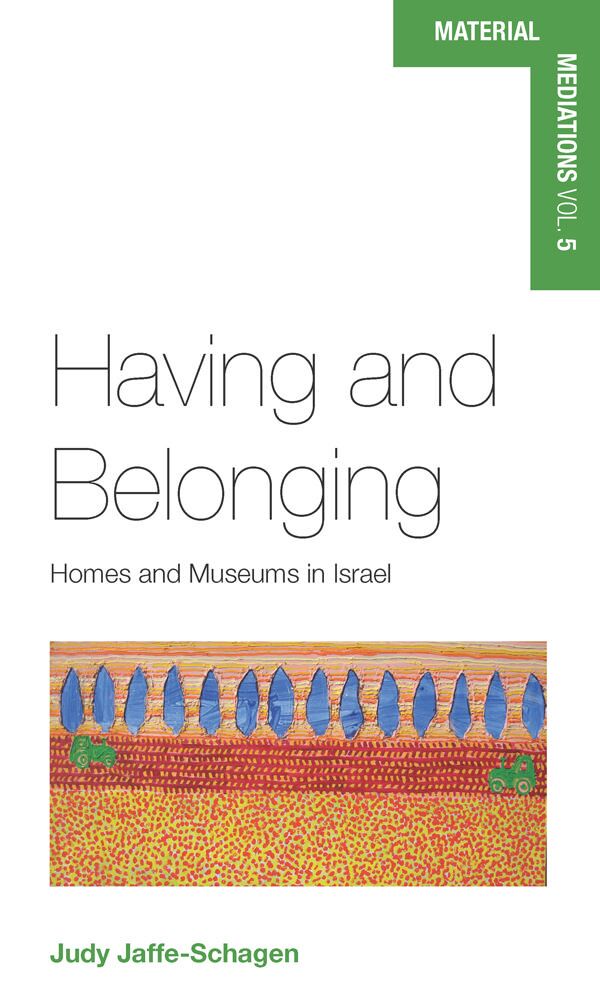
Having and belonging
The home and the museum are typically understood as divergent, even oppositional, social realms: whereas one evokes privacy and familial intimacy, the other is conceived of as a public institution oriented around various forms of civic identity. This meticulous, insightful book draws striking connections between both spheres, which play similar roles by housing objects and generating social narratives. Through fascinating explorations of the museums and domestic spaces of eight representative Israeli communities-Chabad, Moroccan, Iraqi, Ethiopian, Russian, Religious-Zionist, Christian Arab, and Muslim Arab-it gives a powerful account of museums' role in state formation, proposing a new approach to collecting and categorizing particularly well-suited to societies in conflict.
eBook

Escape to prison : penal tourism and the pull of punishment
\"The resurrection of former prisons as museums has caught the attention of tourists along with scholars interested in studying dark tourism. Unsurprisingly, due to their grim subject matter, prison museums tend to invert the 'Disney' experience, becoming the antithesis of 'the happiest place on earth.' With a keen eye on punishment and culture, criminologist Michael Welch explores ten prison museums on six continents, examining the complex interplay between culture and punishment. From Alcatraz to Argentina, from South Africa to South Korea, museums constructed on the former locations of surveillance, torture, colonial control, and possibly even rehabilitation each tell a unique tale about the economic, political, religious, and scientific roots of each site's historical relationship to punishment\"--Provided by publisher.
Book

Historic house museums in the United States and the United Kingdom
This book addresses the phenomenon of historic houses as a distinct species of museum. By analyzing the motivation of the founders, and subsequent keepers, of house museums, the author identifies a typology that casts light on what they were intended to represent and their significance (or lack of it) today
eBook

Time travel : tourism and the rise of the living history museum in mid-twentieth-century Canada
\"In the 1960s, Canadians could step through time to eighteenth-century trading posts or nineteenth-century pioneer towns. These living history museums promised authentic reconstructions of the past but, as Time Travel shows, they revealed more about mid-twentieth-century interests and perceptions of history than they reflected historical fact. The postwar appetite for commercial tourism led to the development of living history museums. They became important components of economic growth, especially as part of government policy to promote regional economic diversity and employment. Time Travel considers these museums in their historical context, revealing how Canadians understood the relationship between their history and the material world. Using examples from across Canada, Alan Gordon explores how these museums responded to shifting expectations of a nation defined by the Great Depression, the Second World War, and the space race. Along the way, museum projects were shaped by scandal, personality conflicts, funding challenges, and the need to balance education and entertainment: historical authenticity was often less important than the tourist experience. Ultimately, the rise of the living history museum is linked to the struggle to establish a pan-Canadian identity in the context of multiculturalism, competing anglophone and francophone nationalisms, First Nations resistance, and the growth of the state.\"-- Provided by publisher.
Book

Desegregating the past
At the Apartheid Museum in Johannesburg, South Africa, visitors confront the past upon arrival. They must decide whether to enter the museum through a door marked \"whites\" or another marked \"non-whites.\" Inside, along with text, they encounter hanging nooses and other reminders of apartheid-era atrocities. In the United States, museum exhibitions about racial violence and segregation are mostly confined to black history museums, with national history museums sidelining such difficult material. Even the Smithsonian's National Museum of African American History and Culture is dedicated not to violent histories of racial domination but to a more generalized narrative about black identity and culture. The scale at which violent racial pasts have been incorporated into South African national historical narratives is lacking in the U.S. Desegregating the Past considers why this is the case, tracking the production and display of historical representations of racial pasts at museums in both countries and what it reveals about underlying social anxieties, unsettled emotions, and aspirations surrounding contemporary social fault lines around race. Robyn Autry consults museum archives, conducts interviews with staff, and recounts the public and private battles fought over the creation and content of history museums. Despite vast differences in the development of South African and U.S. society, Autry finds a common set of ideological, political, economic, and institutional dilemmas arising out of the selective reconstruction of the past. Museums have played a major role in shaping public memory, at times recognizing and at other times blurring the ongoing influence of historical crimes. The narratives museums produce to engage with difficult, violent histories expose present anxieties concerning identity, (mis)recognition, and ongoing conflict.
eBook