
Catalogue Search | MBRL


Are you sure you want to remove the book from the shelf?

{{itemTitle}}
5,955
result(s) for
"History, Naval"
Sort by:

Les fatimides et la mer (909-1171)
\"The Fatimids (10th - 12th centuries C.E) are known to have been the first Shiite caliphal dynasty and to have founded Cairo, the city that became their capital in 973 when they left Tunisia for Egypt. During their reign, the Fatimids built an effective war fleet that inflicted several defeats on Christian navies. This is the first study on the Fatimid naval force and, more generally, on the role of the sea for the Fatimids whose territories touched both the Mediterranean and the Red Sea. The documentation presented in this study demonstrates how, in the course of two centuries, this Ismaeli dynasty set up a maritime policy and developed a communication strategy in which their control of the sea helped legitimize their universalist claims against competing powers. \"-- Provided by publisher.
BOOK

Militarism in a global age : naval ambitions in Germany and the United States before World War I
At the turn of the twentieth century, the United States and Germany emerged as the two most rapidly developing industrial nation-states of the Atlantic world. The elites and intelligentsias of both countries staked out claims to dominance in the twentieth century. In Militarism in a Global Age, Dirk Bönker explores the far-reaching ambitions of naval officers before World War I as they advanced navalism, a particular brand of modern militarism that stressed the paramount importance of sea power as a historical determinant. Aspiring to make their own countries into self-reliant world powers in an age of global empire and commerce, officers viewed the causes of the industrial nation, global influence, elite rule, and naval power as inseparable. Characterized by both transnational exchanges and national competition, the new maritime militarism was technocratic in its impulses; its makers cast themselves as members of a professional elite that served the nation with its expert knowledge of maritime and global affairs.
American and German navalist projects differed less in their principal features than in their eventual trajectories. Over time, the pursuits of these projects channeled the two naval elites in different directions as they developed contrasting outlooks on their bids for world power and maritime force. Combining comparative history with transnational and global history, Militarism in a Global Age challenges traditional, exceptionalist assumptions about militarism and national identity in Germany and the United States in its exploration of empire and geopolitics, warfare and military-operational imaginations, state formation and national governance, and expertise and professionalism.
eBook

A new naval history
A New Naval History brings together the most significant and interdisciplinary approaches to contemporary naval history. The last few decades have witnessed a transformation in how this field is researched and understood and this volume captures the state of a field that continues to develop apace. It examines - through the prism of naval affairs - issues of nationhood and imperialism; the legacy of Nelson; the socio-cultural realities of life in ships and naval bases; and the processes of commemoration, journalism and stage-managed pageantry that plotted the interrelationship of ship and shore. This bold and original publication will be essential for undergraduate and postgraduate students of naval and maritime history. Beyond that, though, it marks an important intervention into wider historiographies that will be read by scholars from across the spectrum of social history, cultural studies and the analysis of national identity. --
Book

Spy Ships
Almost from the first days of seafaring, men have used ships for
\"spying\" and intelligence collection. Since early in the twentieth
century, with the technological advancements of radio and radar,
the U.S. Navy and other government agencies and many other navies
have used increasingly specialized ships and submarines to ferret
out the secrets of other nations. The United States and the Soviet
Union/Russia have been the leaders in those efforts, especially
during the forty-five years of the Cold War. But, as Norman Polmar
and Lee J. Mathers reveal, so has China, which has become a major
maritime power in the twenty-first century, with special interests
in the South China Sea and with increasing hostility toward the
United States. Through extensive, meticulous research and through
the lens of such notorious spy ship events as the Israeli attack on
the USS Liberty , the North Korean capture of the USS
Pueblo , and the U.S. Central Intelligence Agency's success
in clandestinely salvaging part of a Soviet submarine with the
Hughes Glomar Explorer , Spy Ships is a
fascinating and valuable resource for understanding maritime
intelligence collection and what we have learned from it.
eBook

Warships
\"Learn all about warships, from how they have influenced history to how the technology behind them has improved over time.\"-- Provided by publisher.
Book
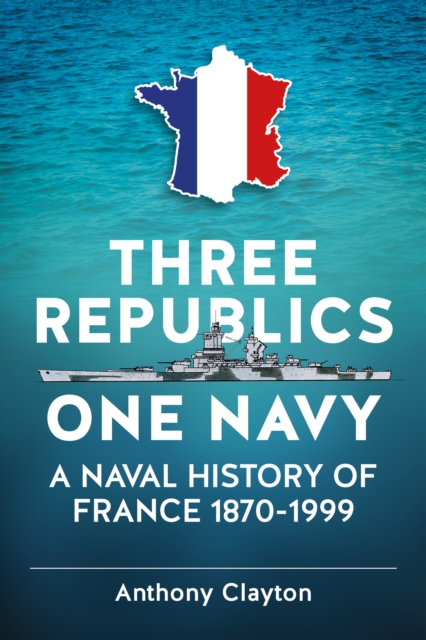
Three Republics One Navy
In the 1870s, to supplement their early steam engines, French warships were still rigged for sail.In the 1970s the Marine Nationale's ships at sea included aircraft carriers operating supersonic jets, and intercontinental ballistic missile submarines propelled by nuclear engines.
eBook


Privateers of the Americas
Privateers of the Americasexamines raids on Spanish shipping conducted from the United States during the early 1800s. These activities were sanctioned by, and conducted on behalf of, republics in Spanish America aspiring to independence from Spain. Among the available histories of privateering, there is no comparable work. Because privateering further complicated international dealings during the already tumultuous Age of Revolution, the book also offers a new perspective on the diplomatic and Atlantic history of the early American republic.
Seafarers living in the United States secured commissions from Spanish American nations, attacked Spanish vessels, and returned to sell their captured cargoes (which sometimes included slaves) from bases in Baltimore, New Orleans, and Galveston and on Amelia Island. Privateers sold millions of dollars of goods to untold numbers of ordinary Americans. Their collective enterprise involved more than a hundred vessels and thousands of people-not only ships' crews but investors, merchants, suppliers, and others. They angered foreign diplomats, worried American officials, and muddied U.S. foreign relations.
David Head looks at how Spanish American privateering worked and who engaged in it; how the U.S. government responded; how privateers and their supporters evaded or exploited laws and international relations; what motivated men to choose this line of work; and ultimately, what it meant to them to sail for the new republics of Spanish America. His findings broaden our understanding of the experience of being an American in a wider world.
eBook

Fleet tactics and naval operations
\"This book covers battle tactics at sea from the age of fighting sail to the present, with emphasis on trends (factors that have changed throughout history), constants (things that have not changed), and variables (things pertinent to each individual battle). The third edition highlights advances in unmanned vehicles, artificial intelligence, cyber warfare in peace and war, and other effects of information warfare and how they are changing the ways that battles at sea will be fought and won. It also describes the interaction between naval operations, wartime campaigns, and coalition tactics and their effects on war at sea and points out the growing interaction between land and sea in littoral combat.\"--Provided by publisher.
Book

Liberty on the Waterfront
Through careful research and colorful accounts, historian Paul A. Gilje discovers what liberty meant to an important group of common men in American society, those who lived and worked on the waterfront and aboard ships. In the process he reveals that the idealized vision of liberty associated with the Founding Fathers had a much more immediate and complex meaning than previously thought.InLiberty on the Waterfront: American Maritime Culture in the Age of Revolution, life aboard warships, merchantmen, and whalers, as well as the interactions of mariners and others on shore, is recreated in absorbing detail. Describing the important contributions of sailors to the resistance movement against Great Britain and their experiences during the Revolutionary War, Gilje demonstrates that, while sailors recognized the ideals of the Revolution, their idea of liberty was far more individual in nature-often expressed through hard drinking and womanizing or joining a ship of their choice.Gilje continues the story into the post-Revolutionary world highlighted by the Quasi War with France, the confrontation with the Barbary Pirates, and the War of 1812.
eBook