
Catalogue Search | MBRL


Are you sure you want to remove the book from the shelf?

{{itemTitle}}
11
result(s) for
"History of Plymouth Plantation"
Sort by:

New world, known world : shaping knowledge in early Anglo-American writing
New World, Known World examines the works of four writers closely associated with the early period of English colonization, from 1624 to 1649: John Smith's Generall Historie of Virginia, William Bradford's Of Plymouth Plantation, Thomas Morton's New English Canaan, and Roger Williams's A Key into the Language of America (in conjunction with another of Williams's major works, The Bloudy Tenent of Persecution). David Read addresses these texts as examples of what he refers to as \"individual knowledge projects\"- the writers' attempts to shape raw information and experience into patterns and narratives that can be compared with and assessed against others from a given society's fund of accepted knowledge.
eBook
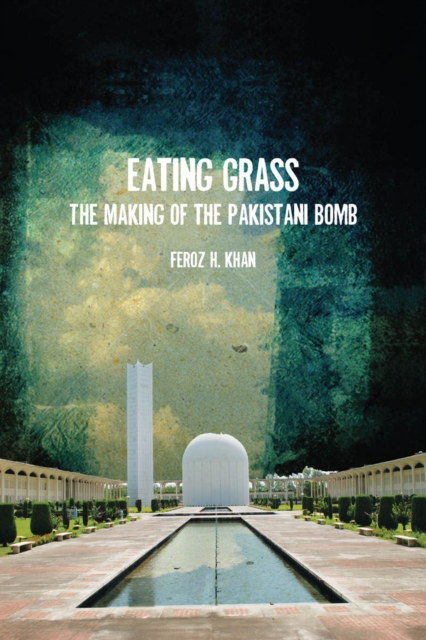
Eating grass : the making of the Pakistani bomb
The history of Pakistan's nuclear program is the history of Pakistan. Fascinated with the new nuclear science, the young nation's leaders launched a nuclear energy program in 1956 and consciously interwove nuclear developments into the broader narrative of Pakistani nationalism. Then, impelled first by the 1965 and 1971 India-Pakistan Wars, and more urgently by India's first nuclear weapon test in 1974, Pakistani senior officials tapped into the country's pool of young nuclear scientists and engineers and molded them into a motivated cadre committed to building the 'ultimate weapon.' The tenacity of this group and the central place of its mission in Pakistan's national identity allowed the program to outlast the perennial political crises of the next 20 years, culminating in the test of a nuclear device in 1998. Written by a 30-year professional in the Pakistani Army who played a senior role formulating and advocating Pakistan's security policy on nuclear and conventional arms control, this book tells the compelling story of how and why Pakistan's government, scientists, and military, persevered in the face of a wide array of obstacles to acquire nuclear weapons. It lays out the conditions that sparked the shift from a peaceful quest to acquire nuclear energy into a full-fledged weapons program, details how the nuclear program was organized, reveals the role played by outside powers in nuclear decisions, and explains how Pakistani scientists overcome the many technical hurdles they encountered. Thanks to General Khan's unique insider perspective, it unveils and unravels the fascinating and turbulent interplay of personalities and organizations that took place and reveals how international opposition to the program only made it an even more significant issue of national resolve. Listen to a podcast of a related presentation by Feroz Khan at the Stanford Center for International Security and Cooperation at cisac.stanford.edu/events/recording/7458/2/765 [http://cisac.stanford.edu/events/recording/7458/2/765].
eBook

They Knew They Were Pilgrims
An ambitious new history of the Pilgrims and Plymouth Colony, published for the 400th anniversary of theMayflower's landing In 1620, separatists from the Church of England set sail across the Atlantic aboard theMayflower. Understanding themselves as spiritual pilgrims, they left to preserve their liberty to worship God in accordance with their understanding of the Bible. There exists, however, an alternative, more dispiriting version of their story. In it, the Pilgrims are religious zealots who persecuted dissenters and decimated the Native peoples through warfare and by stealing their land. The Pilgrims' definition of liberty was, in practice, very narrow. Drawing on original research using underutilized sources, John G. Turner moves beyond these familiar narratives in his sweeping and authoritative new history of Plymouth Colony. Instead of depicting the Pilgrims as otherworldly saints or extraordinary sinners, he tells how a variety of English settlers and Native peoples engaged in a contest for the meaning of American liberty.
eBook

Settlement Literatures Before and Beyond the Stories of Nations
Settlement literature has long been understood through the lens of later national narratives that seek meaningful origins in a pre‐national past. In the Americas, this tendency obfuscates patterns that emerge across the hemisphere and frequently masks the ongoing work of settler colonialism that seeks to reinforce the sense that European settlement of the Americas is total, complete, and natural. By looking both at elements of settlement literature that would seem to align more strongly with discovery discourses and at the composite and collaborative nature of many early settlement histories, this chapter situates settlement literature with respect to hemispheric and global trends in its own time as well as a longer historical trajectory that begins with Columbus and stretches to today.
Book Chapter
Mayflower Launch Town Sending Replica for 400th Anniversary
\"The English town of Harwich is building a replica of the Mayflower to send to the U.S. to celebrate the 400th anniversary of the famous trans-Atlantic voyage of the Pilgrims. The ship was built and launched from Norwich but also stopped at Plymouth before crossing the Atlantic Ocean.\" (Social Studies for Kids) Read more about the commemoration of the Pilgrims' voyage.
Web Resource
Living History
\"A word of warning: when touring Plimoth Plantation's reproduction of New Plimoth Colony, ca. 1627, in Plymouth, Massachusetts, don't ask the costumed residents anything about George Washington or Thomas Jefferson. The only response you will get is a look of bewilderment. And while you're at it, stay away from questions about the American Revolution. You will hear nothing short of a verbal scorn for your answer.\" (Albany Times Union) Read about visiting the Plimouth Plantation in Plymouth, Mass.
Newspaper Article