
Catalogue Search | MBRL


Are you sure you want to remove the book from the shelf?

{{itemTitle}}
44,399
result(s) for
"History of information"
Sort by:

Knowing what we know : the transmission of knowledge, from ancient wisdom to modern magic
Examining such disciplines as education, journalism, encyclopedia creation, museum curation, photography and broadcasting, an award-winning writer explores how humans have attained, stored, and disseminated knowledge.
Book
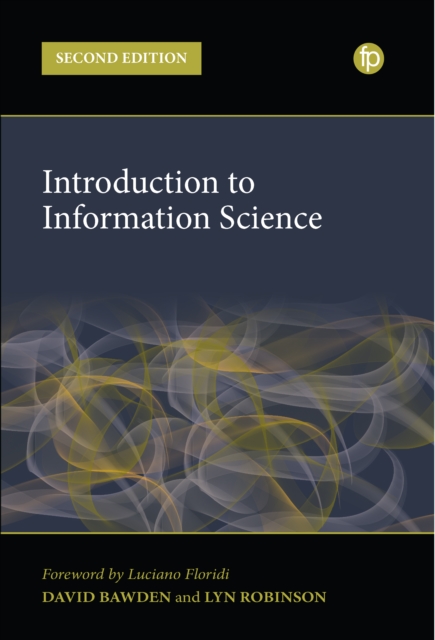
Introduction to information science
The second edition of this definitive textbook provides an introduction to the library and information sciences, emphasising their philosophical, theoretical, and conceptual foundations. Updated to cover the changing information environment, it is suitable as a text for college and university students, for those beginning research, and for thoughtful practitioners.
eBook


Informatica
Informatica -the updated
edition of Alex Wright's previously published Glut-continues the
journey through the history of the information age to show how
information systems emerge . Today's \"information
explosion\" may seem like a modern phenomenon, but we are not the
first generation-or even the first species-to wrestle with the
problem of information overload. Long before the advent of
computers, human beings were collecting, storing, and organizing
information: from Ice Age taxonomies to Sumerian archives, Greek
libraries to Christian monasteries.
Wright weaves a narrative that connects such seemingly far-flung
topics as insect colonies, Stone Age jewelry, medieval monasteries,
Renaissance encyclopedias, early computer networks, and the World
Wide Web. He suggests that the future of the information age may
lie deep in our cultural past.
We stand at a precipice struggling to cope with a tsunami of
data. Wright provides some much-needed historical perspective. We
can understand the predicament of information overload not just as
the result of technological change but as the latest chapter in an
ancient story that we are only beginning to understand.
eBook


From informational reading to information literacy
PurposeThe purpose of this paper is to historicise research conducted in the fields of Information Seeking and Learning and Information Literacy and thereby begin to outline a description of the history of information in the context of Swedish compulsory education.Design/methodology/approachDocument work and documentary practices are used as alternatives to concepts such as information seeking or information behaviour. Four empirical examples of document work – more specifically informational reading – recorded in Swedish primary classrooms in the 1960s are presented.FindingsIn the recordings, the reading style students use is similar to informational reading in contemporary educational settings: it is fragmentary, facts-oriented, and procedure-oriented. The practice of finding correct answers, rather than analysing and discussing the contents of a text seems to continue from lessons organised around print textbooks in the 1960s to the inquiry-based and digital teaching of today.Originality/valueThe paper seeks to analyse document work and documentary practices by regarding “information” as a discursive construction in a particular era with material consequences in particular contexts, rather than as a theoretical and analytical concept. It also problematises the notion that new digital technologies for producing, organising, finding, using, and disseminating documents have drastically changed people’s behaviours and practices in educational and other contexts.
Journal Article

Whistleblowers : honesty in America from Washington to Trump
A magisterial exploration of whistleblowing in America, from the Revolutionary War to the Trump era. Misconduct by those in high places is always dangerous to reveal. Whistleblowers thus face conflicting impulses: by challenging and exposing transgressions by the powerful, they perform a vital public service-yet they always suffer for it. This episodic history brings to light how whistleblowing, an important but unrecognized cousin of civil disobedience, has held powerful elites accountable in America. Analyzing a range of whistleblowing episodes, from the corrupt Revolutionary War commodore Esek Hopkins (whose dismissal led in 1778 to the first whistleblower protection law) to Edward Snowden, to the dishonesty of Donald Trump, Allison Stanger reveals the centrality of whistleblowing to the health of American democracy. She also shows that with changing technology and increasing militarization, the exposure of misconduct has grown more difficult to do and more personally costly for those who do it-yet American freedom, especially today, depends on it.
Book

Refractions of Katyn: Photography and Witnessing in Soviet Investigations of Mass Atrocities
The Soviet Extraordinary State Commission (Chrezvychainaia gosudarstvennaia komissiia, ChGK) was founded on November 2, 1942. From the outset, photography and eyewitnesses were vital resources for conveying the horrors of the German occupation. Refuting accusations that the USSR was responsible for massacring Polish prisoners of war in Katyn forest further magnified the importance of generating an irrefutable record of Nazi guilt. This article examines the efforts of Stalin's government to bury the Katyn lie beneath images of genuine victims of Hitler's regime. Tracing the diverse origins of the ChGK's photographs and supporting testimony brings into focus the reasons why wartime observers found the Soviet falsification convincing. ChGK materials should be approached as artifacts of mass mobilization. By disentangling these pictures and pages from their propagandistic uses, researchers can move closer to understanding the symbiotic relationship between official narratives and personal truths in the USSR as well as the post-Soviet Russian Federation.
Journal Article

The server : a media history from the present to the Baroque
Though classic servants like the butler or the governess have largely vanished, the Internet is filled with servers: web, ftp, mail, and others perform their daily drudgery, going about their business noiselessly and unnoticed. Why then are current-day digital drudges called servers? Markus Krajewski explores this question by going from the present back to the Baroque to study historical aspects of service through various perspectives, be it the servants' relationship to architecture or their function in literary or scientific contexts. At the intersection of media studies, cultural history, and literature, this work recounts the gradual transition of agency from human to nonhuman actors to show how the concept of the digital server stems from the classic role of the servant.
Book

“Burne this when yow have red it”: Secret Intelligence, Information Wars, and Political Satire in William Trumbull the Elder’s Papers
William Trumbull the Elder was an efficient English diplomatic agent in the Netherlands, and his papers illustrate the intersection of diplomacy, espionage, and public controversies in late sixteenth- and early seventeenthcentury Europe. This article examines a series of samples from his collection of printed pamphlets and the ways in which they relate to his manuscript archive. It therefore lays a path toward further research into Trumbull's rich collections, which represent a singular hybrid lying at the intersection of manuscript and print, on the one hand, early modern journalism, prose fiction, and political satire, on the other. It focuses on a publishing genre that repurposed private manuscript documents into ostentatiously public political propaganda in print, frequently distributed in translation and in multilingual formats for an international readership. Trumbulls documents, and the practices that they inform, are all part of the long history of information and knowledge production. As such, they constitute excellent case studies for the panoply of documentary genres used in the competition for political legitimacy conducted in the public arena, many of which resorted to a series of strategies that can be described as the manufacture of truth.
Journal Article