
Catalogue Search | MBRL


Are you sure you want to remove the book from the shelf?

{{itemTitle}}
177,039
result(s) for
"History of religion"
Sort by:

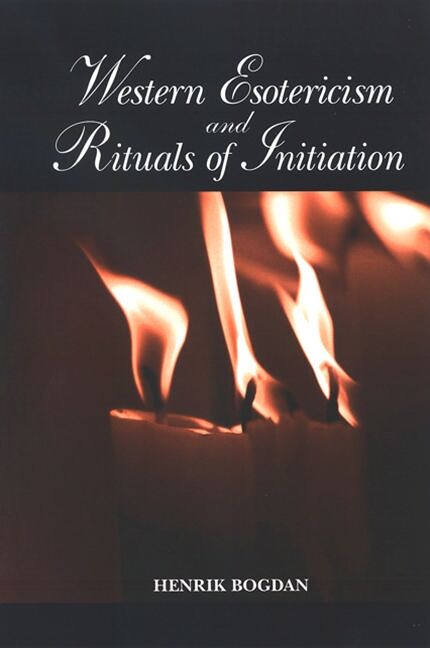
Western Esotericism and Rituals of Initiation
Historical exploration of Masonic rituals of initiation.For more than three hundred years the practice of Masonic rituals of initiation has been part of Western culture, spreading far beyond the boundaries of traditional Freemasonry. Henrik Bogdan explores the historical development of these rituals and their relationship with Western esotericism. Beginning with the Craft degrees of Freemasonry-the blueprints, as it were, of all later Masonic rituals of initiation-Bogdan examines the development of the Masonic High Degrees, the Hermetic Order of the Golden Dawn-the most influential of all nineteenth-century occultist initiatory societies-and Gerald Gardner's Witchcraft movement of the 1950s, one of the first large-scale Western esoteric New Religions Movements.
eBook


Widow City
Widow City: Gender, Emotion, and Community in the Italian Renaissance investigates the ever-evolving role of the widow in medieval and early modern Italian literature, from canonical authors such as Dante, Petrarch, and Boccaccio, to the numerous widowed writers who rose to prominence in the sixteenth century—including Vittoria Colonna, Veronica Gambara, and Francesca Turina—and radically changed the conversation on public mourning. Engaging with broader intellectual discussions around gender, the history of emotions, the politics of mourning, and the construction of community, Widow City argues that widows served as key models demonstrating to readers not just how to mourn, but how to live well after devastating loss. At the same time, widows were figures of great anxiety: their status as unattached women, and the public performance of their grief, were viewed as very real threats to the stability of the social order. They are thus key to broader intellectual understandings of community and civic life in the Italian Middle Ages and Renaissance.
eBook


Indigenous and Black Confraternities in Colonial Latin America
Employing a transregional and interdisciplinary approach, this volume explores indigenous and black confraternities -or lay Catholic brotherhoods- founded in colonial Spanish America and Brazil between the sixteenth and eighteenth century. It presents a varied group of cases of religious confraternities founded by subaltern subjects, both in rural and urban spaces of colonial Latin America, to understand the dynamics and relations between the peripheral and central areas of colonial society, underlying the ways in which colonialized subjects navigated the colonial domain with forms of social organization and cultural and religious practices. The book analyzes indigenous and black confraternal cultural practices as forms of negotiation and resistance shaped by local devotional identities that also transgressed imperial religious and racial hierarchies. The analysis of these practices explores the intersections between ethnic identity and ritual devotion, as well as how the establishment of black and indigenous religious confraternities carried the potential to subvert colonial discourse.
eBook

Law and religion in American history : public values and private conscience
\"This book furthers dialogue on the separation of church and state with an approach that emphasizes intellectual history and the constitutional theory that underlies American society. Mark Douglas McGarvie explains that the founding fathers of America considered the right of conscience to be an individual right, to be protected against governmental interference. While the religion clauses enunciated this right, its true protection occurred in the creation of separate public and private spheres. Religion and the churches were placed in the private sector. Yet, politically active Christians have intermittently mounted challenges to this bifurcation in calling for a greater public role for Christian faith and morality in American society. Both students and scholars will learn much from this intellectual history of law and religion that contextualizes a four-hundred-year-old ideological struggle\"-- Provided by publisher.
Book

Christianity, Islam, and Orisa-Religion
The Yoruba of southwestern Nigeria are exceptional for the copresence among them of three religious traditions: Islam, Christianity, and the indigenousorisareligion. In this comparative study, at once historical and anthropological, Peel explores the intertwined character of the three religions and the dense imbrication of religion in all aspects of Yoruba history up to the present. For over 400 years, the Yoruba have straddled two geocultural spheres: one reaching north over the Sahara to the world of Islam, the other linking them to the Euro-American world via the Atlantic. These two external spheres were the source of contrasting cultural influences, notably those emanating from the world religions. However, the Yoruba not only imported Islam and Christianity but also exported their ownorisareligion to the New World. Before the voluntary modern diaspora that has brought many Yoruba to Europe and the Americas, tens of thousands were sold as slaves in the New World, bringing with them the worship of theorisa. Peel offers deep insight into important contemporary themes such as religious conversion, new religious movements, relations between world religions, the conditions of religious violence, the transnational flows of contemporary religion, and the interplay between tradition and the demands of an ever-changing present. In the process, he makes a major theoretical contribution to the anthropology of world religions.
eBook


The Science of Religion in Britain, 1860–1915
Marjorie Wheeler-Barclay argues that, although the existence and significance of the science of religion has been barely visible to modern scholars of the Victorian period, it was a subject of lively and extensive debate among nineteenth-century readers and audiences. She shows how an earlier generation of scholars in Victorian Britain attempted to arrive at a dispassionate understanding of the psychological and social meanings of religious beliefs and practices-a topic not without contemporary resonance in a time when so many people feel both empowered and threatened by religious passion-and provides the kind of history she feels has been neglected.
Wheeler-Barclay examines the lives and work of six scholars: Friedrich Max Müller, Edward B. Tylor, Andrew Lang, William Robertson Smith, James G. Frazer, and Jane Ellen Harrison. She illuminates their attempts to create a scholarly, non-apologetic study of religion and religions that drew upon several different disciplines, including anthropology, sociology, the classics, and Oriental studies, and relied upon contributions from those outside as well as within the universities. This intellectual enterprise-variously known as comparative religion, the history of religions, or the science of religion-was primarily focused on non-Christian religions. Yet in Wheeler-Barclay's study of the history of this field within the broad contexts of Victorian cultural, intellectual, social, and political history, she traces the links between the emergence of the science of religion to debates about Christianity and to the history of British imperialism, the latter of which made possible the collection of so much of the ethnographic data on which the scholars relied and which legitimized exploration and conquest. Far from promoting an anti-religious or materialistic agenda, the science of religion opened up cultural space for an exploration of religion that was not constricted by the terms of contemporary conflicts over Darwin and the Bible and that made it possible to think in new and more flexible ways about the very definition of religion.
eBook