
Catalogue Search | MBRL


Are you sure you want to remove the book from the shelf?

{{itemTitle}}
740,601
result(s) for
"History of science"
Sort by:


Science and Immortality
From the eighteenth century until as recently as World War II, the natural scientist was depicted as a kind of moral superhero: objective, modest, ascetic, and selflessly dedicated to the betterment of humanity. What accounts for the widespread diffusion of this myth? In Science and Immortality, Charles B. Paul provides a partial explanation. The modern ideology of the scientist as disinterested seeker after truth arose partly through the transformation of an ancient literary form--the commemoration of heroes. In 1699 Bernard de Fontenelle, as Secretary of the Paris Academy of Sciences, inaugurated the tradition of the éloge, or eulogy, in honor of members of the Academy. The moral qualities that had once been attributed to the idealized Stoic philosopher were transferred in the eulogies to the \"natural philosopher,\" or scientist. The over two hundred éloges composed between 1699 and 1791 by Fontenelle and his successors--Mairan, Fouchy, and Condorcet--served as a powerful device for the popularization of science. It was the intention of the secretaries, though, not only to exhibit the natural scientist as a modern-day hero but also to present a truthful record of scientific activity in France. Paul examines the éloges both as a literary form that used rhetorical and stylistic devises to reconcile these two conflicting goals and as a collective biography of a new breed of savants--one that already contained the seed of the conflict between self-image and reality embedded in the modern scientific enterprise. A unique history of science in eighteenth-century France, Science and Immortality illuminates the record in the éloges of the professionalization of some sciences and the maturation of others, the recognition of their utility to society and the state, and the widening trust in science as the remedy to economic restriction and political
absolutism. Paul's thorough catalog of the éloges, extensive bibliography, and translations of representative éloges make this book an essential source for scholars in the field. This title is part of UC Press's Voices Revived program, which commemorates University of California Press's mission to seek out and cultivate the brightest minds and give them voice, reach, and impact. Drawing on a backlist dating to 1893, Voices Revived makes high-quality, peer-reviewed scholarship accessible once again using print-on-demand technology. This title was originally published in 1980.
eBook
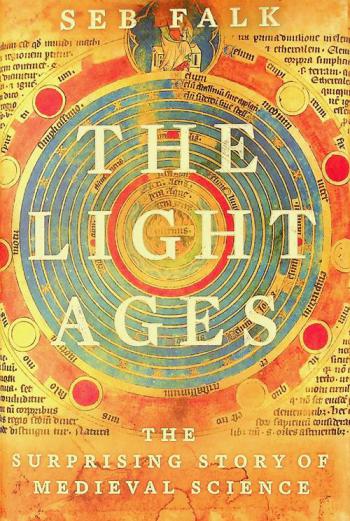
The light ages : the surprising story of medieval science
\"An illuminating guide to the scientific and technological achievements of the Middle Ages through the life of a crusading astronomer-monk. Soaring Gothic cathedrals, violent crusades, the Black Death: these are the dramatic forces that shaped the medieval era. But the so-called Dark Ages also gave us the first universities, eyeglasses, and mechanical clocks, proving that the Middle Ages were home to a vibrant scientific culture. In 'The Light Ages', Cambridge science historian Seb Falk takes us on an immersive tour of medieval science through the story of one fourteenth-century monk, John of Westwyk. From multiplying Roman numerals to navigating by the stars, curing disease, and telling time with an ancient astrolabe, we learn emerging science alongside Westwyk, while following the gripping story of the struggles and successes of an ordinary man in a precarious world. An enlightening history that argues that these times weren't so dark after all, 'The Light Ages' shows how medieval ideas continue to color how we see the world today\"-- Provided by publisher.

When Computers Were Human
Before Palm Pilots and iPods, PCs and laptops, the term \"computer\" referred to the people who did scientific calculations by hand. These workers were neither calculating geniuses nor idiot savants but knowledgeable people who, in other circumstances, might have become scientists in their own right. When Computers Were Human represents the first in-depth account of this little-known, 200-year epoch in the history of science and technology. Beginning with the story of his own grandmother, who was trained as a human computer, David Alan Grier provides a poignant introduction to the wider world of women and men who did the hard computational labor of science. His grandmother's casual remark, \"I wish I'd used my calculus,\" hinted at a career deferred and an education forgotten, a secret life unappreciated; like many highly educated women of her generation, she studied to become a human computer because nothing else would offer her a place in the scientific world. The book begins with the return of Halley's comet in 1758 and the effort of three French astronomers to compute its orbit. It ends four cycles later, with a UNIVAC electronic computer projecting the 1986 orbit. In between, Grier tells us about the surveyors of the French Revolution, describes the calculating machines of Charles Babbage, and guides the reader through the Great Depression to marvel at the giant computing room of the Works Progress Administration. When Computers Were Human is the sad but lyrical story of workers who gladly did the hard labor of research calculation in the hope that they might be part of the scientific community. In the end, they were rewarded by a new electronic machine that took the place and the name of those who were, once, the computers.
eBook


Encountering Water in Early Modern Europe and Beyond
Both the Christian Bible and Aristotle's works suggest that water should entirely flood the earth. Though many ancient, medieval, and early modern Europeans relied on these works to understand and explore the relationships between water and earth, sixteenth-century Europeans particularly were especially concerned with why dry land existed. This book investigates why they were so interested in water's failure to submerge the earth when their predecessors had not been. Analyzing biblical commentaries as well as natural philosophical, geographical, and cosmographical texts from these periods, Lindsay Starkey shows that European sea voyages to the southern hemisphere combined with the traditional methods of European scholarship and religious reformations led sixteenth-century Europeans to reinterpret water and earth's ontological and spatial relationships. The manner in which they did so also sheds light on how we can respond to our current water crisis before it is too late.
eBook


Shaky Foundations
Numerous popular and scholarly accounts have exposed the deep impact of patrons on the production of scientific knowledge and its applications.Shaky Foundationsprovides the first extensive examination of a new patronage system for the social sciences that emerged in the early Cold War years and took more definite shape during the 1950s and early 1960s, a period of enormous expansion in American social science.
By focusing on the military, the Ford Foundation, and the National Science Foundation, Mark Solovey shows how this patronage system presented social scientists and other interested parties, including natural scientists and politicians, with new opportunities to work out the scientific identity, social implications, and public policy uses of academic social research. Solovey also examines significant criticisms of the new patronage system, which contributed to widespread efforts to rethink and reshape the politics-patronage-social science nexus starting in the mid-1960s.
Based on extensive archival research,Shaky Foundationsaddresses fundamental questions about the intellectual foundations of the social sciences, their relationships with the natural sciences and the humanities, and the political and ideological import of academic social inquiry.
eBook

Knowledge in translation : global patterns of scientific exchange, 1000-1800 CE
\"In the second millennium CE, long before English became the language of science in the twentieth century, the act of translation was crucial for understanding and disseminating knowledge and information across linguistic and geographic boundaries. This volume considers the complexities of knowledge exchange through the practice of translation over the course of a millennium, across fields of knowledge--cartography, health and medicine, material construction, astronomy--and a wide geographical range, from Eurasia to Africa and the Americas. Contributors literate in Arabic, Catalan, Chinese, Greek, Hebrew, Italian, Japanese, Latin, Minnan, Ottoman, and Persian explore the history of science in the context of world and global history, investigating global patterns and implications in a multilingual and increasingly interconnected world. Chapters reveal cosmopolitan networks of shared practice and knowledge about the natural world from 1000 to 1800 CE, emphasizing both evolving scientific exchange and the emergence of innovative science. By unraveling the role of translation in cross-cultural communication, Knowledge in Translation highlights key moments of transmission, insight, and critical interpretation across linguistic and faith communities\"-- Provided by publisher.
Book

Making Truth in Early Modern Catholicism
Scholarship has come to value the uncertainties haunting early modern knowledge cultures; indeed, the awareness of the fragility and plurality of knowledge is now offered as a key element of Baroque Science. Yet early modern actors never questioned the possibility of certainty itself; including the notion that truth is out there, universal, and therefore situated at one remove from human manipulations. This book addresses the central question of how early modern actors managed not to succumb to postmodern relativism, amidst uncertainties and blatant disagreements about the nature of God, Man, and the Universe. An international and interdisciplinary team of experts in fields ranging from Astronomy to Business Administration to Theology investigate a number of practices that are central to maintaining and functionalizing the notion of absolute truth, the certainty that could be achieved about it, and of the credibility of a wide plethora of actors in differentiating fields of knowledge.
eBook