
Catalogue Search | MBRL


Are you sure you want to remove the book from the shelf?

{{itemTitle}}
164
result(s) for
"History. fast (OCoLC)fst01411628"
Sort by:

Empire and Jihad : the Anglo-Arab wars of 1870-1920
A panoramic, provocative account of the clash between British imperialism and Arab jihadism in Africa between 1870 and 1920 The Ottoman Sultan called for a \"Great Jihad\" against the Entente powers at the start of the First World War. He was building on half a century of conflict between British colonialism and the people of the Middle East and North Africa. Resistance to Western violence increasingly took the form of radical Islamic insurgency. Ranging from the forests of Central Africa to the deserts of Egypt, Sudan, and Somaliland, Neil Faulkner explores a fatal collision between two forms of oppression, one rooted in the ancient slave trade, the other in modern \"coolie\" capitalism. He reveals the complex interactions between anti-slavery humanitarianism, British hostility to embryonic Arab nationalism, \"war on terror\" moral panics, and Islamist revolt. Far from being an enduring remnant of the medieval past, or an essential expression of Muslim identity, Faulkner argues that \"Holy War\" was a reactionary response to the violence of modern imperialism.
eBook

The castle : a history
A vibrant history of the castle in Britain, from the early Middle Ages to the present day The castle has long had a pivotal place in British life, associated with lordship, landholding, and military might, and today it remains a powerful symbol of history. But castles have never been merely impressive fortresses-they were hubs of life, activity, and imagination. John Goodall weaves together the history of the British castle across the span of a millennium, from the eleventh to the twenty-first century, through the voices of those who witnessed it. Drawing on chronicles, poems, letters, and novels, including the work of figures like Gawain Poet, Walter Scott, Evelyn Waugh, and P. G. Wodehouse, Goodall explores the importance of the castle in our culture and society. From the medieval period to Civil War engagements, right up to modern manifestations in Harry Potter, Goodall reveals that the castle has always been put to different uses, and to this day continues to serve as a source of inspiration.
eBook
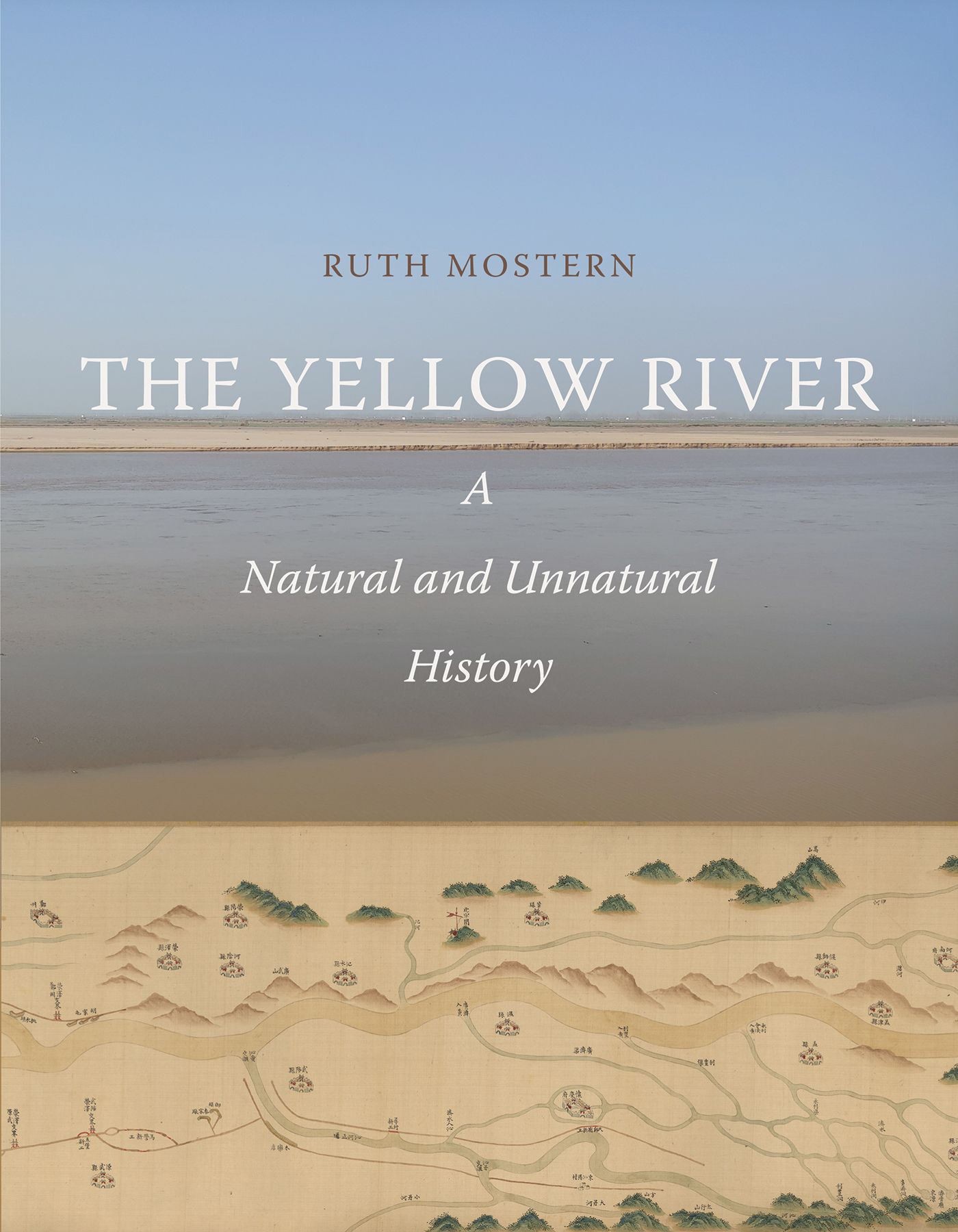
The Yellow River : a natural and unnatural history
A three-thousand-year history of the Yellow River and the legacy of interactions between humans and the natural landscape From Neolithic times to the present day, the Yellow River and its watershed have both shaped and been shaped by human society. Using the Yellow River to illustrate the long-term effects of environmentally significant human activity, Ruth Mostern unravels the long history of the human relationship with water and soil and the consequences, at times disastrous, of ecological transformations that resulted from human decisions. As Mostern follows the Yellow River through three millennia of history, she underlines how governments consistently ignored the dynamic interrelationships of the river's varied ecosystems—grasslands, riparian forests, wetlands, and deserts—and the ecological and cultural impacts of their policies. With an interdisciplinary approach informed by archival research and GIS (geographical information system) records, this groundbreaking volume provides unique insight into patterns, transformations, and devastating ruptures throughout ecological history and offers profound conclusions about the way we continue to affect the natural systems upon which we depend.
eBook

Empire of Destruction
The first comparative, comprehensive history of Nazi mass
killing - showing how genocidal policies were crucial to the
regime's strategy to win the war Nazi Germany killed
approximately 13 million civilians and other non-combatants in
deliberate policies of mass murder, mostly during the war years.
Almost half the victims were Jewish, systematically destroyed in
the Holocaust, the core of the Nazis' pan-European racial
purification programme. Alex Kay argues that the genocide of
European Jewry can be examined in the wider context of Nazi mass
killing. For the first time, Empire of Destruction
considers Europe's Jews alongside all the other major victim
groups: captive Red Army soldiers, the Soviet urban population,
unarmed civilian victims of preventive terror and reprisals, the
mentally and physically disabled, the European Roma and the Polish
intelligentsia. Kay shows how each of these groups was regarded by
the Nazi regime as a potential threat to Germany's ability to
successfully wage a war for hegemony in Europe. Combining the full
quantitative scale of the killings with the individual horror, this
is a vital and groundbreaking work.
eBook

They Knew They Were Pilgrims
An ambitious new history of the Pilgrims and Plymouth Colony, published for the 400th anniversary of theMayflower's landing In 1620, separatists from the Church of England set sail across the Atlantic aboard theMayflower. Understanding themselves as spiritual pilgrims, they left to preserve their liberty to worship God in accordance with their understanding of the Bible. There exists, however, an alternative, more dispiriting version of their story. In it, the Pilgrims are religious zealots who persecuted dissenters and decimated the Native peoples through warfare and by stealing their land. The Pilgrims' definition of liberty was, in practice, very narrow. Drawing on original research using underutilized sources, John G. Turner moves beyond these familiar narratives in his sweeping and authoritative new history of Plymouth Colony. Instead of depicting the Pilgrims as otherworldly saints or extraordinary sinners, he tells how a variety of English settlers and Native peoples engaged in a contest for the meaning of American liberty.
eBook

How Photography Became Contemporary Art
When Andy Grundberg landed in New York in the early 1970s as a
budding writer, photography was at the margins of the contemporary
art world. By 1991, when he left his post as critic for the New
York Times , photography was at the vital center of artistic
debate. Grundberg writes eloquently and authoritatively about
photography's \"boom years,\" chronicling the medium's increasing
role within the most important art movements of the time, from
Earth Art and Conceptual Art to performance and video. He also
traces photography's embrace by museums and galleries, as well as
its politicization in the culture wars of the 80s and 90s.
Grundberg reflects on the landmark exhibitions that defined the
moment and his encounters with the work of leading
photographers-many of whom he knew personally-including Gordon
Matta-Clark, Cindy Sherman, and Robert Mapplethorpe. He navigates
crucial themes such as photography's relationship to theory as well
as feminism and artists of color. Part memoir and part history,
this perspective by one of the period's leading critics ultimately
tells a larger story about the crucial decades of the 70s and 80s
through the medium of photography.
eBook

The Eastern Orthodox Church
An insider's account of the Eastern Orthodox Church, from its beginning in the era of Jesus and the Apostles to the modern age In this short, accessible account of the Eastern Orthodox Church, John McGuckin begins by tackling the question \"What is the Church?\" His answer is a clear, historically and theologically rooted portrait of what the Church is for Orthodox Christianity and how it differs from Western Christians' expectations. McGuckin explores the lived faith of generations, including sketches of some of the most important theological themes and individual personalities of the ancient and modern Church. He interweaves a personal approach throughout, offering to readers the experience of what it is like to enter an Orthodox church and witness its liturgy. In this astute and insightful book, he grapples with the reasons why many Western historians and societies have overlooked Orthodox Christianity and provides an important introduction to the Orthodox Church and the Eastern Christian World.
eBook

Main Street movies : the history of local film in the United States
1. The scholarship in this book is a unique and ground-breaking perspective on film culture in small-town America 2. It is a strong project by an up and coming scholar who is very engaged in his field. 3. The book provides rich archival evidence, and multimedia is hosted in enhanced e-book edition as well as online for our print readers via our partnership with the IU Online Media Archives.
eBook
Ukrainian Nationalists and the Holocaust
One quarter of all Holocaust victims lived on the territory that now forms Ukraine, yet the Holocaust there has not received due attention. This book delineates the participation of the Organization of Ukrainian Nationalists (OUN) and its armed force, the Ukrainian Insurgent Army (Ukrainska povstanska armiia—UPA), in the destruction of the Jewish population of Ukraine under German occupation in 1941–44. The extent of OUN and UPA’s culpability in the Holocaust has been a controversial issue in Ukraine and within the Ukrainian diaspora as well as in Jewish communities and Israel. Occasionally, the controversy has broken into the press of North America, the EU, and Israel.
Triangulating sources from Jewish survivors, Soviet investigations, German documentation, documents produced by OUN itself, and memoirs of OUN activists, it has been possible to establish that: OUN militias were key actors in the anti-Jewish violence of summer 1941; OUN recruited for and infiltrated police formations that provided indispensable manpower for the Germans' mobile killing units; and in 1943, thousands of these policemen deserted from German service to join the OUN-led nationalist insurgency, during which UPA killed Jews who had managed to survive the major liquidations of 1942.
eBook

Political Reforms in Qatar: From Authoritarianism to Political Grey Zone
In the past decade, Qatar has emerged as one of the world’s most proactive mediators in the international arena. It has also experienced a number of domestic changes to its economic infrastructure, welfare system and political system, along with material improvement in its citizens’ standard of living. Nonetheless, despite such radical and rapid advances, political reform in Qatar has proved to be relatively tentative. This book examines political reforms in Qatar from an analytical, normative and ideological perspective. It applies the main concepts and theories found in the literature on democratic transition. Five elements are discussed as the reason of why the political reform process in Qatar has stagnated in the political “Grey Zone\": (1) Absolute power of the ruler over the political institutions, (2) Tribal social structure in Qatar, (3) Rentier style social contract, (4) Lack of public demand for reforms and politically apathetic society, and (5) New regional and international atmosphere, emerging after Arab Spring
eBook