
Catalogue Search | MBRL


Are you sure you want to remove the book from the shelf?

{{itemTitle}}
318
result(s) for
"Hockey teams History."
Sort by:

Scotty : a hockey life like no other
\"From bestselling author and Hall of Fame player Ken Dryden comes the unparalleled life story of the greatest coach in hockey history, Scotty Bowman. Scotty Bowman is universally heralded as the greatest coach in hockey history, and is widely regarded as one of the best coaches in all of sports. He holds the record for most wins and most Stanley Cups as a head coach and is the only NHL coach to lead three different teams to a championship. He has seen all of hockey's great players--from \"The Rocket\" to Gordie Howe to the young stars that play today--and has witnessed firsthand what makes a team click. However, for all of his accomplishments and his legendary stature in the game of hockey, we know very little about who Scotty Bowman is. Now, Hall of Fame player and the former goaltender of Scotty's Montreal Canadiens team, Ken Dryden, takes us inside the mind of hockey's ultimate coach. We see Scotty as a child in his hometown of Verdun, Quebec, as a teenager racing to a spot in the old Montreal Forum to witness Richard's scoring prowess, and as an up and coming hockey mind, tapped on the shoulder to follow in the footsteps of the legendary Montreal coach Toe Blake. Interwoven through the narrative of Scotty's life story are the profiles of the eight best teams in NHL history in Bowman's eyes, as the coach describes what makes these particular teams stand out from the rest. And, because it's in a coach's competitive nature, these eight teams are pitted against one another in a winner-take-all tournament, where Scotty will determine once and for all which team is the greatest team in NHL history, and why.\" -- Provided by publisher
Book
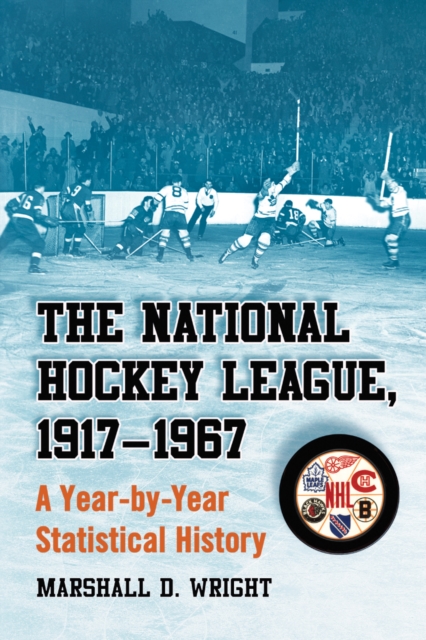
The National Hockey League, 1917-1967 : a year-by-year statistical history
This is a statistical history of the National Hockey League in its first 50 seasons.It provides every statistic for every player for every game, including playoff games.A full introduction puts the tremendous amount of data contained within the book in its historical context, and each chapter then recounts a single season.
eBook
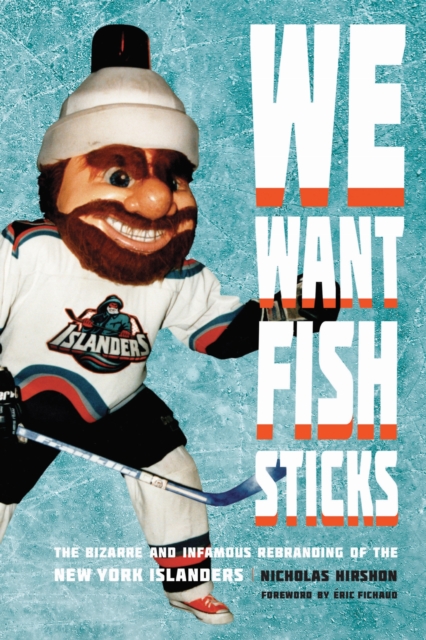
We Want Fish Sticks
The NHL's New York Islanders were struggling. After winning four straight Stanley Cups in the early 1980s, the Islanders had suffered an embarrassing sweep by their geographic rivals, the New York Rangers, in the first round of the 1994 playoffs.
eBook
Men at Play
Players dedicate their lives to the goal of playing professional hockey and teams demand total commitment from their players, giving them complete control over almost all aspects of the players' lives. With the enormous labour turnover in the AHL and the surplus labour pool, players are extremely vulnerable: they must perform well or be replaced by the scores of other men willing to do the same job. With limited education and limited life skills, players seldom meet people who are not connected to the game and, when they do, they do so with trepidation. The constructed universe of the game consumes the players so that, in spite of any wealth they may accumulate, they often know nothing other than the game and have invested everything in an occupation where their services quickly become obsolete.
eBook

Diehard hockey fan has witnessed nearly seven decades of Amerks history
Little did he know he was about to experience a night that would change his life. The only time he missed a significant stretch was when he served two years in the Navy in the late 1960s. A bunch of us hopped on our bikes and rode down to the War Memorial the next morning to buy tickets - and this is no exaggeration - the streets were already filled with people waiting in lines on all sides of the arena.
Journal Article

“We still need the game. As Indigenous people, it’s in our blood.”: A Conversation on Hockey, Residential School, and Decolonization
On March 18th, 2019, settler scholar Sam McKegney and Anishinaabe scholar Mike Auksi conducted an interview with Eugene Arcand at Queen's University's Isabelle Bader Centre in Kingston, Ontario in the territories of the Haudenosaunee and Anishinaabe Peoples. Arcand had travelled to Kingston to act as a Keynote Speaker the following day at the \"Roundtable on Racism in Hockey.\" On Arcand's insistence that the efforts, experiences, and ideas of roundtable participants be honoured in ways that promote tangible change, the roundtable's organizers Courtney Szto, Bob Dawson, McKegney, and Auksi distilled the event's findings into the Policy Paper for Anti-Racism in Canadian Hockey, which has since been downloaded over 7,500 times. The interview below is supplemented by a brief excerpt from a recorded conversation McKegney had with Arcand, his wife Lorna, and Craig McCallum at the Arcands' home on Whitecap Reserve in Saskatchewan in the Spring of 2019.
Journal Article

Descriptive epidemiology of collegiate women's field hockey injuries: National Collegiate Athletic Association Injury Surveillance System, 1988-1989 through 2002-2003
To review 15 years of National Collegiate Athletic Association (NCAA) injury surveillance data for women's field hockey and identify potential areas for injury prevention initiatives.
Field hockey is one of the most popular sports worldwide and is growing in participation in the United States, particularly among women. From 1988-1989 to 2002-2003, participation in NCAA women's field hockey increased 12%, with the largest growth among Division III programs. In 2002- 2003, 253 colleges offered women's field hockey and 5385 women participated.
Game injury rates showed a significant average annual 2.5% decline over 15 years, most likely fueled by drops in ankle ligament sprain, knee internal derangement, and finger fracture injuries. Despite this, ankle ligament sprains were common (13.7% of game and 15.0% of practice injuries) and a frequent cause of severe injuries (resulting in 10+ days of time-loss activity). Concussion and head laceration injuries increased over this same time, and the risk of sustaining a concussion in a game was 6 times higher than the risk of sustaining one during practice. Overall, injury rates were twice as high in games as in practices (7.87 versus 3.70 injuries per 1000 athlete-exposures, rate ratio = 2.1, 95% confidence interval = 2.0, 2.3). Most head/neck/face (71%) and hand/finger/thumb (68%) injuries occurred when the player was near the goal or within the 25-yd line and were caused by contact with the stick or ball (greater than 77% for both body sites); for 34% of head/neck/ face injuries, a penalty was called on the play.
Equipment (requiring helmets and padded gloves) and rule changes (to decrease field congestion near the goal) as well as evidence-based injury prevention interventions (eg, prophylactic ankle taping/bracing, neuromuscular balance exercise programs) may be viable prevention initiatives for reducing injury rates in women's collegiate field hockey players.
Journal Article
The 'Miracle on Ice'
\"The 'Miracle on Ice' was a triumph of belief and inspiration over discipline and experience against the backdrop of the Cold War and its spillover into sports, specifically the Olympics. It happened on Feb. 22, 1980.\" (Social Studies for Kids) Read about the 'Miracle on Ice' hockey game at the 1980 Winter Olympics, where the U.S. defeated the Soviet team.
Web Resource

An Examination and Evaluation of Uniform Color Across North American Professional Team Sports
Color defines modern team sports. Participants wear brightly colored jerseys, serving to identify teammates from opponents, while similarly allowing fans in attendance and watching on television to cheer for their favorites. Collectively, team color choice is based on a number of factors, including sensory and cultural aspects. In addition, advances in dyeing and fabric technology, as well as an ever increasing number of professional teams, has led to a widening array of team color possibilities. While considerable research has been conducted on the role of color in individual competition, corresponding investigation into this aspect of professional team sports has been lacking. As such, uniform color choice was examined for all 122 current North American major league baseball, basketball, football and hockey teams. Each team's number of colors, as well as ordinal ranking of those colors, was recorded, and statistically evaluated. Overall, teams averaged 3.48 colors, with 103 of the 122 opting for either three or four colors. While white was utilized by every team, it M'as never their principal, or first, color. Blue proved to be the most popular principal uniform color, followed by red and black. Basketball teams averaged more colors than the other three sports. Results reaffirm the premise that uniform color choice is an integration of visibility and contrast factors, historical considerations, and the societal significance that colors impart.
Journal Article