
Catalogue Search | MBRL


Are you sure you want to remove the book from the shelf?

{{itemTitle}}
254
result(s) for
"Holocaust, Jewish (1939–1945)"
Sort by:


Numbered Days
As the Nazis swept across Europe during World War II, Jewish victims wrote diaries in which they grappled with the terror unfolding around them. Some wrote simply to process the contradictory bits of news they received; some wrote so that their children, already safe in another country, might one day understand what had happened to their parents; and some wrote to furnish unknown readers in the outside world with evidence against the Nazi regime.Were these diarists resisters, or did the process of writing make the ravages of the Holocaust even more difficult to bear? Drawing on an astonishing array of unpublished and published diaries from all over German-occupied Europe, historian Alexandra Garbarini explores the multiple roles that diary writing played in the lives of these ordinary women and men. A story of hope and hopelessness,Numbered Daysoffers a powerful examination of the complex interplay of writing and mourning. And in these heartbreaking diaries, we see the first glimpses of a question that would haunt the twentieth century: Can such unimaginable horror be represented at all?
eBook


Between Witness and Testimony
The Holocaust presents an immense challenge to those who would represent it or teach it through fiction, film, or historical accounts. Even the testimonies of those who were there provide only a glimpse of the disaster to those who were not. Between Witness and Testimony investigates the difficulties inherent in the obligation to bear witness to events that seem not just unspeakable but also unthinkable. The authors examine films, fictional narratives, survivor testimonies, and the museums at Yad Vashem and the United States Holocaust Memorial Museum in order to establish an ethics of Holocaust representation. Traversing the disciplines of history, philosophy, religious studies, and literary and cultural theory, the authors suggest that while no account adequately provides access to what Adorno called \"the extremity that eludes the concept,\" we are still obliged to testify, to put into language what history cannot contain.
eBook
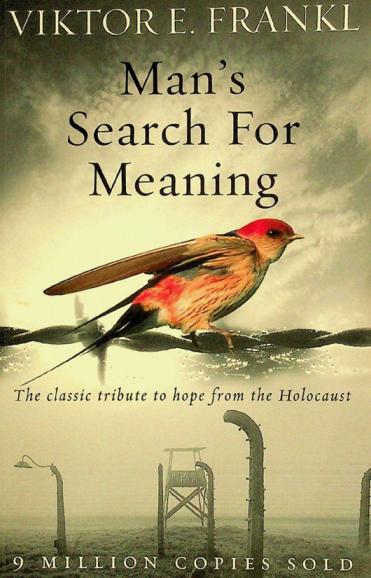
Man's search for meaning : the classic tribute to hope from the Holocaust
In 'Man's Search for Meaning', Dr. Frankl offers an account of his life amid the horrors of the Nazi death camps, chronicling the harrowing experience that led to the discovery of his theory of logotherapy.
BOOK

Holocaust Literature
What is Holocaust literature? When does it begin and how is it changing? Is there an essential core that consists of diaries, eyewitness accounts of the concentration camps, and tales of individual survival? Is it the same everywhere: West and East, in Australia as in the Americas, in poetry as in prose? Is this literature sacred and separate, or can it be studied alongside other responses to catastrophe? What works of Holocaust literature will be read a hundred years from now-and why? Here, for the first time, is a historical survey of Holocaust literature in all genres, countries, and major languages. Beginning in wartime, it proceeds from the literature of mobilization and mourning in the Free World to the vast literature produced in Nazi-occupied ghettos, bunkers and places of hiding, transit and concentration camps. No less remarkable is the new memorial literature that begins to take shape within weeks and months of the liberation. Moving from Europe to Israel, the United States, and beyond, the authors situate the writings by real and proxy witnesses within three distinct postwar periods: \"communal memory,\" still internal and internecine; \"provisional memory\" in the 1960s and 1970s, when a self-conscious Holocaust genre is born; and \"authorized memory,\" in which we live today. Twenty book covers-first editions in their original languages-and a guide to the \"first hundred books\" show the multilingual scope, historical depth, and artistic range of this extraordinary body of writing.
eBook

Kurt Baschwitz : pioneer of communication studies and social psychology
In this study of a forgotten but noteworthy figure, the author tells the story of the life of Kurt Baschwitz (1886-1968), a scholar who fled from the Nazis. He wrote six books, never translated into English, on four related themes: the press, propaganda, politics, and persecution. Baschwitz independently developed concepts that are now seen as key to communication science and social psychology, and the author places Baschwitz's ideas in the wider context of his dramatic life and times.
Book

Call it english
Call It English identifies the distinctive voice of Jewish American literature by recovering the multilingual Jewish culture that Jews brought to the United States in their creative encounter with English. In transnational readings of works from the late-nineteenth century to the present by both immigrant and postimmigrant generations, Hana Wirth-Nesher traces the evolution of Yiddish and Hebrew in modern Jewish American prose writing through dialect and accent, cross-cultural translations, and bilingual wordplay.
eBook
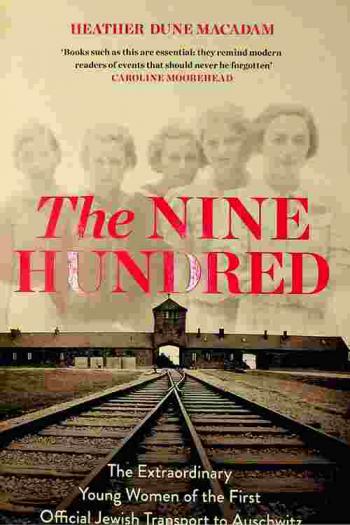
The nine hundred : the extraordinary young women of the first official transport to Auschwitz
On March 23, 1942, nearly a thousand young, unmarried Jewish women boarded a train in Poprad, Slovakia. Filled with a sense of adventure and national pride, they left their parents' homes wearing their best clothes and confidently waving goodbye. Believing they were going to work in a factory for a few months, they were eager to report for government service. Instead, the young women many of them teenagers were sent to Auschwitz. Of those 999 deportees only a few would survive.

Shattered past
Broken glass, twisted beams, piles of debris--these are the early memories of the children who grew up amidst the ruins of the Third Reich. More than five decades later, German youth inhabit manicured suburbs and stroll along prosperous pedestrian malls.Shattered Pastis a bold reconsideration of the perplexing pattern of Germany's twentieth-century history. Konrad Jarausch and Michael Geyer explore the staggering gap between the country's role in the terrors of war and its subsequent success as a democracy. They argue that the collapse of Communism, national reunification, and the postmodern shift call for a new reading of the country's turbulent development, one that no longer suggests continuity but rupture and conflict.
Comprising original essays, the book begins by reexamining the nationalist, socialist, and liberal master narratives that have dominated the presentation of German history but are now losing their hold. Treated next are major issues of recent debate that suggest how new kinds of German history might be written: annihilationist warfare, complicity with dictatorship, the taming of power, the impact of migration, the struggle over national identity, redefinitions of womanhood, and the development of consumption as well as popular culture. The concluding chapters reflect on the country's gradual transition from chaos to civility. This penetrating study will spark a fresh debate about the meaning of the German past during the last century.
There is no single master narrative, no Weltgeist, to be discovered. But there is a fascinating story to be told in many different ways.
eBook