
Catalogue Search | MBRL


Are you sure you want to remove the book from the shelf?

{{itemTitle}}
1,003
result(s) for
"Holocaust, Jewish (1939-1945), in literature"
Sort by:


Holocaust Literature
What is Holocaust literature? When does it begin and how is it changing? Is there an essential core that consists of diaries, eyewitness accounts of the concentration camps, and tales of individual survival? Is it the same everywhere: West and East, in Australia as in the Americas, in poetry as in prose? Is this literature sacred and separate, or can it be studied alongside other responses to catastrophe? What works of Holocaust literature will be read a hundred years from now-and why? Here, for the first time, is a historical survey of Holocaust literature in all genres, countries, and major languages. Beginning in wartime, it proceeds from the literature of mobilization and mourning in the Free World to the vast literature produced in Nazi-occupied ghettos, bunkers and places of hiding, transit and concentration camps. No less remarkable is the new memorial literature that begins to take shape within weeks and months of the liberation. Moving from Europe to Israel, the United States, and beyond, the authors situate the writings by real and proxy witnesses within three distinct postwar periods: \"communal memory,\" still internal and internecine; \"provisional memory\" in the 1960s and 1970s, when a self-conscious Holocaust genre is born; and \"authorized memory,\" in which we live today. Twenty book covers-first editions in their original languages-and a guide to the \"first hundred books\" show the multilingual scope, historical depth, and artistic range of this extraordinary body of writing.
eBook

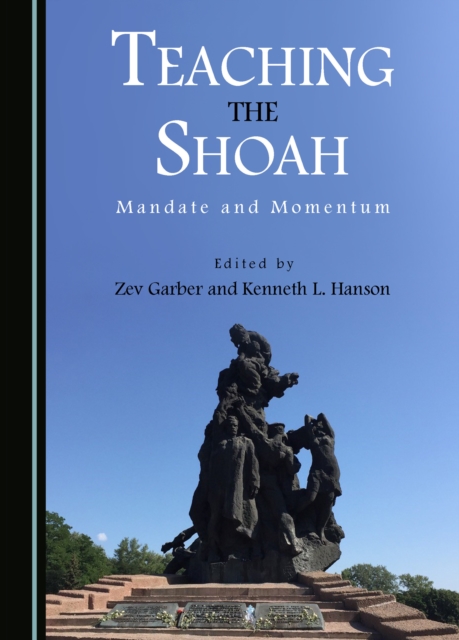
Teaching the Shoah
Today, more than 80 years after the Holocaust/Shoah, the events surrounding Hitler's campaign of murder have not receded into the distance, but remain memorialized in multiple venues, both scholarly and popular. This volume is an anthological collection of essays and creative pieces showcasing the pedagogical issues related to the Nazi genocide. It addresses the field of Shoah education, featuring new and novel ways to promote awareness of the reality of the genocide, as well as an understanding of the instrumentalities (both philosophical and physical) which drove and concretized it. In addition to serious academic contributions, this volume features a play, a short story, and a discussion of the use of educational video in an online environment. It provides insight into the overarching question: how can and should the Shoah be taught, and what approaches can be utilized in sharing the most important lessons of this most unspeakable example of ethnic cleansing in human history?.
eBook

Anne Frank
In 1942, a young Jewish girl named Anne Frank received a diary from her parents for her thirteenth birthday. Today, millions of people have read the compelling, heartfelt diary entries Frank recorded while living in hiding to escape Nazi persecution. Her work is an invaluable account of the Holocaust, an iconic classic of war literature, and a testament to her own hopeful and unbreakable spirit. This biography introduces readers to Frank's life and the legacy she left behind, complete with photographs and fact boxes. Readers will be inspired by Frank's incredible story and her essential contribution to recorded history.
BOOK

Representing the Holocaust in Children's Literature
First Published in 2003. Routledge is an imprint of Taylor & Francis, an informa company.
Lydia Kokkola is a Collegium Researcher at the Turku Institute for Advanced Studies(TIAS) University of Turku, Finland. She is also Adjunct Professor of Children's Literature in English at Åbo Akademi University, Finland.
\"Kokkola is committed to ethical criticism. She asks repeatedly how literature affects children’s thinking and beliefs about the Holocaust and fascism. This is a welcome approach, which is at its best, in my view...when it urges us to think seriously about the profound impact that literature can have on young readers...Kokkola combines theory and criticism of children’s literature with Holocaust studies in productive and knowledgeable ways.\" -- The Lion and the Unicorn
\" Lydia Kokkola's study...is keenly narratological, and she often draws on formalist and structuralist approaches as she explicates texts. Like many before her, she is concerned with narratives that simultaneously reveal and conceal as they deal with horrific events, but the kinds of questions she asks focus specifically on how information can be withheld of divulged...Kokkola's approach also brings new dimensions to previous discussions of children's literature and the Holocaust.\" -- Prooftexts: A Journal of Jewish Literary History
eBook


Numbered Days
As the Nazis swept across Europe during World War II, Jewish victims wrote diaries in which they grappled with the terror unfolding around them. Some wrote simply to process the contradictory bits of news they received; some wrote so that their children, already safe in another country, might one day understand what had happened to their parents; and some wrote to furnish unknown readers in the outside world with evidence against the Nazi regime.Were these diarists resisters, or did the process of writing make the ravages of the Holocaust even more difficult to bear? Drawing on an astonishing array of unpublished and published diaries from all over German-occupied Europe, historian Alexandra Garbarini explores the multiple roles that diary writing played in the lives of these ordinary women and men. A story of hope and hopelessness,Numbered Daysoffers a powerful examination of the complex interplay of writing and mourning. And in these heartbreaking diaries, we see the first glimpses of a question that would haunt the twentieth century: Can such unimaginable horror be represented at all?
eBook

Somewhere there is still a sun : a memoir of the Holocaust
When the Nazis invade Czechoslovakia in 1941, twelve-year-old Michael and his family are deported from Prague to the Terezin concentration camp, where his mother's will and ingenuity keep them from being transported to Auschwitz and certain death.
CHILDBOOK
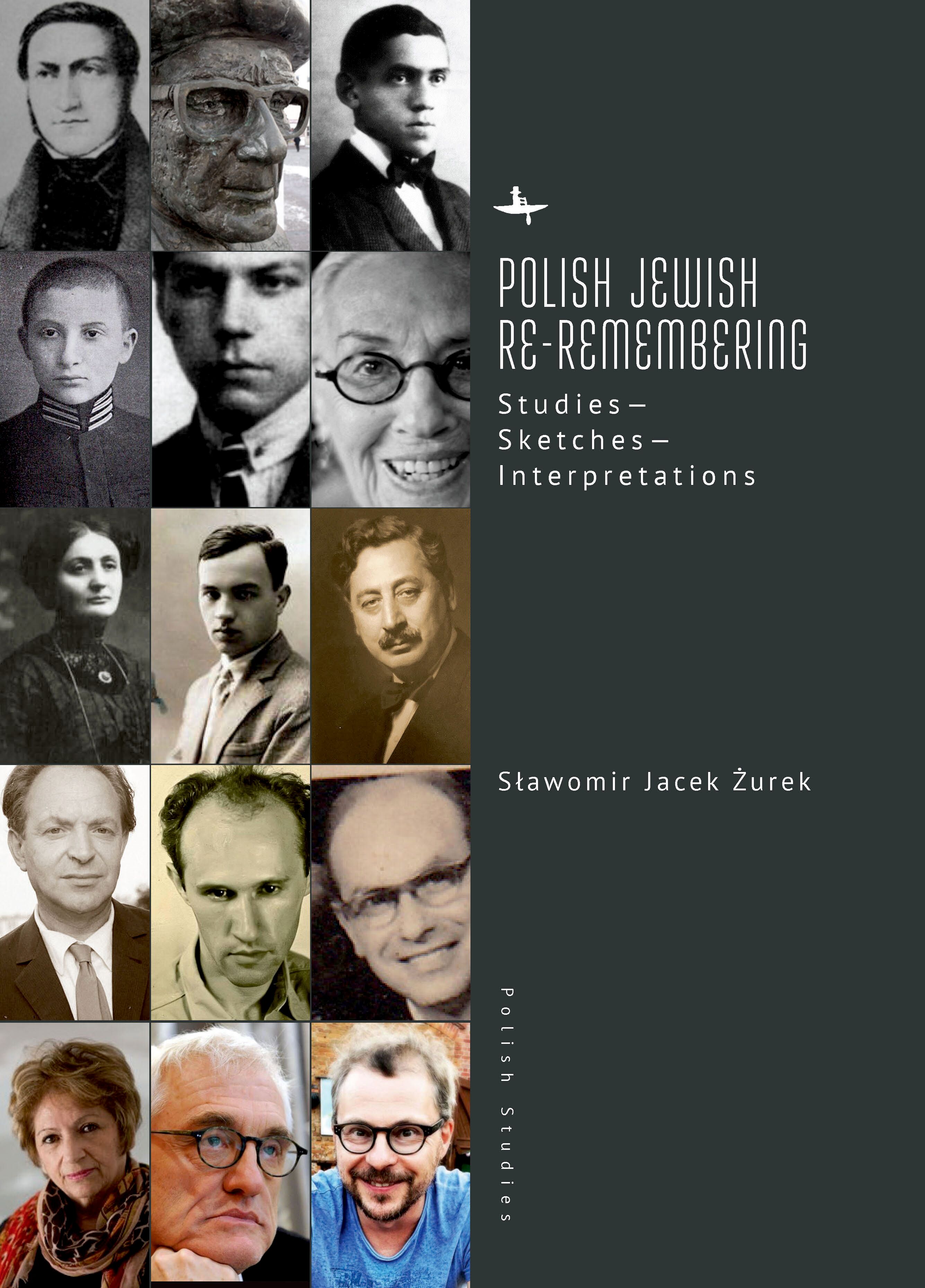
Polish Jewish Re-Remembering
The title of this monograph, ‘Polish Jewish Re-Remembering’, refers to the post-1989, thirty-year-long process of reviving attention to Polish-Jewish relations in historical, cultural, and literary studies, including the impact of Jews on the development of Polish culture, their presence in Polish social life, and the relationships between Jews and non-Jews in Poland. The book consists of four parts: the first focuses on Polish, Jewish and Polish-Jewish Literature (dealing mainly with pre-1939 literary works); the second, on the post-war literary output of the Polish-Jewish writer Arnold Słucki (1920–1972); the third, on Polish-Israeli literary images in the works of writers who were active in Israel (1948–2018); and the fourth, on recent (after 2000) Polish Holocaust literature.
eBook