
Catalogue Search | MBRL


Are you sure you want to remove the book from the shelf?

{{itemTitle}}
572
result(s) for
"Holocaust, Jewish (1939-1945)-Hungary-Tab-Personal narratives"
Sort by:

Man's search for meaning : the classic tribute to hope from the Holocaust
In 'Man's Search for Meaning', Dr. Frankl offers an account of his life amid the horrors of the Nazi death camps, chronicling the harrowing experience that led to the discovery of his theory of logotherapy.
BOOK

Jewish histories of the holocaust
For many years, histories of the Holocaust focused on its perpetrators, and only recently have more scholars begun to consider in detail the experiences of victims and survivors, as well as the documents they left behind. This volume contains new research from internationally established scholars. It provides an introduction to and overview of Jewish narratives of the Holocaust. The essays include new considerations of sources ranging from diaries and oral testimony to the hidden Oyneg Shabbes archive of the Warsaw Ghetto; arguments regarding Jewish narratives and how they fit into the larger fields of Holocaust and Genocide studies; and new assessments of Jewish responses to mass murder ranging from ghetto leadership to resistance and memory.
eBook
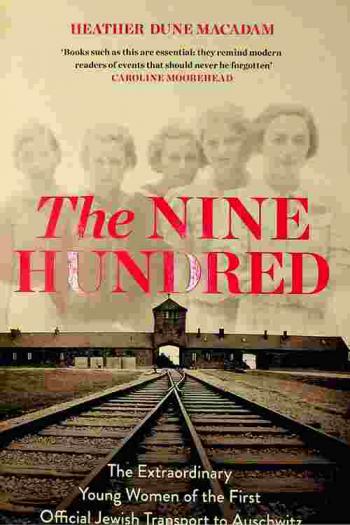
The nine hundred : the extraordinary young women of the first official transport to Auschwitz
On March 23, 1942, nearly a thousand young, unmarried Jewish women boarded a train in Poprad, Slovakia. Filled with a sense of adventure and national pride, they left their parents' homes wearing their best clothes and confidently waving goodbye. Believing they were going to work in a factory for a few months, they were eager to report for government service. Instead, the young women many of them teenagers were sent to Auschwitz. Of those 999 deportees only a few would survive.

Reframing Holocaust Testimony
Institutions that have collected video testimonies from the few remaining Holocaust survivors are grappling with how to continue their mission to educate and commemorate. Noah Shenker calls attention to the ways that audiovisual testimonies of the Holocaust have been mediated by the institutional histories and practices of their respective archives. Shenker argues that testimonies are shaped not only by the encounter between interviewer and interviewee, but also by technical practices and the testimony process. He analyzes the ways in which interview questions, the framing of the camera, and curatorial and programming preferences impact how Holocaust testimony is molded, distributed, and received.
eBook

Man's search for meaning
In this work, a Viennese psychiatrist tells his grim experiences in a German concentration camp which led him to logotherapy, an existential method of psychiatry. This work has riveted generations of readers with its descriptions of life in Nazi death camps and its lessons for spiritual survival. Between 1942 and 1945 the author, a psychiatrist labored in four different camps, including Auschwitz, while his parents, brother, and pregnant wife perished. Based on his own experience and the stories of his many patients, he argues that we cannot avoid suffering but we can choose how to cope with it, find meaning in it, and move forward with renewed purpose. His theory, known as logotherapy, from the Greek word logos (meaning), holds that our primary drive in life is not pleasure, as Freud maintained, but the discovery and pursuit of what we personally find meaningful.
Book

Numbered Days
As the Nazis swept across Europe during World War II, Jewish victims wrote diaries in which they grappled with the terror unfolding around them. Some wrote simply to process the contradictory bits of news they received; some wrote so that their children, already safe in another country, might one day understand what had happened to their parents; and some wrote to furnish unknown readers in the outside world with evidence against the Nazi regime.Were these diarists resisters, or did the process of writing make the ravages of the Holocaust even more difficult to bear? Drawing on an astonishing array of unpublished and published diaries from all over German-occupied Europe, historian Alexandra Garbarini explores the multiple roles that diary writing played in the lives of these ordinary women and men. A story of hope and hopelessness,Numbered Daysoffers a powerful examination of the complex interplay of writing and mourning. And in these heartbreaking diaries, we see the first glimpses of a question that would haunt the twentieth century: Can such unimaginable horror be represented at all?
eBook

The care of the witness : a contemporary history of testimony in crises
\"My preoccupation with witnessing mutated through several phases before it turned into the book you are holding. It germinated while I was writing my PhD dissertation at the Cohn Institute for the History and Philosophy of Science and Ideas at Tel Aviv University, when the gulf between the theory of testimony that so enchanted contemporary thinking around the ethics of memory on the one hand, and the humanitarian practice of witnessing I was studying on the other, first struck me as philosophically awkward and politically suspect\"-- Provided by publisher.
Book

Matters of testimony
In 1944, members of the Sonderkommando—the \"special squads,\" composed almost exclusively of Jewish prisoners, who ensured the smooth operation of the gas chambers and had firsthand knowledge of the extermination process—buried on the grounds of Auschwitz-Birkenau a series of remarkable eyewitness accounts of Nazi genocide. This careful and penetrating study examines anew these \"Scrolls of Auschwitz,\" which were gradually recovered, in damaged and fragmentary form, in the years following the camp's liberation. It painstakingly reconstructs their historical context and textual content, revealing complex literary works that resist narrow moral judgment and engage difficult questions about the limits of testimony.
eBook


Jewish medical resistance in the holocaust
Faced with infectious diseases, starvation, lack of medicines, lack of clean water, and safe sewage, Jewish physicians practiced medicine under severe conditions in the ghettos and concentration camps of the Holocaust. Despite the odds against them, physicians managed to supply public health education, enforce hygiene protocols, inspect buildings and latrines, enact quarantine, and perform triage. Many gave their lives to help fellow prisoners. Based on archival materials and featuring memoirs of Holocaust survivors, this volume offers a rich array of both tragic and inspiring studies of the sanctification of life as practiced by Jewish medical professionals. More than simply a medical story, these histories represent the finest exemplification of a humanist moral imperative during a dark hour of recent history.
eBook