
Catalogue Search | MBRL


Are you sure you want to remove the book from the shelf?

{{itemTitle}}
7,902
result(s) for
"Holocaust literature"
Sort by:


Holocaust Literature
What is Holocaust literature? When does it begin and how is it changing? Is there an essential core that consists of diaries, eyewitness accounts of the concentration camps, and tales of individual survival? Is it the same everywhere: West and East, in Australia as in the Americas, in poetry as in prose? Is this literature sacred and separate, or can it be studied alongside other responses to catastrophe? What works of Holocaust literature will be read a hundred years from now-and why? Here, for the first time, is a historical survey of Holocaust literature in all genres, countries, and major languages. Beginning in wartime, it proceeds from the literature of mobilization and mourning in the Free World to the vast literature produced in Nazi-occupied ghettos, bunkers and places of hiding, transit and concentration camps. No less remarkable is the new memorial literature that begins to take shape within weeks and months of the liberation. Moving from Europe to Israel, the United States, and beyond, the authors situate the writings by real and proxy witnesses within three distinct postwar periods: \"communal memory,\" still internal and internecine; \"provisional memory\" in the 1960s and 1970s, when a self-conscious Holocaust genre is born; and \"authorized memory,\" in which we live today. Twenty book covers-first editions in their original languages-and a guide to the \"first hundred books\" show the multilingual scope, historical depth, and artistic range of this extraordinary body of writing.
eBook


After Representation?
After Representation?explores one of the major issues in Holocaust studiesùthe intersection of memory and ethics in artistic expression, particularly within literature.As experts in the study of literature and culture, the scholars in this collection examine the shifting cultural contexts for Holocaust representation and reveal how writersùwhether they write as witnesses to the Holocaust or at an imaginative distance from the Nazi genocideùarticulate the shadowy borderline between fact and fiction, between event and expression, and between the condition of life endured in atrocity and the hope of a meaningful existence. What imaginative literature brings to the study of the Holocaust is an ability to test the limits of language and its conventions.After Representation?moves beyond the suspicion of representation and explores the changing meaning of the Holocaust for different generations, audiences, and contexts.
eBook

Anne Frank
In 1942, a young Jewish girl named Anne Frank received a diary from her parents for her thirteenth birthday. Today, millions of people have read the compelling, heartfelt diary entries Frank recorded while living in hiding to escape Nazi persecution. Her work is an invaluable account of the Holocaust, an iconic classic of war literature, and a testament to her own hopeful and unbreakable spirit. This biography introduces readers to Frank's life and the legacy she left behind, complete with photographs and fact boxes. Readers will be inspired by Frank's incredible story and her essential contribution to recorded history.
BOOK
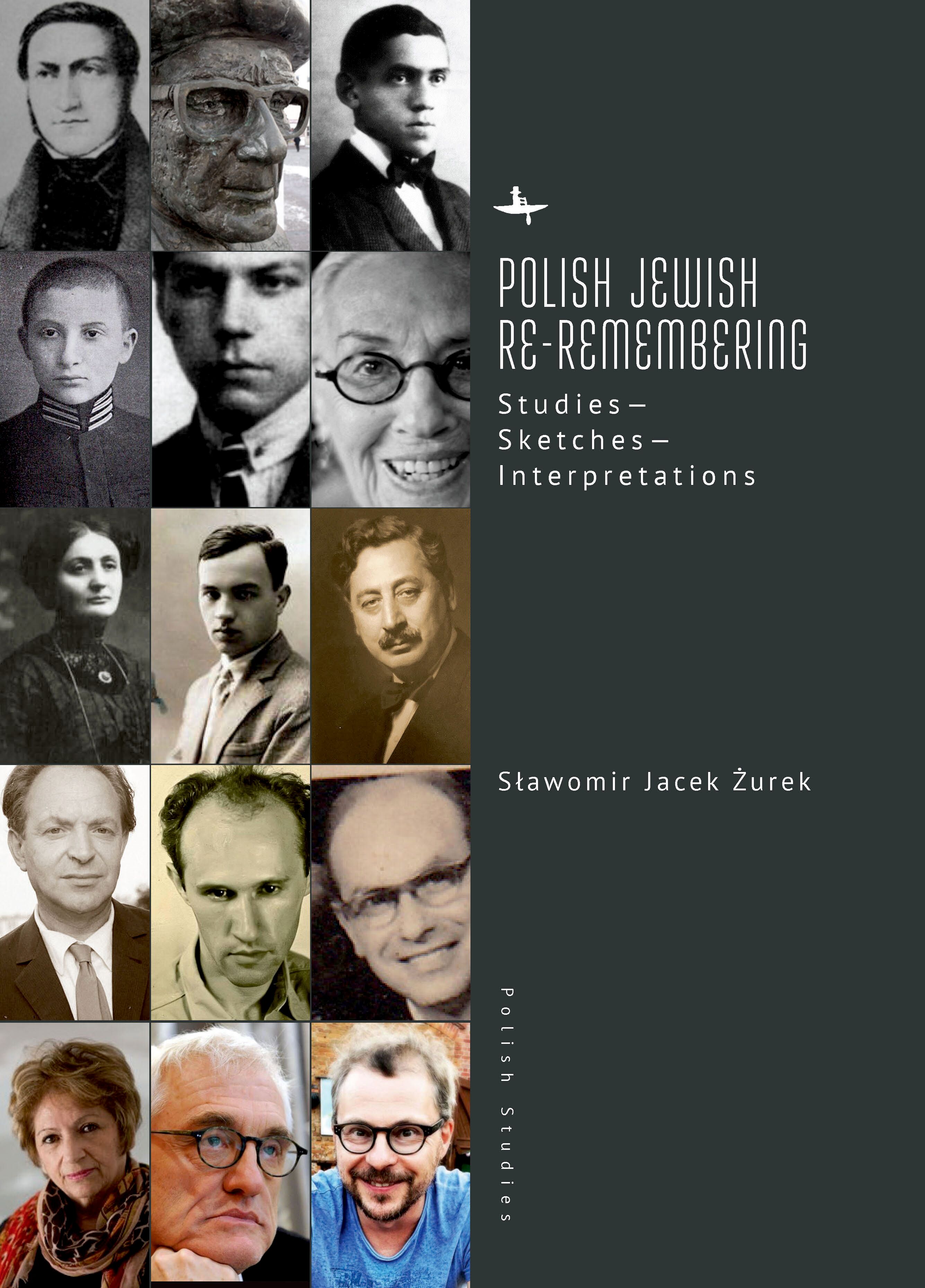
Polish Jewish Re-Remembering
The title of this monograph, ‘Polish Jewish Re-Remembering’, refers to the post-1989, thirty-year-long process of reviving attention to Polish-Jewish relations in historical, cultural, and literary studies, including the impact of Jews on the development of Polish culture, their presence in Polish social life, and the relationships between Jews and non-Jews in Poland. The book consists of four parts: the first focuses on Polish, Jewish and Polish-Jewish Literature (dealing mainly with pre-1939 literary works); the second, on the post-war literary output of the Polish-Jewish writer Arnold Słucki (1920–1972); the third, on Polish-Israeli literary images in the works of writers who were active in Israel (1948–2018); and the fourth, on recent (after 2000) Polish Holocaust literature.
eBook

A light in the darkness : Janusz Korczak, his orphans, and the Holocaust
\"From National Book Award finalist Albert Marrin comes the ... story of Janusz Korczak, the heroic Polish Jewish doctor who devoted his life to children, perishing with them in the Holocaust\"--Provided by publisher.
Book

Representing the Holocaust in Children's Literature
First Published in 2003. Routledge is an imprint of Taylor & Francis, an informa company.
Lydia Kokkola is a Collegium Researcher at the Turku Institute for Advanced Studies(TIAS) University of Turku, Finland. She is also Adjunct Professor of Children's Literature in English at Åbo Akademi University, Finland.
\"Kokkola is committed to ethical criticism. She asks repeatedly how literature affects children’s thinking and beliefs about the Holocaust and fascism. This is a welcome approach, which is at its best, in my view...when it urges us to think seriously about the profound impact that literature can have on young readers...Kokkola combines theory and criticism of children’s literature with Holocaust studies in productive and knowledgeable ways.\" -- The Lion and the Unicorn
\" Lydia Kokkola's study...is keenly narratological, and she often draws on formalist and structuralist approaches as she explicates texts. Like many before her, she is concerned with narratives that simultaneously reveal and conceal as they deal with horrific events, but the kinds of questions she asks focus specifically on how information can be withheld of divulged...Kokkola's approach also brings new dimensions to previous discussions of children's literature and the Holocaust.\" -- Prooftexts: A Journal of Jewish Literary History
eBook


Call It English
Call It English identifies the distinctive voice of Jewish American literature by recovering the multilingual Jewish culture that Jews brought to the United States in their creative encounter with English. In transnational readings of works from the late-nineteenth century to the present by both immigrant and postimmigrant generations, Hana Wirth-Nesher traces the evolution of Yiddish and Hebrew in modern Jewish American prose writing through dialect and accent, cross-cultural translations, and bilingual wordplay.
eBook