
Catalogue Search | MBRL


Are you sure you want to remove the book from the shelf?

{{itemTitle}}
15,849
result(s) for
"Holocene"
Sort by:


Mid-latitude net precipitation decreased with Arctic warming during the Holocene
The latitudinal temperature gradient between the Equator and the poles influences atmospheric stability, the strength of the jet stream and extratropical cyclones
1
–
3
. Recent global warming is weakening the annual surface gradient in the Northern Hemisphere by preferentially warming the high latitudes
4
; however, the implications of these changes for mid-latitude climate remain uncertain
5
,
6
. Here we show that a weaker latitudinal temperature gradient—that is, warming of the Arctic with respect to the Equator—during the early to middle part of the Holocene coincided with substantial decreases in mid-latitude net precipitation (precipitation minus evapotranspiration, at 30° N to 50° N). We quantify the evolution of the gradient and of mid-latitude moisture both in a new compilation of Holocene palaeoclimate records spanning from 10° S to 90° N and in an ensemble of mid-Holocene climate model simulations. The observed pattern is consistent with the hypothesis that a weaker temperature gradient led to weaker mid-latitude westerly flow, weaker cyclones and decreased net terrestrial mid-latitude precipitation. Currently, the northern high latitudes are warming at rates nearly double the global average
4
, decreasing the Equator-to-pole temperature gradient to values comparable with those in the early to middle Holocene. If the patterns observed during the Holocene hold for current anthropogenically forced warming, the weaker latitudinal temperature gradient will lead to considerable reductions in mid-latitude water resources.
A reduced gradient in temperatures between low and high latitudes during the Holocene led to drier mid-latitudes.
Journal Article

Reconciling divergent trends and millennial variations in Holocene temperatures
Analysis of pollen records from North America and Europe reveals a warming trend over the Holocene, consistent with climate-model simulations.
Preserved pollen presents climate past
In spite of decades of work, climate trends over the Holocene—the past 11,700 years—remain extensively debated. For example, climate models forced by known changes in insolation tend to simulate warming while reconstructions using proxies such as marine records often reveal cooling over the late Holocene, before sharp warming in the industrial era. Now, Jeremiah Marsicek and colleagues re-analyse extensive pollen records from North America and Europe and show a warming trend over the Holocene, consistent with climate model simulations. Evidence for cooling appears to be constrained to the North Atlantic region, rather than being a global signal.
Cooling during most of the past two millennia has been widely recognized
1
,
2
and has been inferred to be the dominant global temperature trend of the past 11,700 years (the Holocene epoch)
3
. However, long-term cooling has been difficult to reconcile with global forcing
4
, and climate models consistently simulate long-term warming
4
. The divergence between simulations and reconstructions emerges primarily for northern mid-latitudes, for which pronounced cooling has been inferred from marine and coastal records using multiple approaches
3
. Here we show that temperatures reconstructed from sub-fossil pollen from 642 sites across North America and Europe closely match simulations, and that long-term warming, not cooling, defined the Holocene until around 2,000 years ago. The reconstructions indicate that evidence of long-term cooling was limited to North Atlantic records. Early Holocene temperatures on the continents were more than two degrees Celsius below those of the past two millennia, consistent with the simulated effects of remnant ice sheets in the climate model Community Climate System Model 3 (CCSM3)
5
. CCSM3 simulates increases in ‘growing degree days’—a measure of the accumulated warmth above five degrees Celsius per year—of more than 300 kelvin days over the Holocene, consistent with inferences from the pollen data. It also simulates a decrease in mean summer temperatures of more than two degrees Celsius, which correlates with reconstructed marine trends and highlights the potential importance of the different subseasonal sensitivities of the records. Despite the differing trends, pollen- and marine-based reconstructions are correlated at millennial-to-centennial scales, probably in response to ice-sheet and meltwater dynamics, and to stochastic dynamics similar to the temperature variations produced by CCSM3. Although our results depend on a single source of palaeoclimatic data (pollen) and a single climate-model simulation, they reinforce the notion that climate models can adequately simulate climates for periods other than the present-day. They also demonstrate that amplified warming in recent decades increased temperatures above the mean of any century during the past 11,000 years.
Journal Article
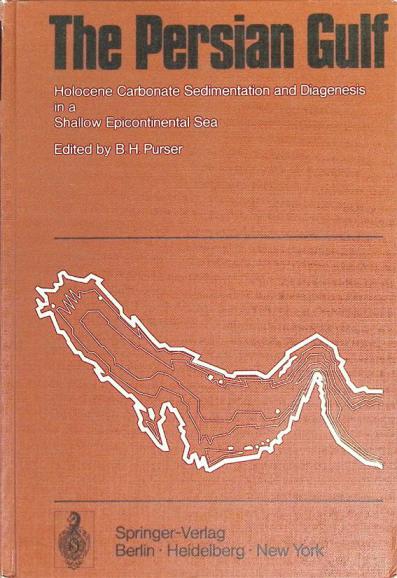
The Persian Gulf : Holocene carbonate sedimentation and diagenesis in a shallow epicontinental sea
This landmark volume, edited by Bruce H. Purser, represents one of the most significant contributions to modern carbonate sedimentology. It provides a comprehensive analysis of the Persian Gulf as a premier contemporary model for a shallow-water epicontinental sea. Through a series of technical papers, the work explores the complex interplay between biological, chemical, and physical processes that govern the formation and alteration of carbonate sediments in a high-salinity, subtropical environment.
BOOK

Variability of East Asian summer monsoon precipitation during the Holocene and possible forcing mechanisms
Projecting how the East Asian summer monsoon (EASM) rainfall will change with global warming is essential for human sustainability. Reconstructing Holocene climate can provide critical insight into its forcing and future variability. However, quantitative reconstructions of Holocene summer precipitation are lacking for tropical and subtropical China, which is the core region of the EASM influence. Here we present high-resolution annual and summer rainfall reconstructions covering the whole Holocene based on the pollen record at Xinjie site from the lower Yangtze region. Summer rainfall was less seasonal and ~ 30% higher than modern values at ~ 10–6 cal kyr BP and gradually declined thereafter, which broadly followed the Northern Hemisphere summer insolation. Over the last two millennia, however, the summer rainfall has deviated from the downward trend of summer insolation. We argue that greenhouse gas forcing might have offset summer insolation forcing and contributed to the late Holocene rainfall anomaly, which is supported by the TraCE-21 ka transient simulation. Besides, tropical sea-surface temperatures could modulate summer rainfall by affecting evaporation of seawater. The rainfall pattern concurs with stalagmite and other proxy records from southern China but differs from mid-Holocene rainfall maximum recorded in arid/semiarid northern China. Summer rainfall in northern China was strongly suppressed by high-northern-latitude ice volume forcing during the early Holocene in spite of high summer insolation. In addition, the El Niño/Southern Oscillation might be responsible for droughts of northern China and floods of southern China during the late Holocene. Furthermore, quantitative rainfall reconstructions indicate that the Paleoclimate Modeling Intercomparison Project (PMIP) simulations underestimate the magnitude of Holocene precipitation changes. Our results highlight the spatial and temporal variability of the Holocene EASM precipitation and potential forcing mechanisms, which are very helpful for calibration of paleoclimate models and prediction of future precipitation changes in East Asia in the scenario of global warming.
Journal Article