
Catalogue Search | MBRL


Are you sure you want to remove the book from the shelf?

{{itemTitle}}
276
result(s) for
"Holy Week"
Sort by:

Singing Jeremiah
A defining moment in Catholic life in early modern Europe, Holy Week brought together the faithful to commemorate the passion, crucifixion, and resurrection of Jesus Christ. In this study of ritual and music, Robert L. Kendrick investigates the impact of the music used during the Paschal Triduum on European cultures during the mid-16th century, when devotional trends surrounding liturgical music were established; through the 17th century, which saw the diffusion of the repertory at the height of the Catholic Reformation; and finally into the early 18th century, when a change in aesthetics led to an eventual decline of its importance. By considering such issues as stylistic traditions, trends in scriptural exegesis, performance space, and customs of meditation and expression, Kendrick enables us to imagine the music in the places where it was performed.
eBook
Adoring the Saints
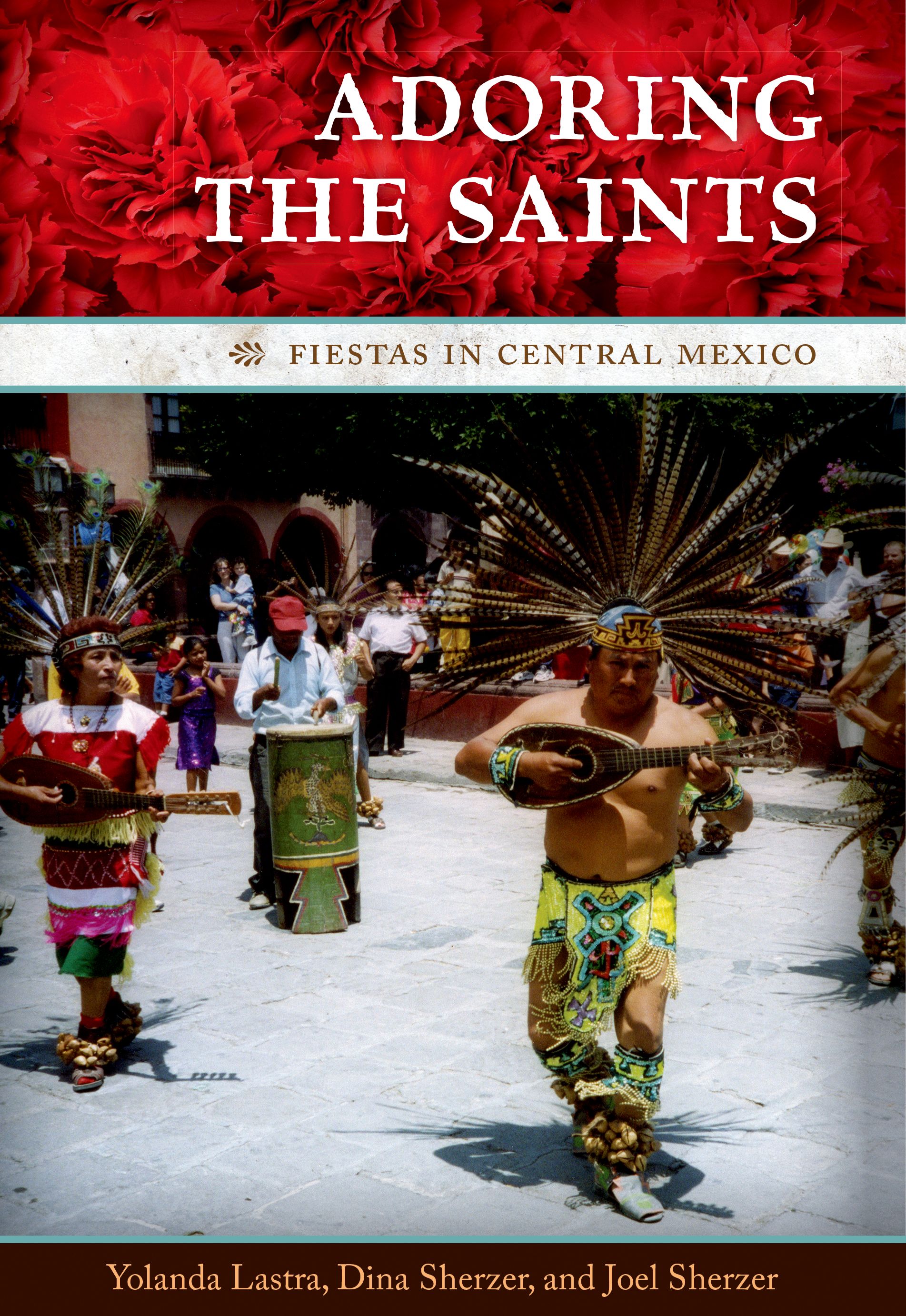
Mexico is famous for spectacular fiestas that embody its heart and soul. An expression of the cult of the saint, patron saint fiestas are the centerpiece of Mexican popular religion and of great importance to the lives and cultures of people and communities. These fiestas have their own language, objects, belief systems, and practices. They link Mexico's past and present, its indigenous and European populations, and its local and global relations. This work provides a comprehensive study of two intimately linked patron saint fiestas in the state of Guanajuato, near San Miguel de Allende—the fiesta of the village of Cruz del Palmar and that of the town of San Luis de la Paz. These two fiestas are related to one another in very special ways involving both religious practices and their respective pre-Hispanic origins. A mixture of secular and sacred, patron saint fiestas are multi-day affairs that include many events, ritual specialists, and performers, with the participation of the entire community. Fiestas take place in order to honor the saints, and they are the occasion for religious ceremonies, processions, musical performances, dances, and dance dramas. They feature spectacular costumes, enormous puppets, masked and cross-dressed individuals, dazzling fireworks, rodeos, food stands, competitions, and public dances. By encompassing all of these events and performances, this work displays the essence of Mexico, a lens through which this country's complex history, religion, ethnic mix, traditions, and magic can be viewed.
eBook

Making Peace in Northern Ireland
This book examines the remarkable process that led to peace in Northern Ireland after decades of violence. That story lies in its granular history but equally in an appreciation of its psychological dynamics, especially the emergence in the social and political realm of what the author calls radical empathy. The leaders who made peace happen were all larger than life, figures out of some 19th Century opera strutting across the stage of history. But there was another hero in the mix, one often noted for his presence but not fully appreciated by scholarly observers for his contributions to the peace process: John Alderdice. The son of a moderate Presbyterian minister, a medical doctor, and a psychiatrist and psychoanalyst, Alderdice brought to the peace process his grasp of others, his generosity, and clarity of vision. The Northern Irish story is immensely complicated but in the end uplifting. They deserve the peace they have made for themselves. The story of the Troubles is horrifying, but the story of peacemaking is not just dramatic - it inspires hope. If the Irish can make peace, anyone can. That may be the most important lesson of this book. And that lesson is transferable.
eBook

Imaginería, devoción y mímesis. Formas de apropiación y organización social en las procesiones de Semana Santa en Tunja, Colombia
This article proposes a reflection on the interaction between sacred imagery and believers in the Holy Week processions in Tunja, a city of colonial origin in central Colombia. The sacred imagery in Tunja and its processional exaltation constitute the faith practices and social organization of the brotherhoods of Nazarenes. These are bearers of a tradition of faith and penitence in which the imagery they carry publicly on their shoulders exalt fulfills a function of representation, identification, and social interaction. The article analyzes the forms and scope of this integral and mimetic relationship between people and images, and comes to consider the meanings of these practices in the processes of faith and social order. To this end, we used ethnographic experience accompanied by semi-structured interviews, following the thread of informal conversations. A systematic monitoring of worship activities was undertaken, taking part in the Holy Week processions organized by the Society of Nazarenes of Tunja in 2019. The work concludes that sacred images identify, communicate, and create practices of memory and affirmation that produce ways of being, maintaining cultural and devotional practices over time. As a result, the Nazarenes gain recognition and social valuation beyond the religious scene.
Journal Article

Reflections on the readings of Sundays and Feasts March-May 2026
The book of Genesis is often divided into two sections: the Universal or Primeval History (Gen 1-11) and the Ancestral History (Gen 12-50). The Universal History is set in the distant past, containing mythic narratives about creation, humanity, and the divine. The transition to a more historical storytelling style occurs at the beginning of Genesis chapter 12, which we read today. The style of writing is that of legends: Abram is the prominent hero who is directly spoken to by God. In legend-like writings, gods often communicate directly with human heroes, thereby emphasising the significance of a chosen human person. Abram, regarded as the founding figure of Israel, receives divine instructions to leave his homeland. The content of the instructions is the promise of a new land which will eventually become a nation, meaning not only a land of numerous people but also the locus of the establishment of an independent social and political community.
Journal Article

Celebrating holy week practices at home during the COVID-19 pandemic in the Philippines
A recent correspondence suggested that taking home ashes and launching digital Lenten ashes filters are non-traditional yet creative ways for the Catholic Church to perform the ritual practice in celebrating Ash Wednesday. These creative practices are deemed as necessary so that the Catholic community can celebrate the liturgical celebration while ensuring public health. With this, we propose in this paper practices that can be done during the holy week so that the spread of the coronavirus will be mitigated.
Journal Article

Adoring the saints : fiestas in central Mexico
Mexico is famous for spectacular fiestas that embody its heart and soul. An expression of the cult of the saint, patron saint fiestas are the centerpiece of Mexican popular religion and of great importance to the lives and cultures of people and communities. These fiestas have their own language, objects, belief systems, and practices. They link Mexico’s past and present, its indigenous and European populations, and its local and global relations. This work provides a comprehensive study of two intimately linked patron saint fiestas in the state of Guanajuato, near San Miguel de Allende—the fiesta of the village of Cruz del Palmar and that of the town of San Luis de la Paz. These two fiestas are related to one another in very special ways involving both religious practices and their respective pre-Hispanic origins. A mixture of secular and sacred, patron saint fiestas are multi-day affairs that include many events, ritual specialists, and performers, with the participation of the entire community. Fiestas take place in order to honor the saints, and they are the occasion for religious ceremonies, processions, musical performances, dances, and dance dramas. They feature spectacular costumes, enormous puppets, masked and cross-dressed individuals, dazzling fireworks, rodeos, food stands, competitions, and public dances. By encompassing all of these events and performances, this work displays the essence of Mexico, a lens through which this country’s complex history, religion, ethnic mix, traditions, and magic can be viewed.
eBook
Holy Wednesday
Identified only in 1986, the Nahuatl Holy Week play is the earliest known dramatic script in any Native American language. In Holy Wednesday, Louise Burkhart presents side-by-side English translations of the Nahuatl play and its Spanish source. An accompanying commentary analyzes the differences between the two versions to reveal how the native author altered the Spanish text to fit his own aesthetic sensibility and the broader discursive universe of the Nahua church. A richly detailed introduction places both works and their creators within the cultural and political contexts of late sixteenth-century Mexico and Spain.
eBook

The Bodily and Multi-Sensory Experiences of Cistercian Nuns: The Collective Liturgy and Ceremonies of the Holy Week in Lichtenthal
Holy Week, the most significant period of the Christian liturgical year, was marked by solemn and complex rituals enacted within the sacred spaces of medieval religious communities. In the case of Cistercian female monasteries, scholarly attention has largely centered on Easter dramatic representations such as the Depositio or the Visitatio Sepulchri, while the official liturgy—Hours, Masses, processions, and the official rituals of the Easter Triduum—has remained comparatively understudied. This article addresses that gap by examining the Holy Week liturgy as performed by the Cistercian nuns of Lichtenthal (Baden-Baden, Germany), on the basis of an exceptional and understudied source: the original Ecclesiastica Officia (mid-13th century, Karlsruhe, Badisches Generallandesarchiv, 65/323). Containing comprehensive normative prescriptions for the Easter liturgy adapted for the Lichtenthal community, this manuscript enables a detailed reconstruction of the nuns’ primary collective experiences during these days. The study brings together evidence from architecture, works of art, and liturgical books, while integrating insights from sensory studies, in order to underscore the bodily and multi-sensory dimensions of the rituals. In doing so, it highlights the implications of the nuns’ active participation in Holy Week ceremonies and contributes to a deeper understanding of medieval female religious ritual experience, challenging conventional notions of enclosure and liturgical practice.
Journal Article

Holy Wednesday : a Nahua drama from early colonial Mexico
Identified only in 1986, the Nahuatl Holy Week play is the earliest known dramatic script in any Native American language. In Holy Wednesday , Louise Burkhart presents side-by-side English translations of the Nahuatl play and its Spanish source. An accompanying commentary analyzes the differences between the two versions to reveal how the native author altered the Spanish text to fit his own aesthetic sensibility and the broader discursive universe of the Nahua church. A richly detailed introduction places both works and their creators within the cultural and political contexts of late sixteenth-century Mexico and Spain.
eBook