
Catalogue Search | MBRL


Are you sure you want to remove the book from the shelf?

{{itemTitle}}
76,604
result(s) for
"Home care services."
Sort by:


The Caring Self
According to the Bureau of Labor Statistics, there were approximately 1.7 million home health aides and personal and home care aides in the United States as of 2008. These home care aides are rapidly becoming the backbone of America's system of long-term care, and their numbers continue to grow. Often referred to as frontline care providers or direct care workers, home care aides-disproportionately women of color-bathe, feed, and offer companionship to the elderly and disabled in the context of the home. InThe Caring Self, Clare L. Stacey draws on observations of and interviews with aides working in Ohio and California to explore the physical and emotional labor associated with the care of others.
Aides experience material hardships-most work for minimum wage, and the services they provide are denigrated as unskilled labor-and find themselves negotiating social norms and affective rules associated with both family and work. This has negative implications for workers who struggle to establish clear limits on their emotional labor in the intimate space of the home. Aides often find themselves giving more, staying longer, even paying out of pocket for patient medications or incidentals; in other words, they feel emotional obligations expected more often of family members than of employees. However, there are also positive outcomes: some aides form meaningful ties to elderly and disabled patients. This sense of connection allows them to establish a sense of dignity and social worth in a socially devalued job. The case of home care allows us to see the ways in which emotional labor can simultaneously have deleterious and empowering consequences for workers.
eBook


Hospital-Level Care at Home for Acutely Ill Adults: a Pilot Randomized Controlled Trial
BackgroundHospitals are standard of care for acute illness, but hospitals can be unsafe, uncomfortable, and expensive. Providing substitutive hospital-level care in a patient’s home potentially reduces cost while maintaining or improving quality, safety, and patient experience, although evidence from randomized controlled trials in the US is lacking.ObjectiveDetermine if home hospital care reduces cost while maintaining quality, safety, and patient experience.DesignRandomized controlled trial.ParticipantsAdults admitted via the emergency department with any infection or exacerbation of heart failure, chronic obstructive pulmonary disease, or asthma.InterventionHome hospital care, including nurse and physician home visits, intravenous medications, continuous monitoring, video communication, and point-of-care testing.Main MeasuresPrimary outcome was direct cost of the acute care episode. Secondary outcomes included utilization, 30-day cost, physical activity, and patient experience.Key ResultsNine patients were randomized to home, 11 to usual care. Median direct cost of the acute care episode for home patients was 52% (IQR, 28%; p = 0.05) lower than for control patients. During the care episode, home patients had fewer laboratory orders (median per admission: 6 vs. 19; p < 0.01) and less often received consultations (0% vs. 27%; p = 0.04). Home patients were more physically active (median minutes, 209 vs. 78; p < 0.01), with a trend toward more sleep. No adverse events occurred in home patients, one occurred in control patients. Median direct cost for the acute care plus 30-day post-discharge period for home patients was 67% (IQR, 77%; p < 0.01) lower, with trends toward less use of home-care services (22% vs. 55%; p = 0.08) and fewer readmissions (11% vs. 36%; p = 0.32). Patient experience was similar in both groups.ConclusionsThe use of substitutive home-hospitalization compared to in-hospital usual care reduced cost and utilization and improved physical activity. No significant differences in quality, safety, and patient experience were noted, with more definitive results awaiting a larger trial.Trial Registration NCT02864420.
Journal Article

Inequalities of aging : paradoxes of independence in American home care
\"Elana D. Buch's \"Inequalities of Aging: Paradoxes of Independence in American Home Care\" focuses on the topic of American home care and explores various contradictions and points of tension within the industry. It also raises awareness of the problematic inequality that exists in the American home care industry and argues for the creation of a more sustainable system.\"-- Provided by publisher.
Book

Effect of home-based specialised palliative care and dyadic psychological intervention on caregiver anxiety and depression: a randomised controlled trial
BackgroundSpecialised palliative care trials often fail to address intervention effects on caregiver anxiety and depression, particularly in bereavement. We evaluate effects of specialised palliative care and dyadic psychological intervention on caregiver anxiety and depression in a randomised controlled trial (RCT).MethodsPatients with incurable cancer and limited antineoplastic treatment options and their caregivers, recruited from a university hospital oncology department, were randomised (1:1) to care as usual or accelerated transition from oncological treatment to home-based specialised palliative care. We assessed caregivers’ symptoms of anxiety and depression with the Symptom Checklist-92 up to six months after randomisation and 19 months into bereavement, and estimated intervention effects in mixed effects models.ResultsThe ‘Domus’ trial enrolled 258 caregivers. The intervention significantly attenuated increases in caregivers’ symptoms of anxiety overall (estimated difference, −0.12; 95% confidence interval, −0.22 to −0.01, p = 0.0266), and symptoms of depression at eight weeks (−0.17; −0.33 to −0.02; p = 0.0314), six months (−0.27; −0.49 to −0.05; p = 0.0165), and in bereavement at two weeks (−0.28; −0.52 to −0.03; p = 0.0295) and two months (−0.24; −0.48 to −0.01; p = 0.0448).ConclusionsThis first RCT evaluating specialised palliative care with dyadic psychological support significantly attenuated caregiver anxiety and depression before and during bereavement. (Clinicaltrials.gov: NCT01885637)
Journal Article

Collaborative helping : a strengths framework for home-based services
\"This book outlines a clear map for dealing with the complex and often ambiguous situations encountered by those working in supportive services. Drawing from numerous interviews with frontline helpers and people seeking help, this resource uses stories to introduce and illustrate core ideas and practices. Examining some of the common dilemmas of working with and advocating for the people served in home and community based settings, this unique volume explores how to collaborate with traditionally trained professionals across systems and how to involve people's natural networks and communities in helping endeavors\"-- Provided by publisher.
Book

Effect of a Universal Postpartum Nurse Home Visiting Program on Child Maltreatment and Emergency Medical Care at 5 Years of Age
The Family Connects (FC) program, a community-wide nurse home visiting program for newborns, has been shown to provide benefits for children and families through the first 2 years of life. Potential longer-term outcomes for child well-being remain unknown.
To determine the effect of randomization to FC on child maltreatment investigations and emergency medical care through 5 years of age.
In this randomized clinical trial, families of all 4777 resident births in Durham County, North Carolina, from July 1, 2009, to December 31, 2010, were randomly assigned to receive the FC program or treatment as usual. Impact evaluation was on an intent-to-treat basis and focused on a subsample of 549 families randomly selected from the full population and included review of hospital and Child Protective Services (CPS) administrative records. Statistical analysis was conducted from November 6, 2020, to April 25, 2021.
The FC programs includes 1 to 3 nurse home visits beginning at the infant age of 3 weeks designed to identify family-specific needs, deliver education and intervention, and connect families with community resources matched to their needs. Ongoing program engagement with service professionals and an electronic resource directory facilitate effective family connections to the community.
Two primary trial outcomes were CPS-recorded child maltreatment investigations and emergency medical care use based on hospital records.
Of the 4777 randomized families, 2327 were allocated to the intervention, and 2440 were allocated to services as usual. Among the children in the full study population, 2380 (49.8%) were female, 2397 (50.2%) were male, and 3359 (70.3%) were from racial/ethnic minority groups; of the 531 children included in the impact evaluation follow-up, 284 (53.5%) were female, 247 (46.5%) were male, and 390 (73.4%) were from racial/ethnic minority groups. Negative binomial models indicated that families assigned to FC had 39% fewer CPS investigations for suspected child maltreatment through 5 years of age (95% CI, -0.80 to 0.06; 90% CI, -0.73 to -0.01; control = 44 total investigations per 100 children and intervention = 27 total investigations per 100 children); intervention effects did not differ across subgroups. Families assigned to FC also had 33% less total child emergency medical care use (95% CI, -0.59 to -0.14; 90% CI, -0.55 to -0.18; control = 338 visits and overnight hospital stays per 100 children and intervention = 227 visits and overnight hospital stays per 100 children). Positive effects held across birth risk, child health insurance, child sex, single-parent status, and racial/ethnic groups. Effects were larger for nonminority families compared with minority families.
The findings of this randomized clinical trial suggest that, when implemented with high quality and broad reach, a brief postpartum nurse home visiting program can reduce population rates of child maltreatment and emergency medical care use in early childhood.
ClinicalTrials.gov Identifier: NCT01406184.
Journal Article
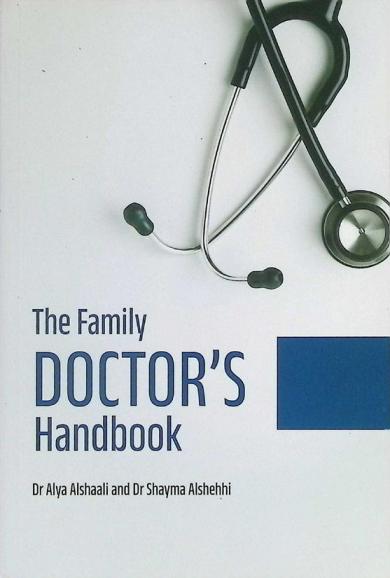
The family doctor's handbook
This essential medical reference is a practical guide tailored for primary healthcare practitioners, residents, and medical students. Authored by two prominent Emirati physicians, Dr. Alya Alshaali and Dr. Shayma Alshehhi, the handbook serves as a localized yet globally relevant tool for clinical decision-making.
BOOK

Hospital-at-home care in Singapore: A review of overseas protocols and guidelines to support implementation and policy redesign (systematic review)
Hospital-at-Home (HaH) is a care model providing acute, hospital-level care to patients in their own homes. It is gaining traction worldwide and could become an integral part of standard healthcare in the future. However, for countries like Singapore, implementation inefficiencies prevent the optimal uptake and establishment of HaH. Currently, there are no standardised guidelines guiding healthcare providers on effective implementation. Thus, our objective is to distil information from existing guidelines worldwide to collate the best practices for HaH implementation.
The systematic review is according to the Preferred Reporting Items for Systematic Review and Meta-Analysis (PRISMA) 2020 checklist. A literature review across three databases and an Advanced Internet Search was performed to collect guidelines that included recommendations on HaH implementation requirements. Two authors independently extracted recommendations. Two reviewers independently assessed guideline quality using the Appraisal of Guidelines for Research and Evaluation II Instrument (AGREE II), which consisted of twenty-three items across six domains. Overall guideline quality was calculated as the total points from all six domains as a percentage over maximum points, and guidelines with overall scores of 50% or more were deemed high quality.
Fourteen guidelines and seven sections were identified, which covered the following topics: inclusion & exclusion criteria, admission process, clinical handover, discharge, team structure, partnerships with external stakeholders, and medication administration. Key observations underline deficiencies in addressing staff safety, appropriate medical supply storage, and admission after hours. The main discrepant recommendations included self-discharge, team structure, partnerships with primary care providers, and medication self-administration. Methodological quality of guidelines varied, with overall AGREE II scores ranging from 38.5% to 58.4%. Individual domain scores were consistently low for Rigour of Development and Editorial Independence. Despite low scores in these domains, all fourteen guidelines were deemed appropriate for information extraction.
Despite inconsistencies among guidelines, a set of streamlined recommendations were consolidated. In Singapore, addressing home environment constraints, fostering stronger partnerships with community providers, and leveraging on multidisciplinary care can enhance the feasibility and sustainability of these HaH recommendations. Policy redesign should focus on further stratifying patients based on home suitability, leveraging on technology to support clinical handovers or collaborations, and investing in multidisciplinary training to strengthen workforce capabilities. In all, healthcare providers around the world should consider contextualising these recommendations within local socioeconomic and healthcare contexts for optimal HaH implementation.
Journal Article