
Catalogue Search | MBRL


Are you sure you want to remove the book from the shelf?

{{itemTitle}}
3,284
result(s) for
"Homeless persons -- Mental health"
Sort by:

Of Others Inside
There is little doubt among scientists and the general public that homelessness, mental illness, and addiction are inter-related. InOf Others Inside, Darin Weinberg examines how these inter-relations have taken form in the United States. He links the establishment of these connections to the movement of mental health and addiction treatment from redemptive processes to punitive ones and back again, and explores the connection between social welfare, rehabilitation, and the criminal justice system.Seeking to offer a new sociological understanding of the relationship between social exclusion and mental disability,Of Others Insideconsiders the general social conditions of homelessness, poverty, and social marginality in the U.S. Weinberg also explores questions about American perceptions of these conditions, and examines in great detail the social reality of mental disability and drug addiction without reducing people's suffering to simple notions of biological fate or social disorder.
eBook


Citizenship & Mental Health
Starting in the 1990s with Jim, a person who was homeless and initially refused help from outreach workers, Citizenship & Mental Health tells a 20-year story of practice, theory, and research to support the full participation of persons with mental illnesses who, in many cases, have also been homeless, have criminal charges in their past, and are poor.
eBook


Social Exclusion, Compound Trauma and Recovery
This timely book provides a framework for practice for professionals developing and running psychologically-informed services to meet the needs of socially excluded people with complex needs. It covers theory and practice from a psychodynamic perspective and provides practical interventions and case studies.
eBook
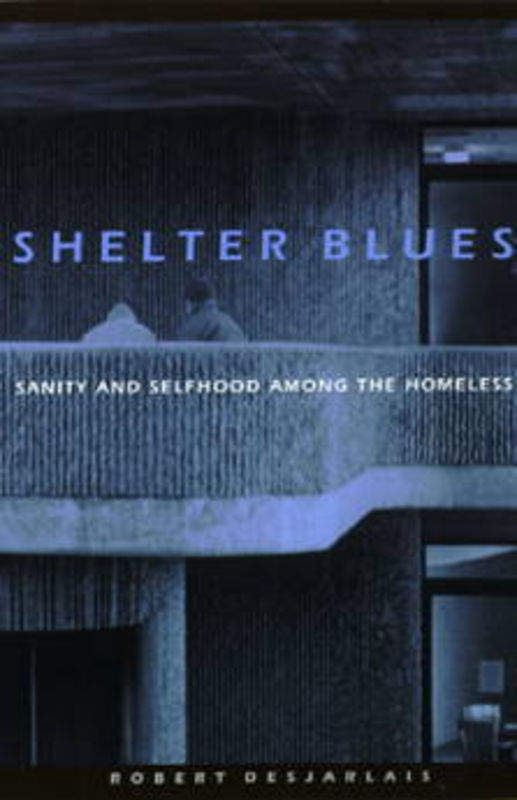
Shelter Blues
Desjarlais shows us not anonymous faces of the homeless but real people.While it is estimated that 25 percent or more of America's homeless are mentally ill, their lives are largely unknown to us. What must life be like for those who, in addition to living on the street, hear voices, suffer paranoid delusions, or have trouble thinking clearly or talking to others.Shelter Bluesis an innovative portrait of people residing in Boston's Station Street Shelter. It examines the everyday lives of more than 40 homeless men and women, both white and African-American, ranging in age from early 20s to mid-60s. Based on a sixteen-month study, it draws readers into the personal worlds of these individuals and, by addressing the intimacies of homelessness, illness, and abjection, picks up where most scholarship and journalism stops.Robert Desjarlais works against the grain of media representations of homelessness by showing us not anonymous stereotypes but individuals. He draws on conversations as well as observations, talking with and listening to shelter residents to understand how they relate to their environment, to one another, and to those entrusted with their care. His book considers their lives in terms of a complex range of forces and helps us comprehend the linkages between culture, illness, personhood, and political agency on the margins of contemporary American society.Shelter Bluesis unlike anything else ever written about homelessness. It challenges social scientists and mental health professionals to rethink their approaches to human subjectivity and helps us all to better understand one of the most pressing problems of our time.
eBook
Homeless Camps Debated As Legislators Seek Solution
\"Like other states around the nation, Florida is home to tens of thousands of people who live on the street - a fact of life that has vexed city and county leaders for decades. Now, state legislators are swooping in with what some are calling a cutting-edge solution to the homeless crisis they say will make streets both safer and cleaner in the Sunshine State. The new law would force counties and cities in Florida to ban the homeless from sleeping in public places but allow local governments to set up designated camps with running water, toilets, security and access to mental health services.\" (South Florida Sun - Sentinel ) Read more about the Florida Legislature's plan to address homelessness.
Newspaper Article
How to Solve Our Soaring Homelessness Problem
\"Homelessness set two records in 2023. The increase in homelessness between 2022 and 2023 was the largest ever recorded since the government began collecting data in 2007. That brought the number of Americans living in homeless shelters and on the streets to an all-time high... Some unique factors contributed to the jump in homelessness in 2023, but policies to address homelessness have been off track for a long time.\" (TCA News Service) Read more about the difference in the \"housing first\" and \"treatment first\" policies to reduce homelessness.
Newspaper Article
Trump Forces D.C. to Get Real About Homelessness
\"President Trump's strategy is straightforward: Everyone living outside must go inside, no exceptions. The president's recent executive order, \"Ending Crime and Disorder on America's Streets,\" goes even further, jeopardizing federal funding to cities and states that don't follow a similar strategy. These efforts mark the end of a decade of national tolerance of street sleeping, tent cities and public drug use.\" (Wall Street Journal) This viewpoint article supports President Trump's efforts to end homelessness in Washington, D.C.
Newspaper Article