
Catalogue Search | MBRL


Are you sure you want to remove the book from the shelf?

{{itemTitle}}
84
result(s) for
"Homer Influence."
Sort by:

Homer and the Good Ruler in Antiquity and Beyond
Homer and the Good Ruler in Antiquity and Beyond focuses on the important question of how and why later authors employ Homeric poetry to reflect on various types and aspects of leadership. In a range of essays discussing generically diverse receptions of the epics of Homer in historically diverse contexts, this question is answered in various ways. Rather than considering Homer's works as literary products, then, this volume discusses the pedagogic dimension of the Iliad and the Odyssey as perceived by later thinkers and writers interested in the parameters of good rule, such as Plato, Philodemus, Polybius, Vergil, and Eustathios.
eBook

Why Homer matters
\"In this passionate, deeply personal book, Adam Nicolson explains why Homer matters--to him, to you, to the world--in a text full of twists, turns and surprises. In a spectacular journey through mythical and modern landscapes, Adam Nicholson explores the places forever haunted by their Homeric heroes. From Sicily, awash with wildflowers shadowed by Italy's largest oil refinery, to Ithaca, southern Spain, and the mountains on the edges of Andalusia and Extremadura, to the deserted, irradiated steppes of Chernobyl, where Homeric warriors still lie under the tumuli, unexcavated. This is a world of springs and drought, seas and cities, with not a tourist in sight. And all sewn together by the poems themselves and their great metaphors of life and suffering. Showing us the real roots of Homeric consciousness, the physical environment that fills the gaps between the words of the poems themselves, Nicholson's is itself a Homeric journey. A wandering meditation on lost worlds, our interconnectedness with our ancestors, and the surroundings we share. This is the original meeting of place and mind, our empathy with the past, our landscape as our drama. Following the acclaimed Gentry, which established him as one of the great landscape writers working today, Nicholson takes Homer's poems back to their source: beneath the distant, god-inhabited mountains, on the Trojan plains above the graves of the heroic dead, we find afresh the foundation level of human experience on Earth\"-- Provided by publisher.
Book
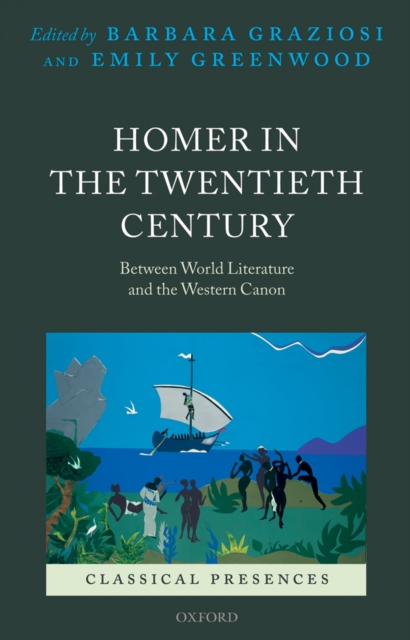
Homer in the twentieth century : between world literature and the western canon
The 20th century saw many contrasting approaches to Homer. On the one hand, Homer was often seen as the father of the western literary canon, the first author in a genealogy that included canonical poets such as Apollonius, Virgil, Dante, and Milton. On the other, Homeric poetry was thought to have strong affinities with poems, performances, and traditions that were sometimes deemed neither literary nor western: the epic of Yugoslavia and sub-Saharan Africa, the keening performances of Irish women, the spontaneous inventiveness of the Blues. This collection of essays attempts to trace the tensions and connections between different visions of Homer in the 20th century. Part I investigates the place of Homer in the shifting cultural landscapes of the 20th century; Part II explores the connections between scholarly and creative approaches to the Homeric poems; Part III looks at some of the means through which writers, poets, scholars, and film-makers mapped their distance from Homer; and Part IV discusses the political and interpretative challenges posed by reading (and not reading) Homer in the 20th century. The book contributes to current debates about the nature of the western literary canon, the evolving concept of world literature, the relationship between orality and the written word, and the dialogue between texts across time and space. It argues that the Homeric poems played an important role in shaping those debates and, conversely, that the experiences of the 20th century opened new avenues for the interpretation of Homer's much-travelled texts.
eBook

Modernism and Homer : the Odysseys of H.D., James Joyce, Osip Mandelstam, and Ezra Pound
\"This comparative study crosses multiple cultures, traditions, genres, and languages in order to explore the particular importance of Homer in the emergence, development, and promotion of modernist writing. It shows how and why the Homeric epics served both modernist formal experimentation, including Pound's poetics of the fragment and Joyce's sprawling epic novel, and sociopolitical critiques, including H.D.'s analyses of the cultural origins of twentieth-century wars and Mandelstam's poetic defiance of the totalitarian Stalinist regime. The book counters a long critical tradition that has recruited Homer to consolidate, champion and, more recently, chastise an elitist, masculine modernist canon. Departing from the tradition of reading these texts in isolation as mythic engagements with the Homeric epics, Leah Flack argues that ongoing dialogues with Homer helped these writers to mount their distinct visions of a cosmopolitan post-war culture that would include them as artists working on the margins of the Western literary tradition\"-- Provided by publisher.
Book
Virgil's Homeric Lens
Virgil's Homeric Lens reevaluates the traditional view of the Aeneid's relationship to Homer's Iliad and Odyssey. Almost since the death of Virgil, there has been an assumption that the Aeneid breaks into two discrete halves: Virgil's Odyssey, and Virgil's Iliad. Although modified in various ways over the centuries, this neat dichotomy has generally diminished the complexity and resonance of the connection between the two canonical epic poets. This work offers an alternate approach in which Virgil uses the transformative power of the Odyssey as a precise filter through which to read the Iliadic experience.
By examining the ways in which Virgil bases his own epic project on the dynamic interaction between the two Homeric poems themselves, Edan Dekel proposes a system in which the Aeneid uses the Odyssey both as a conceptual model for writing an intertextual epic and as a powerful refracting lens for the specific interpretation of the Iliad and its consequences. The traditional view of the Homeric poems as static sources for the construction of distinct \"Odyssean\" and \"Iliadic\" halves of the Aeneid is supplanted by an analysis which emphasizes the active and persistent influence of the Odyssey as a guide to processing the major thematic concerns of the Iliad and exploring the multiple aftermaths of the Trojan war.
eBook


An Odyssey for Our Time
In her 2007 poem cycle Niemands Frau, Barbara Köhler returns to Homer's Odyssey, not to retell it, but to take up some of the threads it has woven into the cultural tradition of the West - and to unravel them, just as Penelope, the wife of the hero who called himself Nobody, unravelled each night the web she re-wove by day. Köhler's return to the Odyssey takes place under the sign of a grammatical shift, from 'er' to 'sie', from the singular hero to a plurality of female voices - Nausicaa, Circe, Calypso, Ino Leucothea, Helen and Penelope herself - with implications for thinking about identity, power and knowledge, about gender and relationality, but also about the corporeality and multivocality which underlies the 'virtual reality' of the printed text. The eight essays in this volume explore Köhler's iridescent poem cycle from a variety of different angles: its context in contemporary German refigurations of the classical; its engagement with Homer and the classical tradition; its contribution to feminist philosophy of the subject and a female 'dialectic of enlightenment'; its incorporation of the voices of poetic predecessors; and the surprising alliance it uncovers between poetry and quantum theory.
eBook
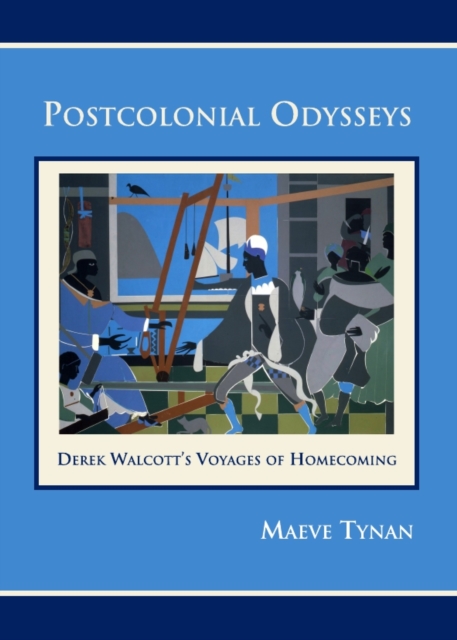
Postcolonial Odysseys
Postcolonial Odysseys: Derek Walcotts Voyages of Homecoming highlights the importance of the trope of voyaging in Derek Walcotts poetics, primarily as it pertains to the poets engagement with classical verse. Focusing specifically on the engagement with Homeric myth, and The Odyssey in particular, it articulates the manner in which Walcotts postcolonial reconfigurations of epic verse both highlights the endurance of the classics as well as demonstrating how cultural practices can remake a.
eBook
The Artistry and Tradition of Tennyson's Battle Poetry
First Published in 2003. Routledge is an imprint of Taylor & Francis, an informa company.
An independent scholar, J. Timothy Lovelace received his Ph.D. from the University of North Carolina at chapel Hill in 1999.
eBook