
Catalogue Search | MBRL


Are you sure you want to remove the book from the shelf?

{{itemTitle}}
91
result(s) for
"Homicide history Europe."
Sort by:

Blood work : a tale of medicine and murder in the scientific revolution
A sharp-eyed expose of the deadly politics, murderous plots, and cutthroat rivalries behind the first blood transfusions in seventeenth-century Europe.
Book
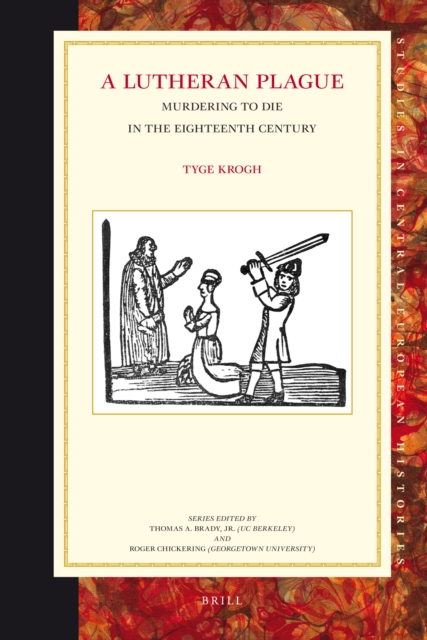
A Lutheran Plague
Suicide murders - i.e., killings in order to be executed - were alarmingly frequent in eighteenth-century Lutheran Europe. The book traces the murderers motives - an investigation that leads to the Pietist care for death convicts, into central elements of Lutheran soteriology and to the idea of capital punishment as being divinely ordained. At dræbe nogen alene for at blive henrettet!. Sådanne mord var alarmerende hyppige i 1700-tallets lutherske Europa. Bogen eftersporer mordernes motiver - en undersøgelse der fører til den pietistiske omsorg for dødsdømte, til centrale dele af den lutherske frelseforståelse og til forestillingen om, at dødsstraffene var direkte beordrede af Gud.
eBook

Constructing Interethnic Conflict and Cooperation: Why Some People Harmed Jews and Others Helped Them during the Holocaust in Romania
The authors draw on a natural experiment to demonstrate that states can reconstruct conflictual interethnic relationships into cooperative relationships in relatively short periods of time. The article examines differences in how the gentile population in each of two neighboring territories in Romania treated its Jewish population during the Holocaust. These territories had been part of tsarist Russia and subject to state-sponsored anti-Semitism until 1917. During the interwar period one territory became part of Romania, which continued anti-Semitic policies, and the other became part of the Soviet Union, which pursued an inclusive nationality policy, fighting against inherited anti-Semitism and working to integrate its Jews. Both territories were then reunited under Romanian administration during World War II, when Romania began to destroy its Jewish population. The authors demonstrate that, despite a uniform Romanian state presence during the Holocaust that encouraged gentiles to victimize Jews, the civilian population in the area that had been part of the Soviet Union was less likely to harm and more likely to aid Jews as compared with the region that had been part of Romania. Their evidence suggests that the state construction of interethnic relationships can become internalized by civilians and outlive the life of the state itself.
Journal Article

Crime and punishment in istanbul
This vividly detailed revisionist history exposes the underworld of the largest metropolis of the early modern Mediterranean and through it the entire fabric of a complex, multicultural society. Fariba Zarinebaf maps the history of crime and punishment in Istanbul over more than one hundred years, considering transgressions such as riots, prostitution, theft, and murder and at the same time tracing how the state controlled and punished its unruly population. Taking us through the city's streets, workshops, and houses, she gives voice to ordinary people—the man accused of stealing, the woman accused of prostitution, and the vagabond expelled from the city. She finds that Istanbul in this period remains mischaracterized—in part by the sensational and exotic accounts of European travelers who portrayed it as the embodiment of Ottoman decline, rife with decadence, sin, and disease. Linking the history of crime and punishment to the dramatic political, economic, and social transformations that occurred in the eighteenth century, Zarinebaf finds in fact that Istanbul had much more in common with other emerging modern cities in Europe, and even in America.
eBook

The Anatomy Murders
Up the close and down the stair, Up and down with Burke and Hare. Burke's the butcher, Hare's the thief, Knox the man who buys the beef.-anonymous children's song On Halloween night 1828, in the West Port district of Edinburgh, Scotland, a woman sometimes known as Madgy Docherty was last seen in the company of William Burke and William Hare. Days later, police discovered her remains in the surgery of the prominent anatomist Dr. Robert Knox. Docherty was the final victim of the most atrocious murder spree of the century, outflanking even Jack the Ripper's. Together with their accomplices, Burke and Hare would be accused of killing sixteen people over the course of twelve months in order to sell the corpses as \"subjects\" for dissection. The ensuing criminal investigation into the \"Anatomy Murders\" raised troubling questions about the common practices by which medical men obtained cadavers, the lives of the poor in Edinburgh's back alleys, and the ability of the police to protect the public from cold-blooded murder. Famous among true crime aficionados, Burke and Hare were the first serial killers to capture media attention, yetThe Anatomy Murdersis the first book to situate their story against the social and cultural forces that were bringing early nineteenth-century Britain into modernity. In Lisa Rosner's deft treatment, each of the murder victims, from the beautiful, doomed Mary Paterson to the unfortunate \"Daft Jamie,\" opens a window on a different aspect of this world in transition. Tapping into a wealth of unpublished materials, Rosner meticulously portrays the aspirations of doctors and anatomists, the makeshift existence of the so-called dangerous classes, the rudimentary police apparatus, and the half-fiction, half-journalism of the popular press.The Anatomy Murdersresurrects a tale of murder and medicine in a city whose grand Georgian squares and crescents stood beside a maze of slums, a place in which a dead body was far more valuable than a living laborer.
eBook

Correlates of National-level Homicide Variation in Post-Communist East-Central Europe
This article examines whether correlates of cross-national homicide variation tested with data from highly developed, predominantly Western nations could also explain homicide rates in East-Central Europe. Using pooled time-series analyses of data from nine countries from 1990 through 2003, this study found that homicide rates were negatively related to GDP/ capita and positively related to ethnic diversity and population density They were also negatively related to the percentage of young people and not significantly related to income inequality or divorce rates. This article also investigates whether conditions specific to the post-communist transformations contributed to homicide variation. Findings indicate that progressive reforms toward democratization and marketization decreased homicide rates. The discussion uses the socio-historical context of the nations to explain these results.
Journal Article

'A Human Treasure': Europe's Displaced Children between Nationalism and Internationalism
Children were at the symbolic heart of efforts to reconstruct Europe in the aftermath of World War II. This article examines what post-war activism around displaced children reveals about the broader relationships between nationalism and internationalism in the process of post-war reconstruction, focusing on displaced children and children of occupation in the reconstruction of France and Czechoslovakia. In both countries the \"repatriation\" of children was linked to the reconstruction of national sovereignty and of the nation's biological and economic strength. In the campaign to reconstruct Europe's children after the War international organizations reinforced nationalist ideals and policies. (Quotes from original text)
Journal Article

Blacks and Gypsies in Nazi Germany: the Limits of the 'Racial State'
Inflections of Race and Class: \"Negroes\" and \"Gypsies\" in Nazi Germany
The mass murder prosecuted against the European Jews by the Nazi regime and rationalized in terms of 'race' poses a particular challenge to materialist historians. In one response to this challenge, many of us have adopted the term 'racial state' as shorthand for the sense that there is some kind of coherence in the multiple histories of internment, labour exploitation, sterilization and murder-or-letting-die, with systematic killing emerging at the end of a continuum of institutional dehumanization. However, close attention to the ways in which exclusionary and genocidal practices were devised, applied and experienced in everyday life throws up substantial evidence of incoherence. Drawing on case studies in the Nazi persecution of Blacks and 'Gypsies', this article explores what happened when the authorities attempted to impose a unitary, biological notion of race on a society with well-developed forms of everyday racism, and what opportunities the resulting tensions created for the victims of persecution to 'answer back'. It invites us to consider the 'racial state' as at best a work in progress, and Nazi racism not as the logical culmination of a trajectory of modern racism, but as a unique and incomplete experiment in radically redefining race.
Journal Article

Democracy Came Too Early: A Tentative Explanation for the Problem of American Homicide
Spierenburg comments on Eric Monkkonen's article Homicide: Explaining America's Exceptionalism. Spierenburg suggests that the idea persisted that the very principle of a monopoly over force threatened self-defense as a democratic right. The US's high homicide rate is one manifestation of an abortive process of state formation.
Journal Article

The Romans and Ritual Murder
The Roman abhorrence of human sacrifice presented by ancient literary sources stands in contrast to the frequency of rites requiring the death of a human being performed by the Romans during the Republic (509–44 BCE). After examining the ways our sources talk about ritual murder, especially as it was practiced by foreign peoples and subversive or tyrannical elements within Roman society, this discussion turns to the issue of the forms of ritual murder performed by the Romans. Of these various rites, the only one clearly identified by them as human sacrifice, that is, as an offering to the gods of a human life, is the live interment of Gauls and Greeks. Other forms of ritual murder—the burial of unchaste Vestal Virgins and the drowning of hermaphroditic children—were not, in Roman opinion, sacrifice. This distinction made the disposal of Vestal Virgins and hermaphrodites acceptable.
Journal Article