
Catalogue Search | MBRL


Are you sure you want to remove the book from the shelf?

{{itemTitle}}
287
result(s) for
"Homme Évolution."
Sort by:

Processes in human evolution : the journey from early hominins to Neanderthals and modern humans
The discoveries of the last decade have brought about a completely revised understanding of human evolution, due to the recent advances in genetics, palaeontology, ecology, archaeology, geography, and climate science. Written by two leading authorities in the fields of physical anthropology and molecular evolution, Processes in Human Evolution presents a reconsidered overview of hominid evolution, synthesising data and approaches from a range of inter-disciplinary fields. The authors pay particular attention to population migrations, since these are crucial in understanding the origin and dispersion of the different genera and species in each continent, and to the emergence of the lithic cultures and their impact on the evolution of the cognitive capacities. Processes in Human Evolution is intended as a primary textbook for university courses on human evolution, and may also be used as supplementary reading in advanced undergraduate and graduate courses. It is also suitable for interested lay-readers seeking a readable but up-to-date and inclusive treatment of human origins and evolution.-- Publisher's website.
Book
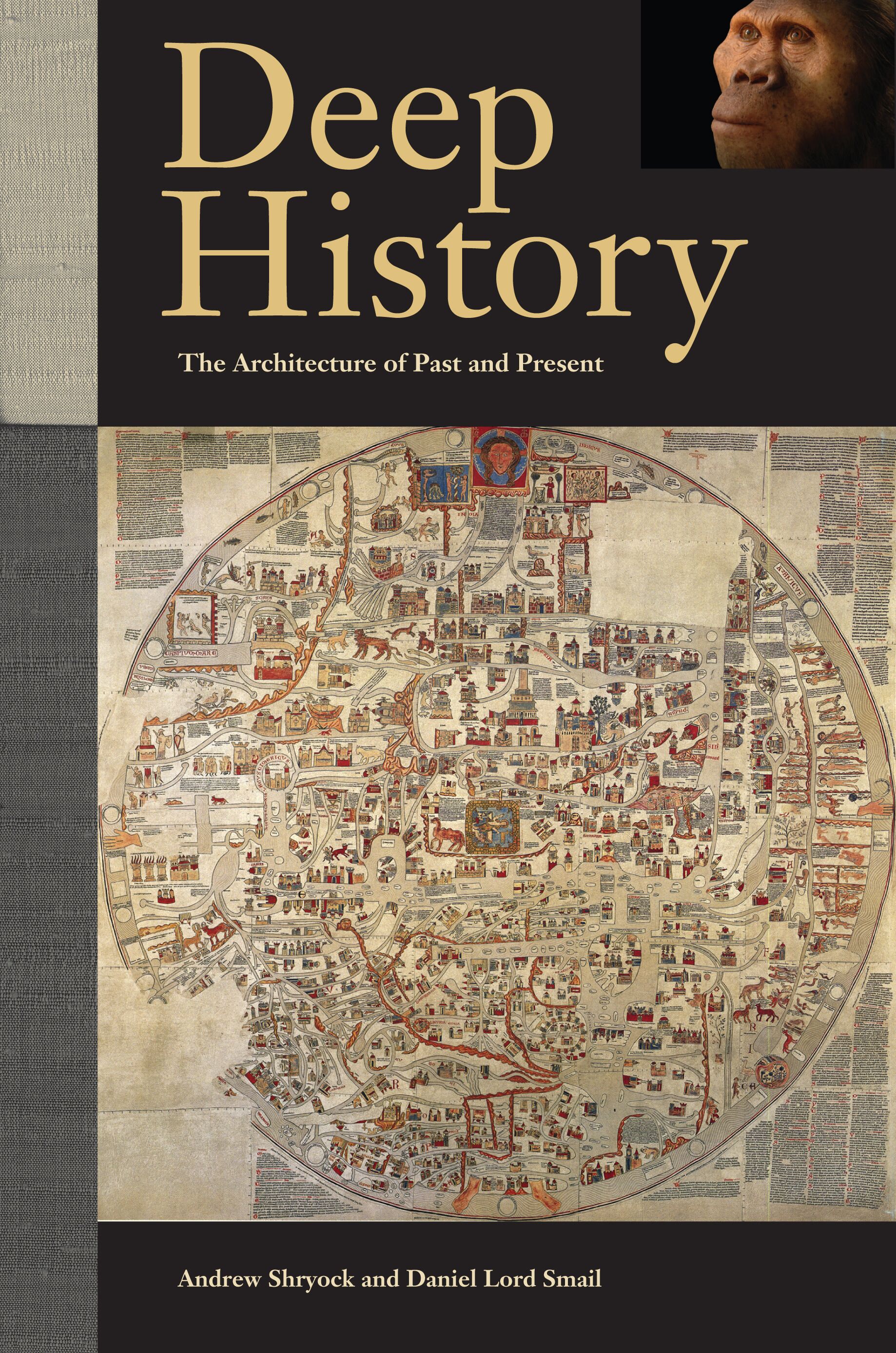
Deep history
Humans have always been interested in their origins, but historians have been reluctant to write about the long stretches of time before the invention of writing. In fact, the deep past was left out of most historical writing almost as soon as it was discovered. This breakthrough book, as important for readers interested in the present as in the past,brings science into history to offer a dazzling new vision of humanity across time. Team-written by leading experts in a variety of fields, it maps events, cultures, and eras across millions of years to present a new scale for understanding the human body, energy and ecosystems, language, food, kinship, migration, and more. Combining cutting-edge social and evolutionary theory with the latest discoveries about human genes, brains, and material culture, Deep History invites scholars and general readers alike to explore the dynamic of connectedness that spans all of human history. With Timothy Earle, Gillian Feeley-Harnik, Felipe Fernández-Armesto, Clive Gamble, April McMahon, John C. Mitani, Hendrik Poinar, Mary C. Stiner, and Thomas R. Trautmann
eBook

Erect men/undulating women : the visual imagery of gender, \race\ and progress in reconstructive illustrations of human evolution
Based on intensive study of human origin illustrations, responses from students and colleagues and research into reconstructive illustration and feminist criticism of Western art, this ground-breaking book traces the subtle ways in which paleoanthropological conventions have influenced and have shifted in the creation of these illustrations. Wiber reveals that embedded meanings in these illustrations go beyond gender to include two other ubiquitous themes—racial superiority and upward cultural progress. Underlying all these themes, she found a basic conservatism in the paleoanthropological approach to evolutionary theory.
Erect Men/Undulating Women provides a deeper understanding of popularized illustrations of human origins, but, more importantly, it encourages readers to gain a sensitivity to the ways in which Western culture constructs \"scientific\" findings that are compatible with its deeply held beliefs and values.
eBook

Second nature
Was exchange an early agent of human evolution or is it merely a de novo artifact of modern civilisation? Here, Haim Ofek explores the impact of market forces on human evolution, from the feed-as-you-go strategy typical of primates to the development of agriculture and the domestication of fire
Book

Ritual and Religion in the Making of Humanity
Roy Rappaport argues that religion is central to the continuing evolution of life, although it has been been displaced from its original position of intellectual authority by the rise of modern science. His book, which could be construed as in some degree religious as well as about religion, insists that religion can and must be reconciled with science. Combining adaptive and cognitive approaches to the study of humankind, he mounts a comprehensive analysis of religion's evolutionary significance, seeing it as co-extensive with the invention of language and hence of culture as we know it. At the same time he assembles the fullest study yet of religion's main component, ritual, which constructs the conceptions which we take to be religious and has been central in the making of humanity's adaptation. The text amounts to a manual for effective ritual, illustrated by examples drawn from anthropology, history, philosophy, comparative religion, and elsewhere.
eBook
Maps of time : an introduction to big history
An introduction to a new way of looking at history, from a perspective that stretches from the beginning of time to the present day, Maps of Time is world history on an unprecedented scale. Beginning with the Big Bang, David Christian views the interaction of the natural world with the more recent arrivals in flora and fauna, including human beings. Cosmology, geology, archeology, and population and environmental studies--all figure in David Christian's account, which is an ambitious overview of the emerging field of \"Big History.\" Maps of Time opens with the origins of the universe, the stars and the galaxies, the sun and the solar system, including the earth, and conducts readers through the evolution of the planet before human habitation. It surveys the development of human society from the Paleolithic era through the transition to agriculture, the emergence of cities and states, and the birth of the modern, industrial period right up to intimations of possible futures. Sweeping in scope, finely focused in its minute detail, this riveting account of the known world, from the inception of space-time to the prospects of global warming, lays the groundwork for world history--and Big History--true as never before to its name.
eBook

Adam's ancestors : race, religion, and the politics of human origins
Winner of the Selection for Professional Reading List of the U.S. Marine Corps
Although the idea that all human beings are descended from Adam is a long-standing conviction in the West, another version of this narrative exists: human beings inhabited the Earth before, or alongside, Adam, and their descendants still occupy the planet.
In this engaging and provocative work, David N. Livingstone traces the history of the idea of non-adamic humanity, and the debates surrounding it, from the Middle Ages to the present day. From a multidisciplinary perspective, Livingstone examines how this alternative idea has been used for cultural, religious, and political purposes. He reveals how what began as biblical criticism became a theological apologetic to reconcile religion with science—evolution in particular—and was later used to support arguments for white supremacy and segregation.
From heresy to orthodoxy, from radicalism to conservatism, from humanitarianism to racism, Adam's Ancestors tells an intriguing tale of twists and turns in the cultural politics surrounding the age-old question, \"Where did we come from?\"
eBook
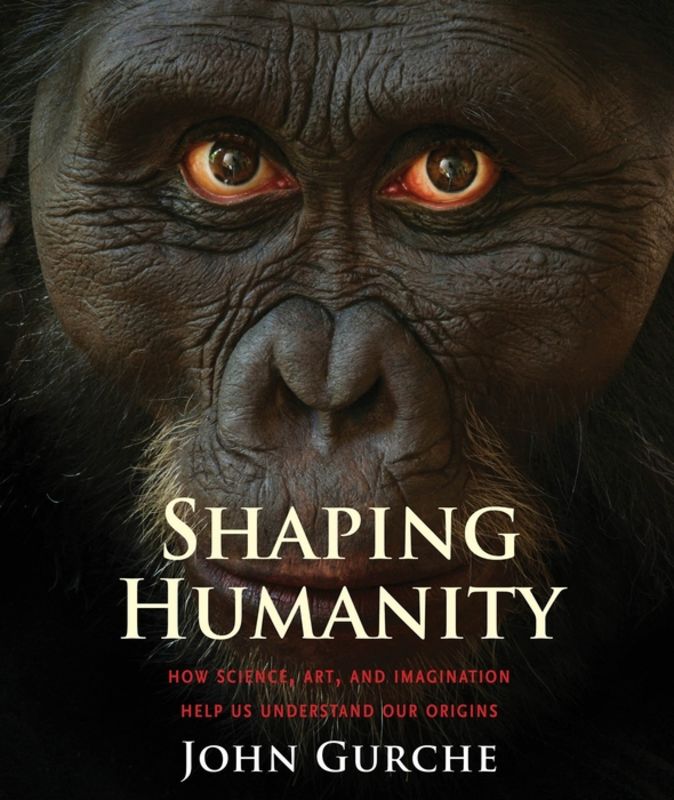
Shaping Humanity
What did earlier humans really look like? What was life like for them, millions of years ago? How do we know? In this book, internationally renowned paleoartist John Gurche describes the extraordinary process by which he creates forensically accurate and hauntingly realistic representations of our ancient human ancestors.
Inspired by a lifelong fascination with all things prehistoric, and gifted with a unique artistic vision, Gurche has studied fossil remains, comparative ape and human anatomy, and forensic reconstruction for over three decades. His artworks appear in world-class museums and publications ranging fromNational Geographicto the journalScience,and he is widely known for his contributions to Steven Spielberg'sJurassic Parkand a number of acclaimed television specials. For the Smithsonian Institution's groundbreaking David H. Koch Hall of Human Origins, opened in 2010, Gurche created fifteen sculptures representing six million years of human history. InShaping Humanityhe relates how he worked with a team of scientists to depict human evolution in sculpture for the new hall. He reveals the debates and brainstorming that surround these often controversial depictions, and along the way he enriches our awareness of the various paths of human evolution and humanity's stunning uniqueness in the history of life on Earth.
eBook

Language and Human Behavior
“What this book proposes to do,” writes Derek Bickerton, “is to stand the conventional wisdom of the behavioral sciences on its head: instead of the human species growing clever enough to invent language, it will view that species as blundering into language and, as a direct result of that, becoming clever.” According to Bickerton, the behavioral sciences have failed to give an adequate account of human nature at least partly because of the conjunction and mutual reinforcement of two widespread beliefs: that language is simply a means of communication and that human intelligence is the result of the rapid growth and unusual size of human brains.Bickerton argues that each of the properties distinguishing human intelligence and consciousness from that of other animals can be shown to derive straightforwardly from properties of language. In essence, language arose as a representational system, not a means of communication or a skill, and not a product of culture but an evolutionary adaptation.The author stresses the necessity of viewing intelligence in evolutionary terms, seeing it not as problem solving but as a way of maintaining homeostasis—the preservation of those conditions most favorable to an organism, the optimal achievable conditions for survival and well-being. Nonhumans practice what he calls “on-line thinking” to maintain homeostasis, but only humans can employ off-line thinking: “only humans can assemble fragments of information to form a pattern that they can later act upon without having to wait on that great but unpunctual teacher, experience.”The term protolanguage is used to describe the stringing together of symbols that prehuman hominids employed. “It did not allow them to turn today’s imagination into tomorrow’s fact. But it is just this power to transform imagination into fact that distinguishes human behavior from that of our ancestral species, and indeed from that of all other species. It is exactly what enables us to change our behavior, or invent vast ranges of new behavior, practically overnight, with no concomitant genetic changes.”Language and Human Behavior should be of interest to anyone in the behavioral and evolutionary sciences and to all those concerned with the role of language in human behavior.
eBook
The Hominid Individual in Context
This book explores new approaches to the remarkably detailed information that archaeologists now have for the study of our early ancestors. Rather than explaining the archaeology of stones and bones as the product of group decisions, the contributors investigate how individual action created social life. This challenge to the accepted standpoint of the Palaeolithic brings new models and theories into the period; innovations that are matched by the resolution of data preserving individual action among the stones and bones. The volume brings together examples from recent excavations such as Boxgrove, Schöningen and Blombos Cave and the analyses of artefacts from Middle and Early Upper Pleistocene excavations in Europe, Africa and Asia.
eBook