
Catalogue Search | MBRL


Are you sure you want to remove the book from the shelf?

{{itemTitle}}
6
result(s) for
"Homme Influence de l"
Sort by:
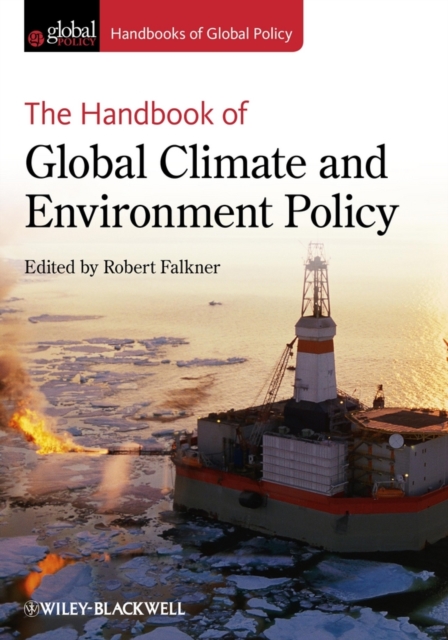
The handbook of global climate and environment policy
The Handbook of Global Climate and Environment Policy presents an authoritative and comprehensive overview of global policy on climate and the environment. It combines the strengths of an interdisciplinary team of experts from around the world to explore current debates and the latest thinking in the search for global environmental solutions. -Explores the environmental challenges we currently face, and the concepts and approaches to solving these -Questions the role of global actors, institutions and processes, and considers the links between global climate and environment policy, and that of the global economy -Highlights the connections between social science research and global policy -Brings together authoritative coverage of recent research by internationally-renowned experts from around the world, including from North America, Europe, and Asia -Provides an essential resource guide for students and researchers from across a wide range of related disciplines – from politics and international relations, to environmental sciences and sociology – and for global policy practitioners
eBook
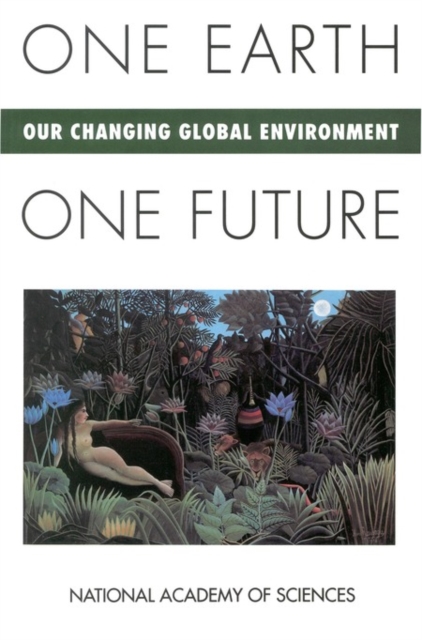
One earth, one future : our changing global environment
Written for nonscientists, One Earth, One Future can help individuals understand the basic science behind changes in the global environment and the resulting policy implications that the population of the entire planet must face.The volume describes the earth as a unified system--exploring the interactions between the atmosphere, land, and water and the snowballing impact that human activity is having on the system--and presents perspectives on policies and programs that can both develop and protect our natural resources.One Earth, One Future discusses why such seemingly diverse issues as historical climate change, species diversity, and sea-level rise are part of a single picture--and how human activity is the critical element in that picture.The book concludes with practical examinations of economic, security, and development questions, with a view toward achieving improvements in quality of life without further environmental degradation.One Earth, One Future is must reading for anyone interested in the interrelationship of environmental matters and public policy issues.
eBook

The Story of N
InThe Story of N, Hugh S. Gorman analyzes the notion of sustainability from a fresh perspective-the integration of human activities with the biogeochemical cycling of nitrogen-and provides a supportive alternative to studying sustainability through the lens of climate change and the cycling of carbon. It is the first book to examine the social processes by which industrial societies learned to bypass a fundamental ecological limit and, later, began addressing the resulting concerns by establishing limits of their own
The book is organized into three parts. Part I, \"The Knowledge of Nature,\" explores the emergence of the nitrogen cycle before humans arrived on the scene and the changes that occurred as stationary agricultural societies took root. Part II, \"Learning to Bypass an Ecological Limit,\" examines the role of science and market capitalism in accelerating the pace of innovation, eventually allowing humans to bypass the activity of nitrogen-fixing bacteria. Part III, \"Learning to Establish Human-Defined Limits,\" covers the twentieth-century response to the nitrogen-related concerns that emerged as more nitrogenous compounds flowed into the environment. A concluding chapter, \"The Challenge of Sustainability,\" places the entire story in the context of constructing an ecological economy in which innovations that contribute to sustainable practices are rewarded.
eBook

Orientalism, postmodernism and globalism
It is often thought that the development of capitalism and the modernization of culture have brought about a profound decline of religious belief and commitment. The history of Christianity in the last two decades appears to be a good illustration of this general process of secularization with the undermining of belief and commitment as Western cultures became industrial and urban. However, in the twentieth century we have seen that Islam continues to be a dominant force in politics and culture not only in the Orient but in Western society. In this challenging study of contemporary social theory, Bryan Turner examines the recent debate about orientalism in relation to postmodernism and the process of globalization. He provides a profound critique of many of the leading fissures in classical orientalism. His book also considers the impact of the notion of the world in sociological theory. These cultural changes and social debates also reflect important change in the status and position of intellecuals in modern culture who are threatened, not only by the levelling of mass culture, but also by the new opportunities posed by postmodernism. He takes a critical view of the role of sociology in these developments and raises important questions about the global role of English intellectuals as a social stratum. Bryan Turner's ability to combine these discussions about religion, politics, culture and intellectuals represents a remarkable integration of cultural analysis in cultural studies.
eBook

Me Yawovi Agboyibo
Ce livre revient sur la vie et le parcours sociopolitique d'un homme dont la notoriété a dépassé les frontières du Togo : Me Yawovi Agboyibo, fervent défenseur des droits humains, premier Président de la Commission Nationale des Droits de l'Homme (CNDH) au Togo. Un homme qui a remarquablement marqué l'histoire institutionnelle et politique du Togo. Ancien Premier ministre du Togo, Me Yawovi Agboyibo était un homme dont peu de Togolais connaissent la grandeur, la magnanimité et l'abnégation. L'auteur révèle dans cet ouvrage, les côtés cachés du « Bélier Noir » que seuls sa famille et ses plus proches collaborateurs connaissent. L'auteur partage avec le grand public, les relations amicales et professionnelles qu'il avait avec cet éminent avocat togolais décédé en 2020 à Paris.
eBook