
Catalogue Search | MBRL


Are you sure you want to remove the book from the shelf?

{{itemTitle}}
1,317
result(s) for
"Homoptera"
Sort by:

Laboratory evaluation of a bio-insecticide candidate from tangerine peel extracts against Trialeurodes vaporariorum (Homoptera: Aleyrodidae)
The excessive use of synthetic insecticides in modern agriculture has led to environmental contamination and the development of insect resistance. Also, the prolonged use of chemical insecticides in producing flowers and tomatoes in greenhouses has caused health problems for workers and their offspring. In this study, we analyzed the efficacy of mandarin peel (
L.) essential oil (EO) as a natural insecticide against greenhouse whitefly (
W., Homoptera: Aleyrodidae), a common pest in greenhouse production of different crops.
Petroleum ether (PET) and n-hexane (HEX) were used as solvents to extract essential oil (EO) from tangerine peels.
The yield of EO was 1.59% and 2.00% (m/m) for PET and HEX, respectively. Additionally, the insect-killing power of EO was tested by checking how many greenhouse whiteflies died at different times. The results showed that PET and HEX extracts of tangerine EO effectively controlled greenhouse whiteflies. Furthermore, with both solvents, a 12.5% (v/v) application was as practical as the commercial insecticide imidacloprid. Further characterization tests with the polarimeter, FTIR, HPLC-RP, and GC-MS showed that the essential oil (EO) contained about 41% (v/v) of
limonene and that this compound may be responsible for the observed insecticidal properties.
Therefore, tangerine peel essential oil is an excellent botanical insecticide candidate for controlling greenhouse whiteflies.
Journal Article

The harlequin ladybird, Harmonia axyridis: global perspectives on invasion history and ecology
The harlequin ladybird, Harmonia axyridis (Pallas) (Coleoptera: Coccinellidae), is native to Asia but has been intentionally introduced to many countries as a biological control agent of pest insects. In numerous countries, however, it has been introduced unintentionally. The dramatic spread of H. axyridis within many countries has been met with considerable trepidation. It is a generalist top predator, able to thrive in many habitats and across wide climatic conditions. It poses a threat to biodiversity, particularly aphidophagous insects, through competition and predation, and in many countries adverse effects have been reported on other species, particularly coccinellids. However, the patterns are not consistent around the world and seem to be affected by many factors including landscape and climate. Research on H. axyridis has provided detailed insights into invasion biology from broad patterns and processes to approaches in surveillance and monitoring. An impressive number of studies on this alien species have provided mechanistic evidence alongside models explaining large-scale patterns and processes. The involvement of citizens in monitoring this species in a number of countries around the world is inspiring and has provided data on scales that would be otherwise unachievable. Harmonia axyridis has successfully been used as a model invasive alien species and has been the inspiration for global collaborations at various scales. There is considerable scope to expand the research and associated collaborations, particularly to increase the breadth of parallel studies conducted in the native and invaded regions. Indeed a qualitative comparison of biological traits across the native and invaded range suggests that there are differences which ultimately could influence the population dynamics of this invader. Here we provide an overview of the invasion history and ecology of H. axyridis globally with consideration of future research perspectives. We reflect broadly on the contributions of such research to our understanding of invasion biology while also informing policy and people.
Journal Article

Invasion of sorghum in the Americas by a new sugarcane aphid (Melanaphis sacchari) superclone
In the United States (US), the sugarcane aphid (SCA) Melanaphis sacchari (Zehnter) (Hemiptera: Aphididae) was introduced in the 1970s, however at that time it was only considered a pest of sugarcane. In 2013, a massive outbreak of M. sacchari occured on sorghum, resulting in significant economic damage to sorghum grown in North America including the US, Mexico, and Puerto Rico. The aim of the present study was to determine if the SCA pest emergence in American sorghum resulted from the introduction of new genotypes. To this end we used microsatellite markers and COI sequencing to compare the genetic diversity of SCA populations collected in the Americas after the 2013 SCA outbreak on sorghum (during 2013-2017) to older samples collected before the pest outbreak (during 2007-2009). Our results show that the SCA outbreak in the Americas and the Caribbean observed since 2013 belong to populations exhibiting low genetic diversity and consisting of a dominant clonal lineage, MLL-F, which colonizes Sorghum spp. and sugarcane. The comparison of MLL-F specimens collected post-2013 with specimens collected in Louisiana in 2007 revealed that both populations are genetically distinct, according to COI sequencing and microsatellite data analyses. Our result suggest that MLL-F is a new invasive genotype introduced into the Americas that has spread rapidly across sorghum growing regions in the US, Mexico, Honduras and the Caribbean. The origin of this introduction is either Africa or Asia, with Asia being the most probable source.
Journal Article
Urban Warming Drives Insect Pest Abundance on Street Trees
Cities profoundly alter biological communities, favoring some species over others, though the mechanisms that govern these changes are largely unknown. Herbivorous arthropod pests are often more abundant in urban than in rural areas, and urban outbreaks have been attributed to reduced control by predators and parasitoids and to increased susceptibility of stressed urban plants. These hypotheses, however, leave many outbreaks unexplained and fail to predict variation in pest abundance within cities. Here we show that the abundance of a common insect pest is positively related to temperature even when controlling for other habitat characteristics. The scale insect Parthenolecanium quercifex was 13 times more abundant on willow oak trees in the hottest parts of Raleigh, NC, in the southeastern United States, than in cooler areas, though parasitism rates were similar. We further separated the effects of heat from those of natural enemies and plant quality in a greenhouse reciprocal transplant experiment. P. quercifex collected from hot urban trees became more abundant in hot greenhouses than in cool greenhouses, whereas the abundance of P. quercifex collected from cooler urban trees remained low in hot and cool greenhouses. Parthenolecanium quercifex living in urban hot spots succeed with warming, and they do so because some demes have either acclimatized or adapted to high temperatures. Our results provide the first evidence that heat can be a key driver of insect pest outbreaks on urban trees. Since urban warming is similar in magnitude to global warming predicted in the next 50 years, pest abundance on city trees may foreshadow widespread outbreaks as natural forests also grow warmer.
Journal Article

Fumigant Toxicity of Summer Savory and Lemon Balm Oil Constituents and Efficacy of Spray Formulations Containing the Oils to B- and Neonicotinoid-Resistant Q-Biotypes of Bemisia tabaci (Homoptera: Aleyrodidae)
An assessment was made of the fumigant toxicity of 36 constituents from lemon balm oil (LBO) and summer savory oil (SSO) and another additional nine previously identified compounds of the oils, as well as of the control efficacy of four experimental spray formulations containing individual oils (0.5 and 0.1% sprays) and spinosad 10% suspension concentrate (SC) to females from B- and neonicotinoid-resistant Q-biotypes of Bemisia tabaci (Gennadius) (Homoptera: Aleyrodidae). Based on 24-h LC50 values, Q-biotype females (0.20 mu g/cm3) were 40 times less susceptible to dichlorvos than B-biotype females (0.005 mu g/cm3). Thymol (LC50, 0.35 mu g/cm3) and carvacrol (0.56 mu g/cm3) were the most toxic compounds toward Q-biotype females, followed by (1S)-( - )-borneol, alpha -terpineol, nerol, linalool, and carvone (1.06-1.38 mu g/cm3). The toxicity of these compounds was virtually identical toward both biotype females, indicating that the terpenoids and the insecticides (neonicotinoids and dichlorvos) do not share a common mode of action or elicit cross-resistance. The 0.5% spray of LBO, SSO, and spinosad 10% SC resulted in >90% mortality toward both biotype females. Global efforts to reduce the level of toxic synthetic insecticides in the agricultural environment justify further studies on LBO- and SSO-derived materials as potential contact-action fumigants for the control of B. tabaci populations.
Journal Article
An Opposite Pattern to the Conventional Thermal Hypothesis: Temperature-Dependent Variation in Coloration of Adults of Saccharosydne procerus (Homoptera: Delphacidae): e0128859
Melanism is a common polymorphism in many insect species that also influences immune function. According to the thermal melanin hypothesis, ectothermic individuals from cooler environments have darker cuticles and higher polyphenol oxidase (PO) levels, which represent a better immunocompetence. In this study, the links among environmental temperature, melanism, and PO activity of Saccharosydne procerus (Matsumura) were examined. Most S. procerus have a black spot on their forewings at high temperatures in the field and in the laboratory. In PO activity assay, a positive association between PO level and temperature was found. Our results showed that a diversification of melanism occurred under different temperatures and that melanism in S. procerus presented an opposite pattern to the one proposed by the thermal hypothesis.
Journal Article
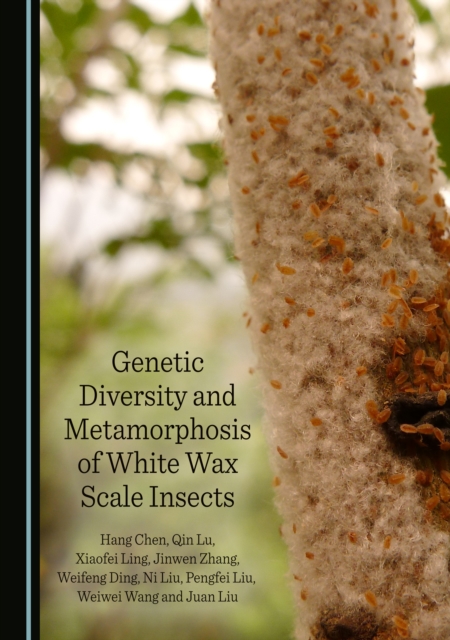
Genetic Diversity and Metamorphosis of White Wax Scale Insects
How did ancestral arthropods successfully diversify to colonize the land? How do insects use their wings to exploit terrestrial and freshwater ecosystems by metamorphosis? The causes and consequences of metamorphosis are still poorly understood in biology. This collection of essays examines the molecular basis underlying the metamorphosis regulation of the white wax scale insect (WWS), a fascinating insect that undergoes different metamorphoses between males and females. It shows that the WWS has produced great economic or medical benefits for human beings for thousands of years. This book provides interesting information for scientific and technical personnel, as well as undergraduate and graduate students engaged in entomology, molecular biology and biogeography.
eBook

Review of Chinese species of the leafhopper genus Scaphomonoides Li, 2011 (Hemiptera, Cicadellidae, Deltocephalinae, Scaphoideini), with description of a new species
The leafhopper genus Scaphomonoides Li, 2011 is redescribed, and a new species Scaphomonoides robustus sp. nov. is described and illustrated from Yunnan Province, China. A key is given to distinguish the two species of this genus. The type specimen of the new species is deposited in the Institute of Entomology, Guizhou University, Guiyang, China (GUGC).
Journal Article
Rapid Spread of Tomato Yellow Leaf Curl Virus in China Is Aided Differentially by Two Invasive Whiteflies
Tomato yellow leaf curl virus (TYLCV) was introduced into China in 2006, approximately 10 years after the introduction of an invasive whitefly, Bemisia tabaci (Genn.) B biotype. Even so the distribution and prevalence of TYLCV remained limited, and the economic damage was minimal. Following the introduction of Q biotype into China in 2003, the prevalence and spread of TYLCV started to accelerate. This has lead to the hypothesis that the two biotypes might not be equally competent vectors of TYLCV.
The infection frequency of TYLCV in the field-collected B. tabaci populations was investigated, the acquisition and transmission capability of TYLCV by B and Q biotypes were compared under the laboratory conditions. Analysis of B. tabaci populations from 55 field sites revealed the existence of 12 B and 43 Q biotypes across 18 provinces in China. The acquisition and transmission experiments showed that both B and Q biotypes can acquire and transmit the virus, however, Q biotype demonstrated superior acquisition and transmission capability than its B counterparts. Specifically, Q biotype acquired significantly more viral DNA than the B biotype, and reached the maximum viral load in a substantially shorter period of time. Although TYLCV was shown to be transmitted horizontally by both biotypes, Q biotype exhibited significantly higher viral transmission frequency than B biotype. Vertical transmission result, on the other hand, indicated that TYLCV DNA can be detected in eggs and nymphs, but not in pupae and adults of the first generation progeny.
These combined results suggested that the epidemiology of TYLCV was aided differentially by the two invasive whiteflies (B and Q biotypes) through horizontal but not vertical transmission of the virus. This is consistent with the concomitant eruption of TYLCV in tomato fields following the recent rapid invasion of Q biotype whitefly in China.
Journal Article
Impact of the Resident Microbiota on the Nutritional Phenotype of Drosophila melanogaster
Animals are chronically infected by benign and beneficial microorganisms that generally promote animal health through their effects on the nutrition, immune function and other physiological systems of the host. Insight into the host-microbial interactions can be obtained by comparing the traits of animals experimentally deprived of their microbiota and untreated animals. Drosophila melanogaster is an experimentally tractable system to study host-microbial interactions.
The nutritional significance of the microbiota was investigated in D. melanogaster bearing unmanipulated microbiota, demonstrated by 454 sequencing of 16S rRNA amplicons to be dominated by the α-proteobacterium Acetobacter, and experimentally deprived of the microbiota by egg dechorionation (conventional and axenic flies, respectively). In axenic flies, larval development rate was depressed with no effect on adult size relative to conventional flies, indicating that the microbiota promotes larval growth rates. Female fecundity did not differ significantly between conventional and axenic flies, but axenic flies had significantly reduced metabolic rate and altered carbohydrate allocation, including elevated glucose levels.
We have shown that elimination of the resident microbiota extends larval development and perturbs energy homeostasis and carbohydrate allocation patterns of of D. melanogaster. Our results indicate that the resident microbiota promotes host nutrition and interacts with the regulation of host metabolism.
Journal Article