
Catalogue Search | MBRL


Are you sure you want to remove the book from the shelf?

{{itemTitle}}
1,433
result(s) for
"Homosexuality Poetry"
Sort by:
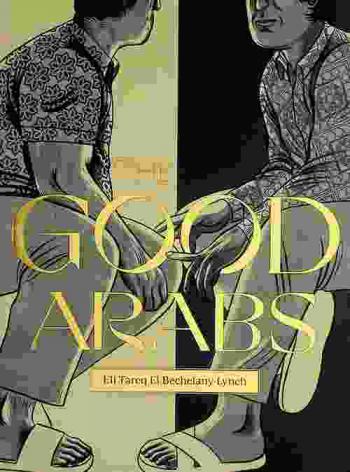
The good Arabs : poems
\"Swinging from post-explosion Beirut to a Montreal balcony in summer, the verse and prose poems in The good Arabs ground the reader in place, language, and the body. Peeling and rinsing radishes. Dancing as a pre-teen to Nancy Ajram. Being drenched in stares on the city bus. The collection is an interlocking and rich offering of the speaker's communities, geographical surroundings both expansive and precise, and family both biological and chosen. The good Arabs gifts the reader with insight into cycles and repetition in ourselves and our broken nations. This genre-defying collection maps Arab and trans identity through the immensity of experience felt in one body, the sorrow of citizens let down by their countries, and the garbage crisis in Lebanon. Ultimately, it shows how we might love amid dismay, adore the pungent and the ugly, and exist in our multiplicity across spaces.\"-- Provided by publisher.
Book

Walt Whitman's Songs of Male Intimacy and Love
In his 1859 \"Live Oak, with Moss,\" Walt Whitman's unpublished sheaf of twelve poems on manly passion, the poet dreams of a city where men who love men can live and love openly. The revised \"Live Oak, with Moss\" poems became \"Calamus,\" Whitman's cluster of poems on \"adhesive\" and manly love, comradeship, and democracy, inLeaves of Grass. Commemorating both the first publication of the \"Calamus\" poems and the little-known manuscript of notebook poems out of which the \"Calamus\" cluster grew, Whitman scholar Betsy Erkkila brings together in a single edition for the first time the \"Live Oak, with Moss\" poems, the 1860 \"Calamus\" poems, and the final 1881 \"Calamus\" poems. In addition to honoring the sesquicentennial of the \"Calamus\" cluster, she celebrates the ongoing legacy of Whitman's songs of manly passion, sex, and love.
The volume begins with Whitman's elegantly handwritten manuscript of the \"Live Oak, with Moss\" poems, printed side by side with a typeset transcription and followed by a facsimile of the 1860 version of the \"Calamus\" poems. The concluding section reprints the final version of the \"Calamus\" poems from the 1881 edition ofLeaves of Grass. In an afterword, Erkkila discusses the radical nature of these poems in literary, sexual, and social history; the changes Whitman made in the \"Live Oak\" and \"Calamus\" poems in the post-Civil War and Reconstruction years; the literary, political, and other contests surrounding the poems; and the constitutive role the poems have played in the emergence of modern heterosexual and homosexual identity in the United States and worldwide. The volume closes with a selected bibliography of works that have contributed to the critical and interpretive struggles around Whitman's man-loving life.
One hundred and fifty years after Whitman's brave decision to speak publicly about a fully realized democracy, his country is still locked in a struggle over the rights of homosexuals. These public battles have been at the very center of controversies over the life, work, and legacy of Walt Whitman, America's (and the world's) major poet of democracy and its major singer of what he called \"manly love\" in all its moods. Together the poems in this omnibus volume affirm his creation of a radical new language designed to convey and affirm the poet's man love.
eBook

Historicizing the Enlightenment, Volume 2
Enlightenment critics from Dryden through Johnson and Wordsworth conceived the modern view that art and especially literature entails a double reflection: a reflection of the world, and a reflection on the process by which that reflection is accomplished. Instead \"neoclassicism\" and \"Augustanism\" have been falsely construed as involving a one-dimensional imitation of classical texts and an unselfconscious representation of the world. In fact these Enlightenment movements adopted an oblique perspective that registers the distance between past tradition and its present reenactment, between representation and presence. Two modern movements, Romanticism and modernism, have appropriated as their own these innovations, which derive from Enlightenment thought. Both of these movements ground their error in a misreading of \"imitation\" as understood by Aristotle and his Enlightenment proponents. Rightly understood, neoclassical imitation, constitutively aware of the difference between what it knows and how it knows it, is an experimental inquiry that generates a range of prefixes—\"counter-,\" \"mock-,\" \"anti-,\" \"neo-\"—that mark formal degrees of its epistemological detachment. Romantic ideology has denied the role of the imagination in Enlightenment imitation, imposing on the eighteenth century a dichotomous periodization: duplication versus imagination, the mirror versus the lamp. Structuralist ideology has dichotomized narration and description, form and content, structure and history. Poststructuralist ideology has propounded for the novel a contradictory \"novel tradition\"—realism, modernism, postmodernism, postcolonialism—whose stages both constitute a sequence and collapse it, each stage claiming the innovation of the stage that precedes it.
Published by Bucknell University Press. Distributed worldwide by Rutgers University Press.
eBook

Homosexuality in Greece and Rome
The most important primary texts on homosexuality in ancient Greece and Rome are translated into modern, explicit English and collected together for the first time in this comprehensive sourcebook. Covering an extensive period—from the earliest Greek texts in the late seventh century b.c.e. to Greco-Roman texts of the third and fourth centuries c.e.—the volume includes well-known writings by Plato, Sappho, Aeschines, Catullus, and Juvenal, as well as less well known but highly relevant and intriguing texts such as graffiti, comic fragments, magical papyri, medical treatises, and selected artistic evidence. These fluently translated texts, together with Thomas K. Hubbard's valuable introductions, clearly show that there was in fact no more consensus about homosexuality in ancient Greece and Rome than there is today. The material is organized by period and by genre, allowing readers to consider chronological developments in both Greece and Rome. Individual texts each are presented with a short introduction contextualizing them by date and, where necessary, discussing their place within a larger work. Chapter introductions discuss questions of genre and the ideological significance of the texts, while Hubbard's general introduction to the volume addresses issues such as sexual orientation in antiquity, moral judgments, class and ideology, and lesbianism. With its broad, unexpurgated, and thoroughly informed presentation, this unique anthology gives an essential perspective on homosexuality in classical antiquity.
eBook

Loving in the War Years
An updated edition combining two classic works of Chicana and queer literature, with a new introduction by renowned writer and luminary, Cherríe Moraga.In celebration of the 40th anniversary of its original publication, this updated edition of Loving in the War Years combines Moraga's classic memoir with The Last Generation: Poetry and Prose.
eBook

The Other Orpheus
First published in 2003. This volume aims to re-establish an interest in poetry by integrating questions of prosody and aesthetics with political literary inquiry.The broader theoretical goal is nothing less than a rehabilitation of the concepts of affect and imagination, though the study also argues against anti-formalist approaches to.
eBook

Queering social reproduction
In this paper I ask what is at stake when we move past static ontologies of the ‘gayborhood’ as a form of commercial and residential concentration in decline to theorise gay urban activism as a mode of queer social reproduction, through which queer caring labour ‘redeems’ the dislocations of the neoliberal city structured by oedipalised and capitalist social relations. Through well-documented formal and informal collective action, queers in the urban West have organised in response to health crises, exclusion and systemic threats of violence. Returning to socialist feminist imaginaries of care beyond the ‘social’, and to Guy Hocquenghem’s often-overlooked theory of the sociality of the anus, this paper draws on excerpts from the film Milk, the poetry of Thom Gunn and a discussion of gay men’s volunteering to examine San Francisco as a queer urban space constituted through a network of encounters, crossings, intimacies and labours enacted through the mundane caring practices of everyday life. I ask in what ways we can think of gay urban space as continuously made and remade through non-monogamous sex practices that perform the messy marrying of public and private, and erotic and platonic.
在本文中,我要问的是,当我们超越作为一种商业和住宅集中形式(处于衰落过程中)的“同志村”的静态本体论,将同性恋城市行动主义理论化为一种酷儿社会再生产模式时,会有什么利害关系。通过这种模式,同性恋关怀劳动“弥补”了由俄狄浦斯化的资本主义社会关系所构建的新自由主义城市的混乱。通过有据可查的正式和非正式集体行动,西部城市的酷儿组织起来应对健康危机、排斥和系统性暴力威胁。回到社会主义女权主义者对“社会”之外的关怀的想象,以及盖伊·霍克昂海姆 (Guy Hocquenghem) 经常被忽视的肛门的社会性理论,本文摘录了电影《自由大道 (Milk)》、托姆·冈恩 (Thom Gunn) 的诗、和一个关于同性恋男子志愿调查旧金山酷儿城市空间的讨论,该空间由一个邂逅、交叉、亲密关系、劳动网络构成,通过日常生活的中世俗关怀实现。我的问题时,我们可以怎样将同性恋城市空间视为通过非一夫一妻制的性行为不断创造和重塑的,这种性行为将公共和私人生活、色情和柏拉图式的理想主义混乱地结合在一起。
Journal Article

What W. H. Auden Can Do for You
When facing a moral dilemma, Isabel Dalhousie--Edinburgh philosopher, amateur detective, and title character of a series of novels by best-selling author Alexander McCall Smith--often refers to the great twentieth-century poet W. H. Auden. This is no accident: McCall Smith has long been fascinated by Auden. Indeed, the novelist, best known for his No. 1 Ladies Detective Agency series, calls the poet not only the greatest literary discovery of his life but also the best of guides on how to live. In this book, McCall Smith has written a charming personal account about what Auden has done for him--and what he just might do for you.
Part self-portrait, part literary appreciation, the book tells how McCall Smith first came across the poet's work in the 1970s, while teaching law in Belfast, a violently divided city where Auden's \"September 1, 1939,\" a poem about the outbreak of World War II, strongly resonated. McCall Smith goes on to reveal how his life has related to and been inspired by other Auden poems ever since. For example, he describes how he has found an invaluable reflection on life's transience in \"As I Walked Out One Evening,\" while \"The More Loving One\" has provided an instructive meditation on unrequited love. McCall Smith shows how Auden can speak to us throughout life, suggesting how, despite difficulties and change, we can celebrate understanding, acceptance, and love for others.
An enchanting story about how art can help us live, this book will appeal to McCall Smith's fans and anyone curious about Auden.
eBook

Outside the lines
Editor Christopher Hennessy gathers interviews with some of the most significant figures in contemporary American poetry. While each poet is gay, these encompassing, craft-centered interviews reflect the diversity of their respective arts and serve as a testament to the impact gay poets have had and will continue to have on contemporary poetics. The book includes twelve frank, intense interviews with some of America's best-known and loved poets, who have not only enjoyed wide critical acclaim but who have had lasting impact on both the gay tradition and the contemporary canon writ large, for example, Frank Bidart, the late Thom Gunn, and J. D. McClatchy. Some of the most honored and respected poets, still in the middle of their careers, are also included, for example, Mark Doty, Carl Phillips, and Reginald Shepherd. Each interview explores the poet's complete work to date, often illuminating the poet's technical evolution and emotional growth, probing shifts in theme, and even investigating links between verse and sexuality.
eBook

Chaucer’s Queer Nation
Bringing the concerns of queer theory and postcolonial studies to bear on Chaucer’s Canterbury Tales, this ambitious book compels a rethinking not only of this most canonical of works, but also of questions of sexuality and gender in pre- and postmodern contexts, of issues of modernity and nation in historiography, and even of the enterprise of historiography itself. Medieval Cultures Series, volume 34
eBook