
Catalogue Search | MBRL


Are you sure you want to remove the book from the shelf?

{{itemTitle}}
42
result(s) for
"Hopewell culture"
Sort by:
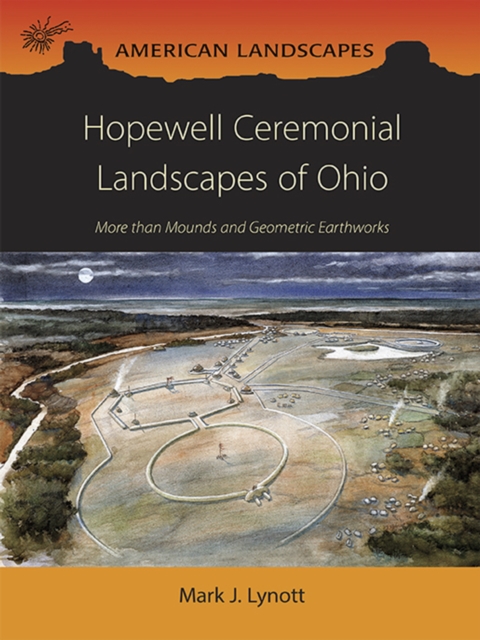
Hopewell Ceremonial Landscapes of Ohio
Nearly 2000 years ago, people living in the river valleys of southern Ohio built earthen monuments on a scale that is unmatched in the archaeological record for small-scale societies. The period from c. 200 BC to c. AD 500 (Early to Middle Woodland) witnessed the construction of mounds, earthen walls, ditches, borrow pits and other earthen and stone features covering dozen of hectares at many sites and hundreds of hectares at some. The development of the vast Hopewell Culture geometric earthwork complexes such as those at Mound City, Chilicothe; Hopewell; and the Newark earthworks was accompanied by the establishment of wide-ranging cultural contacts reflected in the movement of exotic and strikingly beautiful artefacts such as elaborate tobacco pipes, obsidian and chert arrowheads, copper axes and regalia, animal figurines and delicately carved sheets of mica. These phenomena, coupled with complex burial rituals, indicate the emergence of a political economy based on a powerful ideology of individual power and prestige, and the creation of a vast cultural landscape within which the monument complexes were central to a ritual cycle encompassing a substantial geographical area. The labour needed to build these vast cultural landscapes exceeds population estimates for the region, and suggests that people from near (and possibly far) travelled to the Scioto and other river valleys to help with construction of these monumental earthen complexes. Here, Mark Lynott draws on more than a decade of research and extensive new datasets to re-examine the spectacular and massive scale Ohio Hopewell landscapes and to explore the society that created them.
eBook

Sacred games, death, and renewal in the ancient Eastern Woodlands
The book presents an account of the Ohio Middle Woodland period embankment earthworks, ca 100 B.C. to A.D. 400, that is radically different from the prevailing theory. Byers critically addresses all the arguments and characterizations that make up the current treatment of the embankment earthworks and then presents an alternative interpretation. This unconventional view hinges on two basic social characterizations: the complementary heterarchical community model and the cult sodality heterarchy model. Byers posits that these two models interact to characterize the Ohio Middle Woodland period settlement pattern; the community was constituted by autonomous social formations: clans based on kinship and sodalities based on companionship. The individual communities of the region each have their clan components dispersed within a fairly well-defined zone while the sodality components of the same set of region-wide communities ally with each other and build and operate the embankment earthworks. This dichotomy is possible only because the clans and sodalities respect each other as relatively autonomous; the affairs of the clans, focusing on domestic and family matters, remain outside the concerns of the sodalities and the affairs of the sodalities, focusing on world renewal and sacred games, remain outside the concerns of the clans. Therefore, two models are required to understand the embankment earthworks and no individual earthwork can be identified with any particular community. This radical interpretation grounded in empirical archaeological data, as well as the in-depth overview of the current theory of the Ohio Middle Woodland period, make this book a critically important addition to the perspective of scholars of North American archaeology and scholars grappling with prehistoric social systems.
eBook

Ritualised craft production at the Hopewell periphery: new evidence from the Appalachian Summit
Ritual items made of thin mica sheet are among the most spectacular of the special objects from the Hopewell sites of the Ohio Valley. Hitherto it has generally been believed that the mica was imported in raw material form from sources in the Appalachian Summit and cut into shape in the Hopewell core. Recent excavations at Garden Creek, a ritual enclosure on the margin of the source area, throws doubt on this model through extensive evidence for mica-working at this site. The Garden Creek community may have been drawn into the Hopewell sphere through its proximity to the mica sources, and the people of Garden Creek may have carried cut mica and crystal quartz as offerings to the major Hopewell centres in the course of pilgrimage.
Journal Article

Drums Along the Scioto: Interpreting Hopewell Material Culture Through the Lens of Contemporary American Indian Ceremonial Practices
The Seip-Pricer Mound was one of the largest mounds in the Hopewellian world. Among the many features at the mound’s base, there was a massive, clay-lined, oval basin known as the “Burnt Offering.” This basin contained a large quantity of artifacts that had been subjected to intense burning. Five small spheres of black steatite were among the remarkable objects recovered from this deposit, each of which had been engraved with abstract designs. Shetrone interpreted these objects as marbles. More recently, Carr suggested they were shamanic paraphernalia. We propose an alternative interpretation based on the premise that conversations with contemporary, indigenous descendant communities may provide improved contextualization of archeological materials. Our conversation involving traditional Shawnee people and their ceremonial practices suggests a more parsimonious identification of the Seip-Pricer Mound spheres. The Shawnee drum uses spherical stones to attach the drum head to the shell. In contemporary practice, these stones are not engraved, but similarities between the Shawnee drum stones and the Hopewell steatite spheres, including size, color, and number, suggest the intriguing possibility that the Hopewell spheres were parts of a drum. This would be the first direct evidence for a drum in the Middle Woodland period, and our proposed interpretation is strengthened by the fact that it derives from firsthand knowledge of the ceremonial practices of an indigenous Eastern Woodlands tribe that could be among the direct descendants of the Hopewell culture.
Journal Article


Migration and Social Structure among the Hopewell: Evidence from Ancient DNA
For more than a century, archaeologists have studied the cultural and skeletal remains of the prehistoric Native Americans known as the “Hopewell Moundbuilders.” While many aspects of the Hopewell phenomenon are now well understood, questions still remain about the genetic makeup, burial practices, and social structure of Hopewell communities. To help answer these questions, we extracted mitochondrial DNA (mtDNA) from the skeletal remains of 39 individuals buried at the Pete Klunk Mound Group in Illinois. The pattern of mtDNA variation at this site suggests that matrilineal relationships did not strongly influence burial practices. Because different forms of mortuary activity were not associated with distinct genetic lineages, this study provides no evidence of a maternally inherited or ascribed status system in this society. The genetic data collected here also help clarify another aspect of Illinois Hopewell social structure by suggesting a matrilocal system of post-marital residence. Finally, when these data were considered in conjunction with mtDNA data previously collected from the Hopewell Mound Group in Ohio (Mills 2003), they demonstrated that migration and gene flow did accompany the cultural exchange between Hopewell communities in the Illinois and Ohio Valleys.
Journal Article

The Calusa
Normal0falsefalsefalseMicrosoftInternetExplorer4
Normal0falsefalsefalseEN-USX-NONEX-NONEMicrosoftInternetExplorer4
Presents a full phonological and morphological analysis
of the total corpus of surviving Calusa language data left by a
literate Spanish captive held by the Calusa from his early youth
to adulthood The linguistic origins of Native American
cultures and the connections between these cultures as traced
through language in prehistory remain vexing questions for
scholars across multiple disciplines and interests. Native
American linguist Julian Granberry defines the Calusa language,
formerly spoken in southwestern coastal Florida, and traces its
connections to the Tunica language of northeast Louisiana.
Archaeologists, ethnologists, and linguists have long assumed
that the Calusa language of southwest Florida was unrelated to
any other Native American language. Linguistic data can offer a
unique window into a culture’s organization over space and
time; however, scholars believed the existing lexical data was
insufficient and have not previously attempted to analyze or
define Calusa from a linguistic perspective. In
The Calusa: Linguistic and Cultural Origins and
Relationships, Granberry presents a full phonological and
morphological analysis of the total corpus of surviving Calusa
language data left by a literate Spanish captive held by the
Calusa from his early youth to adulthood. In addition to further
defining the Calusa language, this book presents the hypothesis
of language-based cultural connections between the Calusa people
and other southeastern Native American cultures, specifically the
Tunica. Evidence of such intercultural connections at the
linguistic level has important implications for the ongoing study
of life among prehistoric people in North America. Consequently,
this thoroughly original and meticulously researched volume
breaks new ground and will add new perspectives to the broader
scholarly knowledge of ancient North American cultures and to
debates about their relationships with one another.
eBook
Variation in Ohio Hopewell Political Economies
I examine mortuary, artifactual, symbolic, and proxemic data from Hopewell sites in southwestern and south-central Ohio to suggest that people associated with south-central Ohio sites such as Hopewell and Seip implemented more exclusionary political strategies, while people at southwestern sites such as Turner and Fort Ancient maintained a more corporate orientation through much of the Middle Woodland period. The recognition of this dimension of variation among Ohio Hopewell peoples has important implications for the study of the evolution of middle-range societies.
Journal Article
High Precision Measurement of Obsidian Hydration Layers on Artifacts from the Hopewell Site Using Secondary Ion Mass Spectrometry
Obsidian hydration dating has served as one of the chronological indicators for the Hopewell Culture earthworks (ca. 200 B.C.—A.D. 500) in central Ohio. This work presents new obsidian hydration dates developed from high precision hydration layer depth profiling using secondary ion mass spectrometry (SIMS). These data suggest that long-distance exchange in obsidian occurred throughout the Hopewell period.
Journal Article